
What is nuclear medicine?
Nuclear medicine uses a very small amount of radioactive material to show biological activity at the molecular level, such as blood flow to the heart muscle, how quickly food moves through the stomach, or how a bone is healing after a fracture. Nuclear medicine includes PET imaging as well as SPECT and other studies.
Why choose Kettering Health for nuclear medicine?
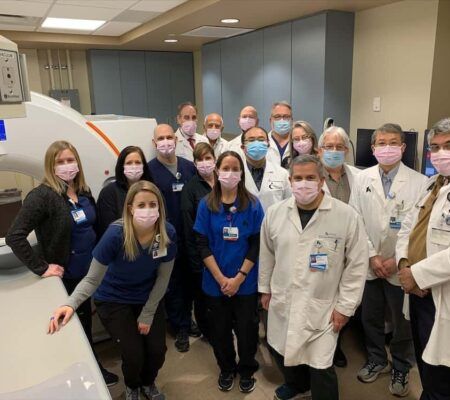
- Nuclear medicine specialists: Kettering Health has physicians who specialize in nuclear medicine, rather than relying solely on radiologists who interpret these studies in addition to other imaging.
- Advanced imaging technology: Kettering Health uses hybrid single-photon emission computed tomography and computed tomography (SPECT/CT) scanners, in addition to digital PET/CT technology used for PET imaging.
- On-site cyclotron: An on-site cyclotron gives Kettering Health improved access to specialized radiopharmaceuticals used across nuclear medicine and PET imaging.
- C11 methionine brain tumor imaging: Kettering Health’s brain tumor program uses this specialized PET imaging tool to help neurosurgeons evaluate brain tumors.
- Clinical research: Kettering Health participates in clinical research trials related to nuclear medicine. Explore clinical research opportunities.
Personalized imaging for diagnosis and treatment
Nuclear medicine gives your care team more than a picture—it gives them information about what is happening inside your body at the molecular level. This is especially valuable in cancer care, where molecular imaging can show how a tumor is behaving or whether it has spread. Advanced molecular imaging can give your care team more information about what is happening inside your body, helping guide the right diagnosis and treatment plan for you.
Nuclear medicine also plays a role in neurological, cardiac, and gastrointestinal care, among others. Imaging is one important piece of the picture. Your physician considers it alongside your symptoms, history, and other test results to determine the right treatment path for you.
See how nuclear medicine works
If you’d like a closer look at what a nuclear medicine exam involves, this short video offers a helpful overview before your appointment.
What to expect during your exam
Nuclear medicine and PET imaging work differently from fast anatomical tests such as X-rays or CT scans. Because these exams follow biological processes as they happen, they can take longer. For example, a gastric emptying study may take about four hours because the scan follows the digestive process as it occurs. Exam length varies widely depending on the specific study your physician has ordered.
You will receive preparation instructions when your exam is scheduled. These instructions may also be available through MyChart. Please follow the guidance provided for your specific exam, since preparation can differ from one study to another.
Frequently Asked Questions
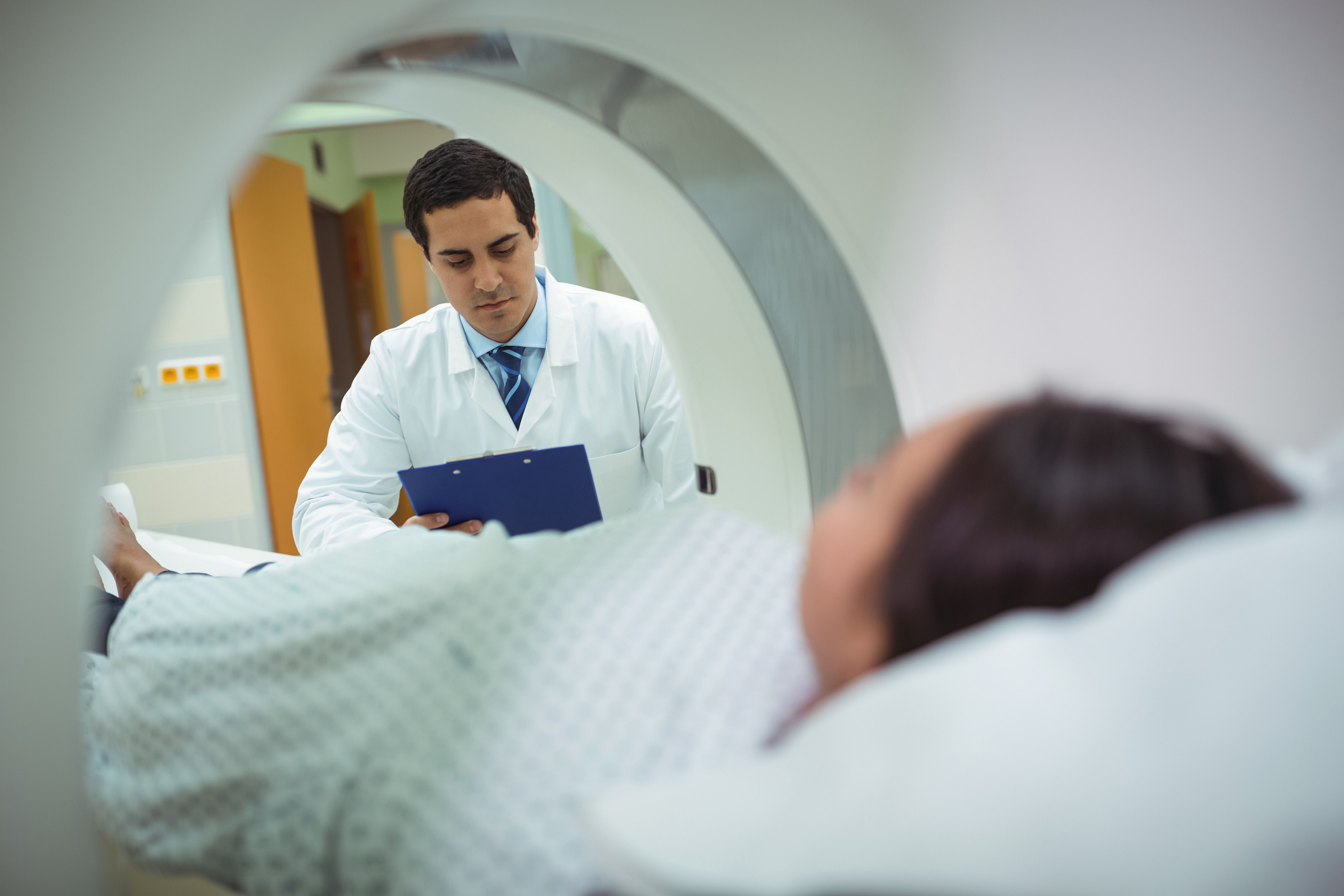
Nuclear medicine cameras are open, and they do not make the loud noises associated with MRI scanners. For many exams, your head remains outside the camera. Most patients with claustrophobia are able to complete nuclear medicine and PET scans without medication. If you’re concerned, you can call ahead to ask about seeing the equipment or trying the table before your appointment.
No. Most diagnostic nuclear medicine and PET examinations do not cause noticeable side effects from the tracer. These tests use a small amount of radioactive material, and your referring physician has determined that the expected diagnostic benefit justifies the radiation exposure.
It depends on the exam. Some studies require fasting or temporarily holding certain medications, while others do not. Your care team will review preparation requirements with you during scheduling, and instructions may also be available in MyChart. Please follow the guidance provided for your specific test.
For many nuclear medicine exams, a family member may be able to stay in the room with you. For PET exams and stress tests, family members are generally asked to stay in the waiting area. Because some studies can take a long time, we encourage patients not to bring children to their appointment.
Most diagnostic nuclear medicine procedures do not require special radiation-safety precautions afterward. Therapeutic nuclear medicine treatments, including certain thyroid or prostate cancer treatments, may require temporary precautions. If you’re considering one of these therapies, your physician will provide individualized counseling before treatment.
Nuclear medicine follows physiological processes in the body, so some exams take longer than a CT scan or X-ray. Imaging has to occur at the pace of your body’s biological activity, which means scan times vary depending on what your physician is evaluating.