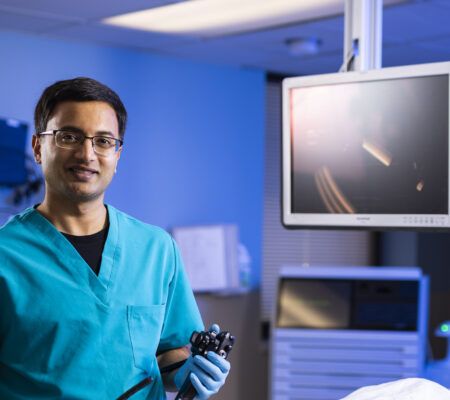


Which Colonoscopy Is Right For You?
Two different kinds of colonoscopies can help us learn more about your gastrointestinal health:
- Screening colonoscopy: A preventative test used to detect cancerous and precancerous polyps in the colon and rectum. This test can detect issues before symptoms begin.
- Diagnostic colonoscopy: A test used to investigate specific symptoms or abnormalities, such as unexplained gastrointestinal issues. This test can help diagnose underlying conditions.
Most insurance providers cover a screening colonoscopy. A diagnostic colonoscopy, however, is often billed to the patient. Speak with your insurance provider to determine your coverage.
Who Is a Good Candidate for a Colonoscopy?
Patients 45 and older with no symptoms or GI issues are good candidates for a screening colonoscopy. Patients experiencing specific symptoms are often good candidates for a diagnostic colonoscopy.
Some patients may have to undergo additional heart and lung screenings before scheduling. Speak with your healthcare provider to determine if this test is right for you.
Think You Are a Candidate?
Make a Primary Care AppointmentWhat to Expect
Patients are given very detailed instructions for the day before the procedure, such as following a clear liquid diet. In some cases, patients may also need to stop taking certain medications or complete lab tests.
On the day of the procedure, patients can expect to be at the hospital for three to four hours, while the screening typically takes 30 to 45 minutes. Patients are sedated during the procedure, so they will need a driver to bring them to and from the hospital that day.
Recovering from a Colonoscopy
Most patients can return to their usual activities within a day. But it’s recommended they avoid strenuous activities for a few days after the procedure.
Patients should gradually ease back into their typical diet, starting with easily digestible foods, like bananas, rice, applesauce, or toast, and slowly reintroducing regular foods. They should initially avoid foods high in fiber and drink plenty of water to help their digestive system recover.
Some mild bloating and cramps can be common after the screening, but symptoms such as severe pain, fever, or excessive bleeding are unusual. Contact your healthcare provider if you develop any of these abnormal symptoms.