



Women’s Health
Want to learn more about this at Kettering Health?
At a Glance
Q: How do women’s hormones affect muscles and bones—and can weight training help?
A: Hormonal changes can weaken bones and reduce muscle over time. Weight training is a proven way to build strength, improve bone density, and support health throughout a woman’s life.
- Simple ways to start lifting weights
- Bone loss increases after menopause
- Muscle burns more calories than fat
The hormonal changes women undergo throughout their lives can affect muscle and bone health. Menopause, for example, dramatically speeds bone loss, with one in 10 women over 60 diagnosed with osteoporosis.
One thing proven to help is weight training.
By lifting weights or doing resistance training, women can counteract the muscle and bone loss they may experience as they age while also improving period symptoms and easing pregnancy.
How do women’s hormones affect their muscles and bones?
Pregnancy and menopause bring hormonal changes that affect bones and muscles, but Dr. Misty Dickerson, an OB-GYN, explains that women may experience changes in strength and energy throughout the month due to their usual hormonal cycle.
“Normal menstrual cycle hormone fluctuations influence muscle strength and recovery, in addition to joint laxity, which can lead to increased rates of injury.”
She explains that women are more likely to feel additional fatigue during the luteal phase (second half) of their cycle. However, regular exercise can alleviate cramping and other period symptoms.
Pregnancy introduces additional hormonal shifts that may make women feel even more fatigued. These hormonal changes can also affect a woman’s calcium levels, potentially decreasing bone density during pregnancy (although this loss is usually short-lived and corrects itself after pregnancy). Dr. Dickerson explains that weight training while pregnant is completely safe for most women—even beneficial.
“Lifting weights in pregnancy can help improve overall mood and energy, reduce aches and pains, and lower risk for certain pregnancy-induced conditions such as gestational diabetes and hypertension.”
The biggest shift in bone and muscle health occurs during perimenopause and menopause, as a drop in estrogen leads to decreased bone density and muscle mass.
“Women lose approximately three to eight percent muscle mass each decade beyond age 30,” Dr. Dickerson explains, “but more rapidly after menopause.”
Weight training before and during menopause can prevent conditions like osteoporosis.
What about weight loss?
Cardio is essential for overall heart health, but it shouldn’t be your only form of movement. If you’re trying to lose weight, Dr. Gretchen Polinski, a sports medicine provider, says incorporating weight training may help you reach your goals faster.
“The misconception is that cardiovascular or aerobic exercise is truly what’s going to help people lose weight. But resistance training is very important because that’s going to increase your metabolism.”
Muscles require more energy, or calories, than fat does. In other words, the more muscle mass you have, the more calories your body “burns” at rest. Fat, however, doesn’t use energy the way muscle does. By lifting weights, you can replace fat with muscle mass, boosting your metabolism.
“If you’re doing aerobic activity for 20 to 30 minutes, will you burn calories during that time? Yes,” Dr. Polinski says. “But when we’re talking about long-term health, keeping metabolism up throughout the whole day plays a huge role.”
How to get started with weight training
If you’ve never lifted weights, it can be intimidating and even confusing when starting. Dr. Polinski shares that you don’t need equipment or a gym pass to get started.
“Body weight is usually a nice place to start.”
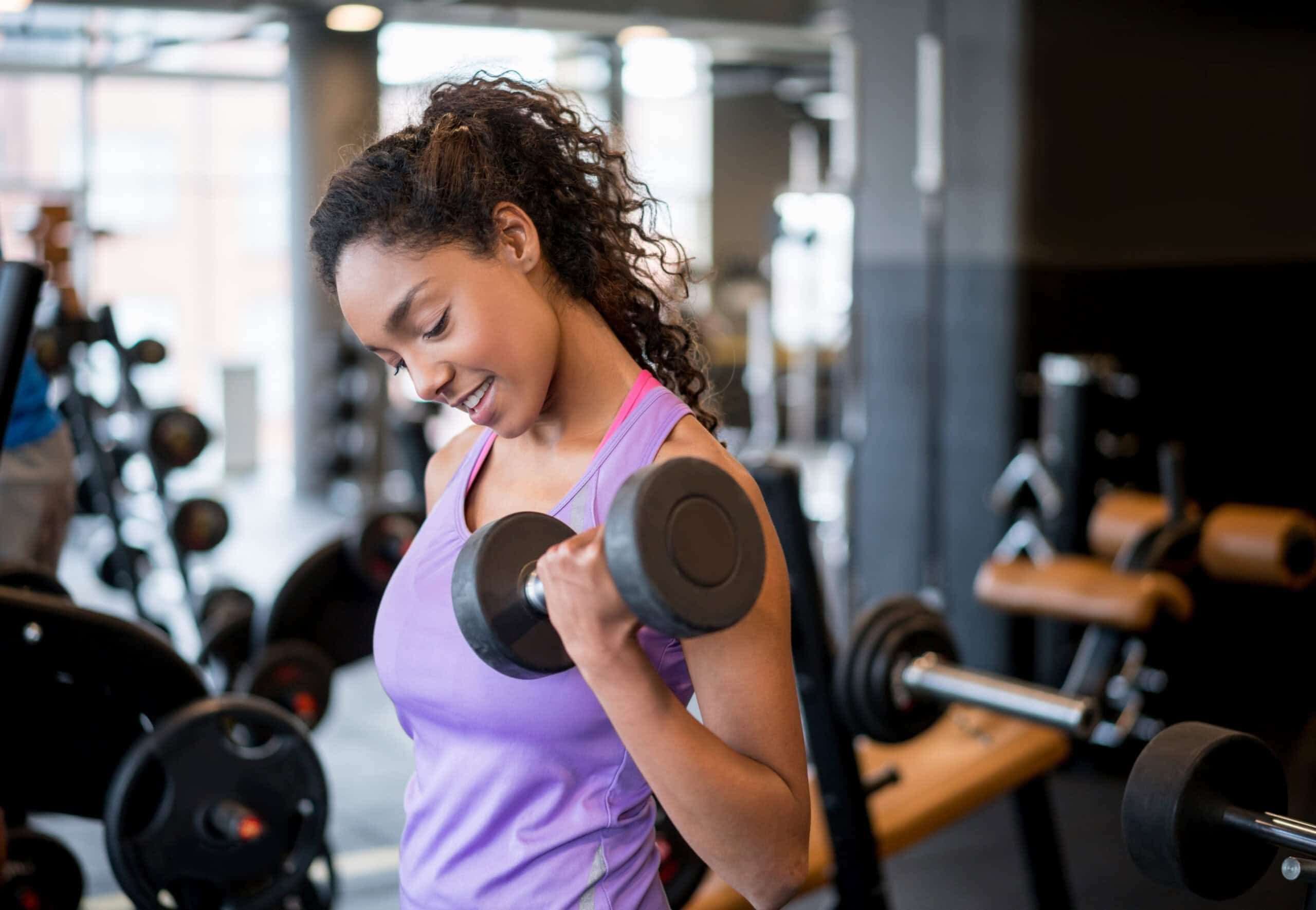
She recommends movements such as squats, lunges, and push-ups. Start with three sets of 10 repetitions each. If this feels too easy, do three sets of 15 or 20. Once body weight movements get too easy, you can incorporate small dumbbells, resistance bands, or even household items like milk jugs or tote bags filled with books for bicep curls and shoulder presses.
And don’t stress about the weekly workout splits you see influencers talk about. If you want to split your workouts into arm days and leg days, you certainly can, but Dr. Polinski shares that doing 15-20 minutes of full-body weight or resistance training a few times a week is enough to transform your health.
“If you can do two days of full body,” she says, “you’d get long-term benefits with metabolism, muscle mass, and bone density.”
Health in your hands
With fluctuating hormones month to month and drastic hormonal changes as women age, it can be hard to commit to a regular exercise routine—each day feeling different than the last, and each year bringing on a new normal. But incorporating a few days of weight training a week can have significant impacts on your health, as well as your psyche.
“There are a lot of changes that occur in our bodies as we age and transition through menopause, many of which may seem uncontrollable and discouraging,” Dr. Dickerson says. “Weight training allows us to take some of that control back.”
Have questions? A Women’s Health provider can help.
Schedule an appointmentPeople Often Ask
Yes. Weight training is safe for most women, including beginners and older adults. Starting with light resistance and proper form helps reduce injury risk.
Regular weight training can slow bone loss and help maintain bone density, especially before and during menopause. This lowers the risk of osteoporosis over time.
Yes. Strength training may reduce cramps and boost energy despite hormone changes during the menstrual cycle. Many women feel better with consistent exercise.
Yes. Weight training builds muscle, which burns more calories at rest than fat. Combining resistance training with cardio supports healthy weight loss.
Two to three full‑body sessions per week can improve muscle mass, bone health, and metabolism. Even short workouts can be effective.




