
Orthopedic Care
Want to learn more about this at Kettering Health?
What Is a Meniscus Injury?
A meniscus injury refers to a tear in the medial or lateral meniscus, which are cartilage structures that cushion and stabilize the knee.
These tears can be caused by a sudden rotating movement while bearing weight, such as when twisting the upper leg while the foot stays in one place during sports and other activities. Tears can also be degenerative as the meniscus weakens with age and repetitive activities.
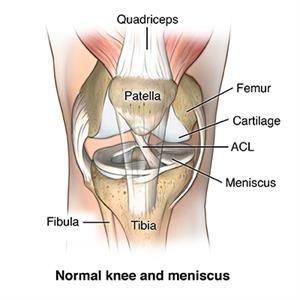
Symptoms of a Meniscus Injury
The most common symptoms of a meniscus injury are
- Catching, clicking, or locking in the knee
- Less range of motion
- Pain, especially when holding the knee straight
- Swelling and stiffness
- Weakness or instability in the knee
How Is a Meniscus Injury Diagnosed?
To diagnose a meniscus injury, a healthcare provider will do a thorough review of your medical history and perform a physical exam. You will also need imaging, such as
- Arthroscopy: A minimally invasive procedure to assess the conditions of a joint
- MRI: To evaluate tendon damage
- X-ray: To look for bone issues
Treatments for a Meniscus Injury
Treatment is dependent on your symptoms, age, general health, and severity of the injury. For mild injuries, treatment may include
- Compression
- Medication to relieve pain and reduce inflammation, such as ibuprofen
- Physical therapy
- Resting, icing, and elevating the knee
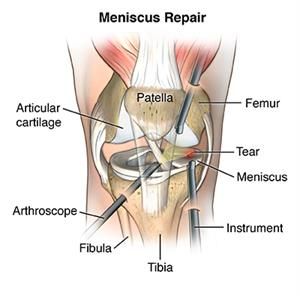
More severe meniscus injuries may require arthroscopic surgery, a minimally invasive procedure. During this procedure, small incisions are made in the knee, then an arthroscope, a small tube with a camera, is inserted into the joint. Surgeons can then visualize the tear and repair it.
Patients typically go home on the same day as surgery and can expect to see improvements over the next several months, with the help of physical therapy.