



At a Glance
Q: Why does my heel hurt when I get out of bed?
A: Morning heel pain is often caused by plantar fasciitis, an inflammation of tissue under your foot. Learn what triggers it and how to find relief.
- Pain usually starts near the heel.
- Try ice, orthotics, and gentle stretches.
- Severe cases may benefit from radiation therapy.
For many people, the first steps out of bed are the worst. A sharp, stabbing pain shoots through the heel or along the bottom of the foot—and often lingers throughout the day. This common condition, called plantar fasciitis, affects about 1 in 10 people and can make even simple movement painful.
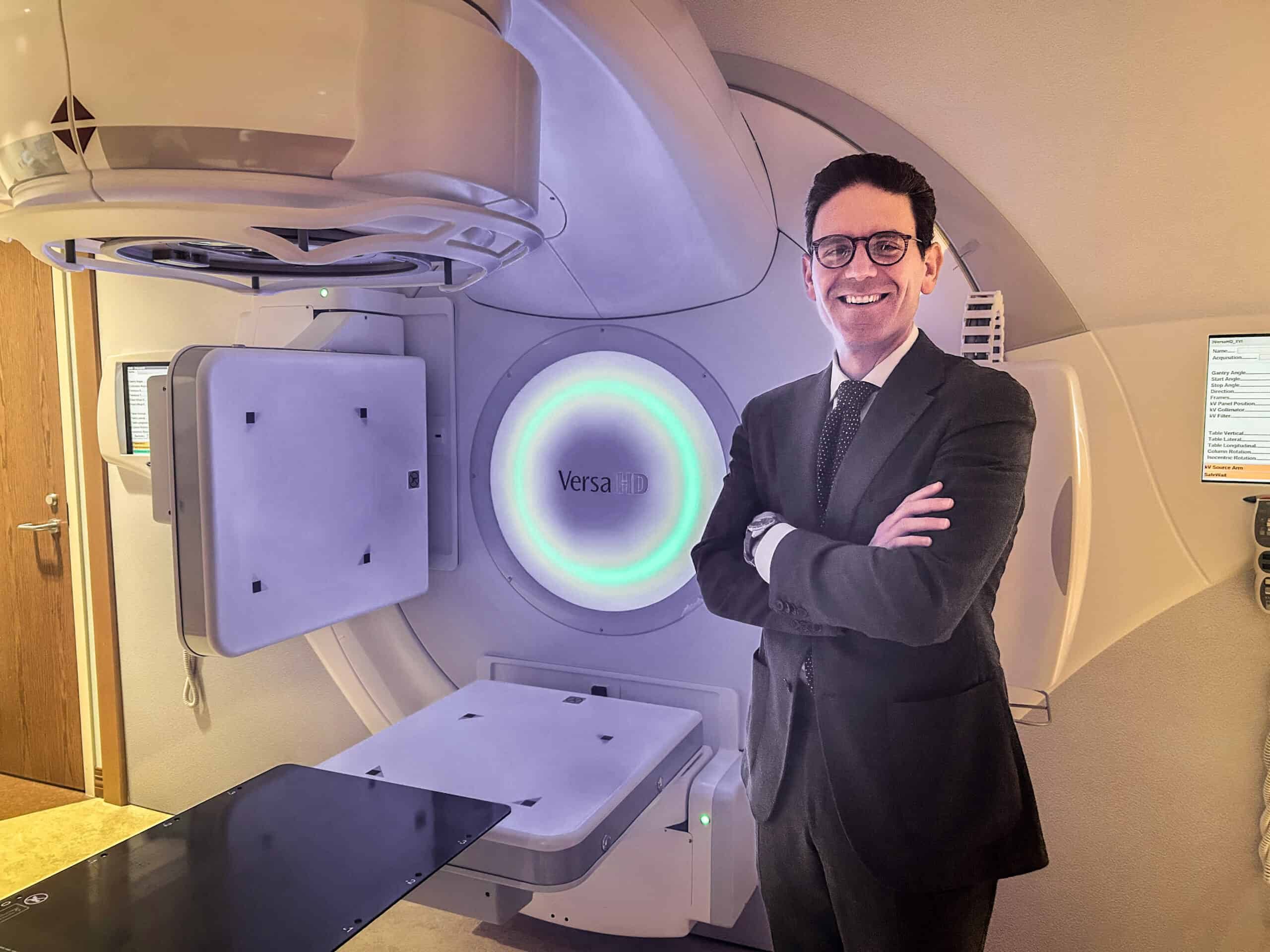
“Plantar fasciitis can be incredibly disruptive,” says Dr. Anthony Paravati, executive medical director of Oncology and chief of Radiation Oncology. “For some patients, it’s a nuisance. For others, it can significantly interfere with daily life.”
While radiation therapy is most often associated with cancer care, radiation oncologists also use very low doses of radiation to treat certain non-cancer conditions. One of those is chronic plantar fasciitis, a painful inflammation of the tissue that supports the arch of the foot.
Treatment typically focuses on rest, stretching, orthotics, and other conservative measures. But for patients who don’t find relief, Dr. Paravati and his team offer an option that may come as a surprise: low-dose radiation therapy.
Why does my heel hurt?
Your heel might hurt from swelling in your plantar fascia, a thick band of tissue that runs along the bottom of your foot, connecting your heel to your toes. Repeated stress in the tissue can cause inflammation and pain, which is most noticeable in the morning or after sitting for a while, after the fascia hasn’t been used and has grown stiff.
Athletes are prone to plantar fasciitis, but it’s just as common in non-athletes—especially women between 40 and 60, people with higher body weight, and those who spend hours standing at work.
What are ways to treat plantar fasciitis?
For most people, symptoms improve with simple measures:
- Rest and ice
- Stretching exercises
- Supportive shoes or inserts
- Over-the-counter pain relievers
When these aren’t enough, doctors may recommend physical therapy or steroid injections. Surgery is rare but sometimes necessary for severe cases.
How does low-dose radiation therapy treat plantar fasciitis?
For those with chronic pain, or for those who aren’t candidates for surgery, Dr. Paravati points to a newer treatment option: low-dose radiation therapy.
Granted, it’s not typical to think of radiation when dealing with inflammation. But as Dr. Paravati explains, “Radiation therapy isn’t just for cancer anymore. We’re using very low doses of radiation to treat chronic inflammatory conditions like plantar fasciitis.”
Unlike cancer treatment, where radiation aims to destroy tumors, this therapy delivers tiny doses to the inflamed tissue to alter the immune activity in the area. This calms inflammation and helps the body heal.
“As the name implies, the dose is extremely low,” Dr. Paravati explains. “Patients often experience significant pain relief, and if needed, we can safely repeat the course.”
Studies show that about 70 to 80% of patients with chronic tendon pain find relief with low-dose radiation therapy, making it a good option when other treatments haven’t worked.
How safe is low-dose radiation therapy?
But is low-dose radiation therapy safe? Understandably, many patients ask this. Dr. Paravati is clear: the risks are very small.
“Because the dose is so low and the patients are typically middle-aged or older, the risk of long-term complications like second cancers is minimal,” he says. “We also use modern machines that spare the skin and don’t interfere with future surgeries like joint replacements.”
In Europe, low-dose radiation has been used for decades to treat plantar fasciitis and other inflammatory conditions. Even Olympic sprinting legend Usain Bolt went through radiation therapy to help him overcome chronic heel pain.
Who should consider low-dose radiation therapy?
Low-dose radiation isn’t for everyone. Dr. Paravati emphasizes that it’s not a first-line treatment.
“If you’ve just started having heel pain, we recommend stretching, orthotics, and physical therapy first,” he says. “But for patients who have tried injections, shockwave, even surgery and still struggle, this can be a game-changer.”
Kettering Health now offers this therapy through its radiation oncology program.
“We’ve just launched the service and already received referrals,” Dr. Paravati says. “It’s exciting to offer something new that can give patients their quality of life back.”
If chronic heel pain is limiting your daily activities, talk with your doctor about low-dose radiation therapy.
Want to know if low-dose radiation therapy is right for you? Talk to your doctor or make an appointment to find out.
Find a ProviderPeople Often Ask
Heel pain after waking is often due to plantar fasciitis, an inflamed band of tissue under your foot. It stiffens overnight, making the first steps painful.
Start with rest, ice, and gentle calf stretches. Supportive shoes or inserts can help reduce strain. Avoid walking barefoot on hard surfaces.
If pain lasts more than a few weeks or limits daily activities, see a doctor. Persistent symptoms may need physical therapy or advanced treatments.
It uses tiny doses of radiation to calm inflammation in the heel. This option is for chronic cases that don’t respond to other treatments.
Yes. The dose is extremely low, and modern techniques minimize risk. It’s been used safely in Europe for decades to treat chronic heel pain.



