



Heart and Vascular Care
Want to learn more about this at Kettering Health?
At a Glance
Q: How does Pulsed Field Ablation (PFA) treat atrial fibrillation?
A: PFA uses short electrical pulses to destroy unhealthy heart cells that trigger AFib. It’s precise, safe, and offers faster recovery than traditional ablation. Read on for what to expect before and after the procedure.
- AFib is an irregular heartbeat affecting millions of Americans.
- PFA is designed to treat AFib without harming surrounding areas.
- Recovery is quick—most patients go home the same day.
About five million Americans have Atrial Fibrillation (AFib). Kettering Health now offers Pulsed Field Ablation (PFA), a minimally invasive treatment for this heart condition, which causes an irregular heartbeat.
Dr. Zubin Agarwal, a cardiac electrophysiologist, explains what PFA is and what patients can expect from this treatment.
What is Pulsed Field Ablation?
PFA uses electrical pulses to treat abnormal and unhealthy cells in the heart responsible for AFib. Dr. Agarwal explains that traditional ablation methods for treating AFib include heating or freezing the damaged tissue. However, these techniques aren’t as precise as PFA.
“It’s one of the safest techniques that’s ever been developed for treatment of atrial fibrillation,” Dr. Agarwal says. “It’s also faster than any of the other techniques that are currently available.”
What can patients expect?
Before the ablation, Dr. Agarwal uses a mapping catheter to pinpoint the areas of the heart that are causing AFib in the patient. The catheter detects healthy and unhealthy signals, highlighting problem areas. He explains that unhealthy signals are usually caused by scar tissue or fibrosis.
“If there are unhealthy signals in the left atrium,” Dr. Agarwal says, “we tend to focus our time in those areas.”
PFA is a minimally invasive procedure that usually takes about three hours. The patient is asleep and should feel no pain upon waking up. Because it is minimally invasive, the recovery process is quick.
“We expect them to go home the same day,” Dr. Agarwal explains.
Patients can then return to normal activities the following day.
Impact on the community
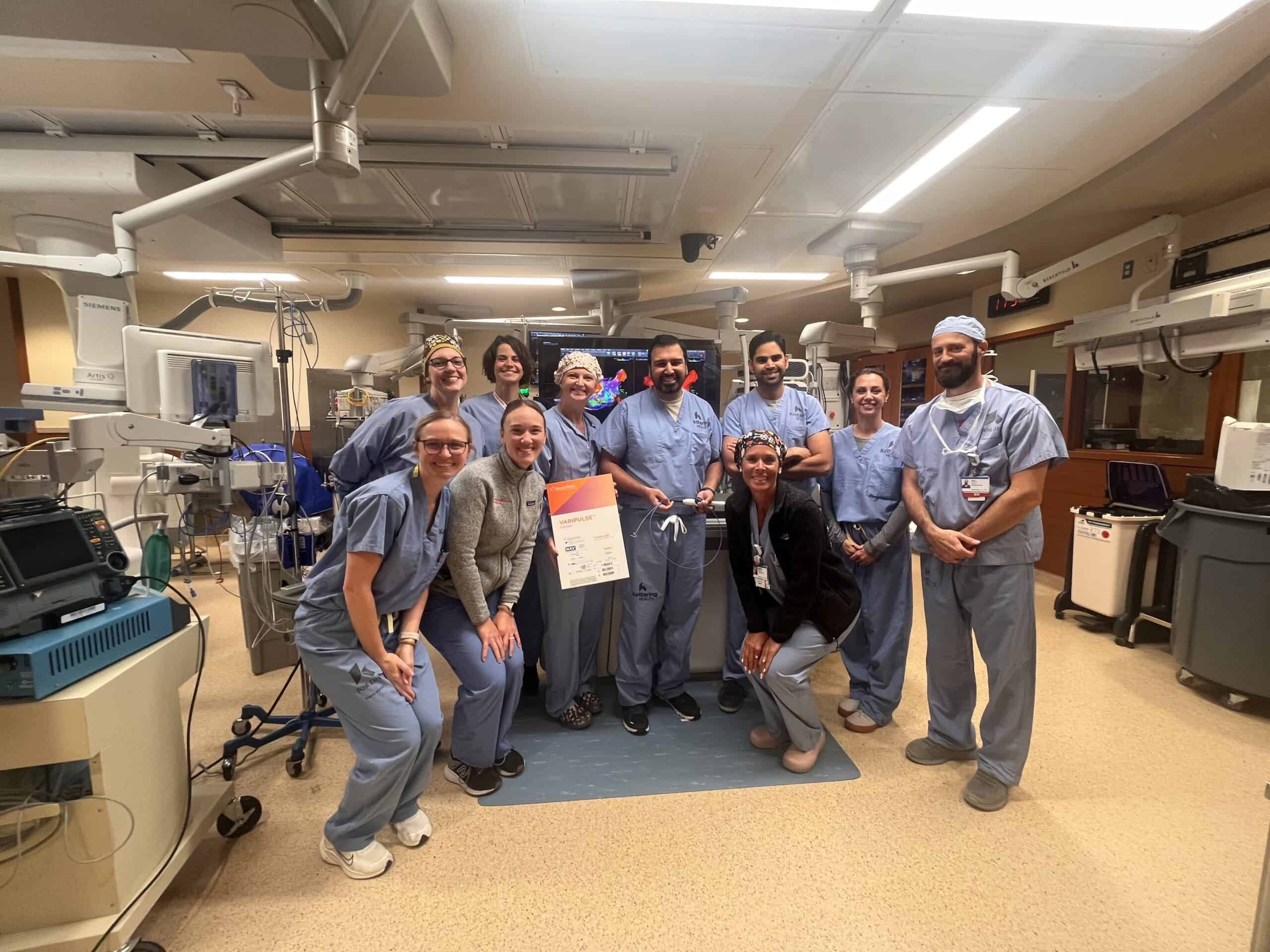
Dr. Agarwal recently treated his first patient with this procedure, and he is excited to offer this new technology to the community.
“Kettering Health is on the cutting edge of therapy for atrial fibrillation,” he says. “We can do operations for patients safer and faster than ever before.”



