


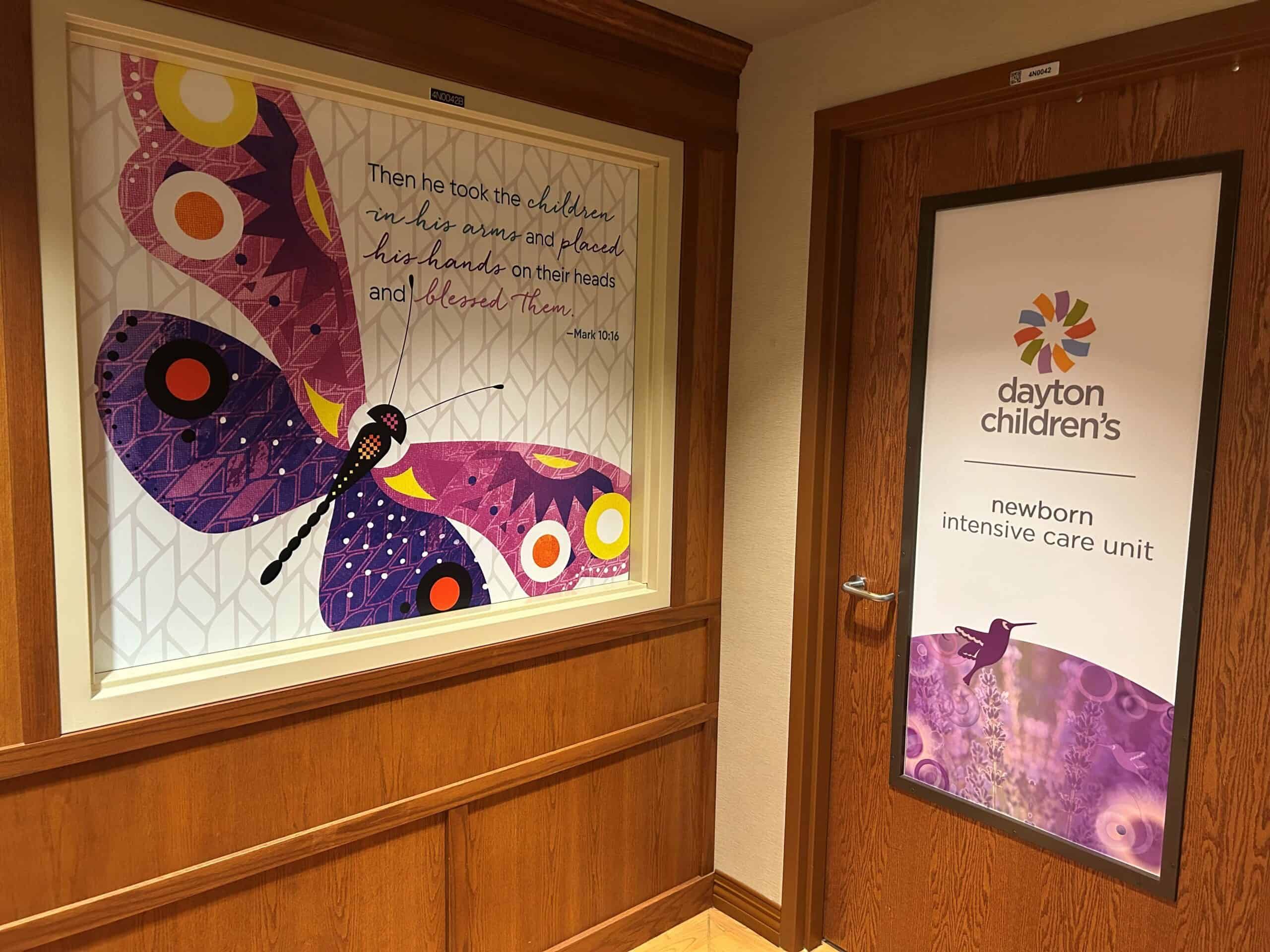
Few parents expect their newborn’s first days of life to be spent in a newborn intensive care unit (NICU). Instead of bringing their baby home, they find themselves navigating medical updates, treatment plans and an uncertain path forward.
At Dayton Children’s NICU at Kettering Health Main Campus, compassion rounds create dedicated time to support families through the emotional and spiritual challenges that often accompany a NICU stay.
Launched in October 2024, the monthly initiative brings together a neonatologist and chaplain to meet with families, discuss how they are coping and connect them with emotional, spiritual and practical support resources.
For Dr. Angela Isbel, the neonatologist who introduced the program after seeing it used at a previous hospital, the distinction between traditional rounds and compassion rounds is straightforward.
“The morning rounds are all about the baby, how things have been going and what the plans are for the next days or weeks,” Isbel said. “But our afternoon rounding time is a time to check in with the parents to see how they’re handling the NICU.”
Compassion rounds take place in the Level III-Dayton Children’s Hospital Newborn Intensive Care Unit at Kettering Health. The unit is a hospital within a hospital model by Dayton Children’s Hospital and Kettering Health in collaboration with Cincinnati Children’s, bringing together specialized expertise to care for premature and critically ill newborns.
“We know that the NICU is a really stressful environment, and we want to make sure that we’re supporting the parents as well as taking care of the baby,” Isbel said.
During compassion rounds, Isbel and a chaplain visit families and ask open-ended questions about how they are coping with the unexpected realities of a NICU hospitalization. Conversations often focus on stress management, support systems, self-care and the practical challenges families face while balancing hospital visits with responsibilities at home.
The rounds complement the clinical care taking place in the NICU by addressing the emotional, spiritual and practical needs families may experience during an extended hospital stay, reflecting a whole-person approach to care.
“Most families are not expecting it,” Isbel said. “When they find out they’re having a baby, everybody’s excited and planning for everything to go fine. So, we’re checking to see how they’re coping with that change in plans.”
The initiative also gives families an opportunity to connect with chaplaincy services before they face a crisis.
“I was hoping for more chaplain involvement in the unit,” Isbel said. “These families are going through a lot and could use some support day-to-day as they sit with their baby.”
For Dario Maldonado, a chaplain at Kettering Health Main Campus who regularly participates in compassion rounds, the visits provide an opportunity to shift the focus from clinical care to the people experiencing it.
Maldonado said parents are often surprised when caregivers use the conversations to focus on their well-being rather than medical updates about their baby.
“It’s a stressful moment,” Maldonado said. “The ability to share yourself and say, ‘Hey, we are here for you. Your story is unique. We are here to support you.’ “
Families often continue to remember those interactions long after they leave the hospital.
According to Carrie Bernkopf, unit-based specialist and educator for the NICU, parents frequently mention compassion rounds during follow-up calls after discharge, particularly those whose babies spend extended periods in the NICU.
“There’s so much information that comes at them throughout their NICU stay that is very medical-based focused,” Bernkopf said. “To have somebody come in and talk with them specifically about how they’re feeling and help them process things and provide resources for them on more of the emotional or spiritual side of things, I think is something that’s been value added.”
Bernkopf said families with longer hospital stays often experience what she describes as “NICU fatigue,” making those conversations especially meaningful as the stress and uncertainty of weeks or months in the hospital begin to accumulate.
For Isbel, the purpose of compassion rounds ultimately comes back to a principle that guides her work as a neonatologist.
“As pediatricians, we care about this because we know that the well-being of the child is directly related to the well-being of the parent,” she said. “We want to make sure our parents are in the best place that they can be to help their little ones.”