



Orthopedic Care
Want to learn more about this at Kettering Health?
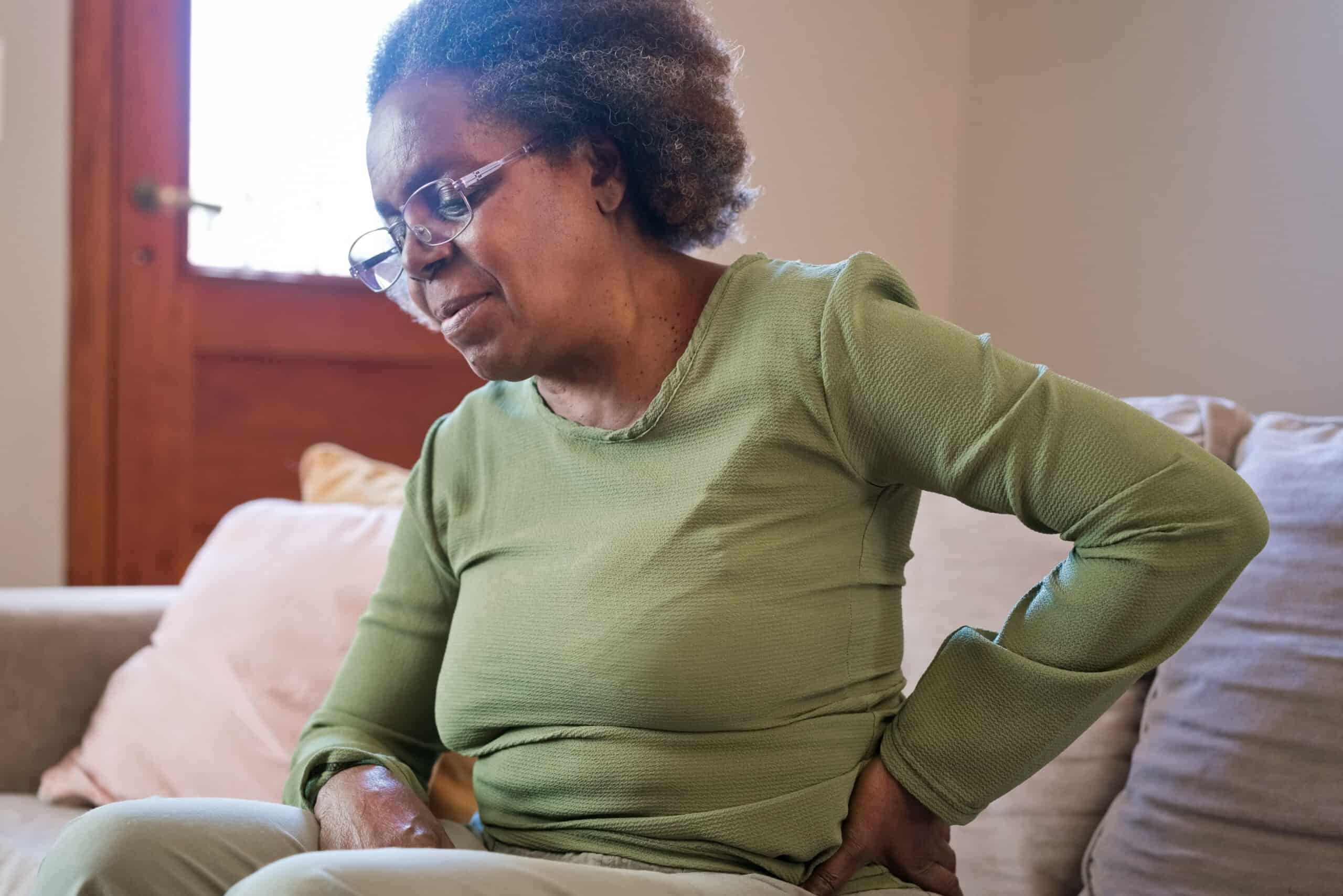
Prolonged sitting is bad for your cardiovascular health, but did you know it can also impact your hip health, leading to tight hips and pain?
Dr. Zachary Miller, an orthopedic surgeon, explains what causes tight hips and how this can lead to pain in the rest of your body.
What causes hip pain?
Sitting in the same position for long periods, like at your office job, watching TV, or on a long car trip, can cause tightness in your hip flexor muscles.
Primarily, sitting contracts the iliopsoas muscle, the largest hip flexor muscle. Without this muscle—which is actually a system of smaller muscles that includes the psoas major (connects the spine to the femur) and the iliacus (connects the pelvis to the femur)—you wouldn’t be able to walk or sit up straight.
Tightness in the iliopsoas can cause pain and limited range of motion. And because of its proximity to other large muscle groups, pain in this muscle can cause problems beyond the hips.
Other issues caused by tight hips
We all know the hip bone is connected to the backbone. But the hip muscle (the iliopsoas) is also connected to the back muscle.
“That muscle, particularly, is important,” Dr. Miller says, “because it attaches to the lumbar spine, so it can cause a lot of issues with back pain.”
Additionally, the iliopsoas extends over the pelvis and may cause or worsen pelvic floor dysfunction if the hip flexors are too weak or too tight.
Tight hip flexors are also associated with weakened core muscles, which can lead to increased strain and discomfort in the back and hips.
How to prevent hip pain
Tight hips manifest differently in everyone, but Dr. Miller says decreased range of motion and pain are common symptoms. And if ignored, it can lead to further complications.
“When you try to do activities that stretch [chronically tight hip flexors], it ends up putting more force across the joints, which is going to increase the risk of arthritis or degeneration of the joint,” Dr. Miller says.
While arthritis is irreversible, Dr. Miller shares that it’s never too late to focus on hip health and regain range of motion. He recommends stretching and exercises such as yoga and pilates to maintain hip mobility and build core strength.
Have questions? An Orthopedic and Sports Medicine provider can help.
Find a provider



