Breast Health
Want to learn more about this at Kettering Health?
Abby Eller saw the notification on her phone. “You have a new test result on MyChart.”
As a nurse, she knows patients often get test results before their follow-up appointments. She recommends they not look until they’re with their care team.
But Abby thought back to the shower when she felt a lump in her right breast. She thought about how her mom faced breast cancer 20 years earlier.
She opened the app and read “carcinoma.”
“I know this means cancer,” Abby said. “But it was just so shocking to me that the very first thing I did was Google ‘Does carcinoma mean cancer?’ All of my knowledge went out the window when it came to myself.”
Abby called her mom, Kathy, who took the day off in anticipation of Abby’s test results. She lives half an hour away, and when Abby croaked out “Mom…,” Kathy arrived at her front door in 31 minutes.
Motherhood
Abby’s medical team, which included Dr. Rebecca Tuttle, a surgical oncologist, laid out her treatment plan: 12 rounds of chemotherapy followed by a lumpectomy.
“They said the tumor was very small,” Abby said, “and if the chemo shrank it, they’d have to take out very limited tissue.”
But first, they wanted to biopsy her left breast and test her BRCA (BReast CAncer) genes, which indicate a genetic risk for breast cancer. Women who test positive for BRCA1 and BRCA2 mutations are more likely to develop breast cancer in their other breast and again after their first diagnosis.
At work, on her last day before taking time off for chemotherapy, Abby received another MyChart notification. In the break room at Kettering Health Main Campus, she read that she had another primary tumor in her left breast.
She got a call from Dr. Tuttle.
“I already saw the biopsy result,” Abby told her. “I already cried about it.”
But Dr. Tuttle wasn’t calling to discuss the biopsy results. She called to tell Abby her BRCA test came back positive. And that a lumpectomy was no longer on the table.
Abby would need a double mastectomy.
Her world slowed. This was a harder pill to swallow than the cancer diagnosis.
“Working in the NICU with moms and helping them breastfeed was always the best part of my job. It was the part where moms got to be moms, and their kids weren’t sick babies. I always adored that bond,” Abby said. “So to have that option taken away from me was just very hard.”
Dr. Tuttle apologized. “You’re allowed to hate me,” she told Abby, “but I have to save you.”
Sisterhood
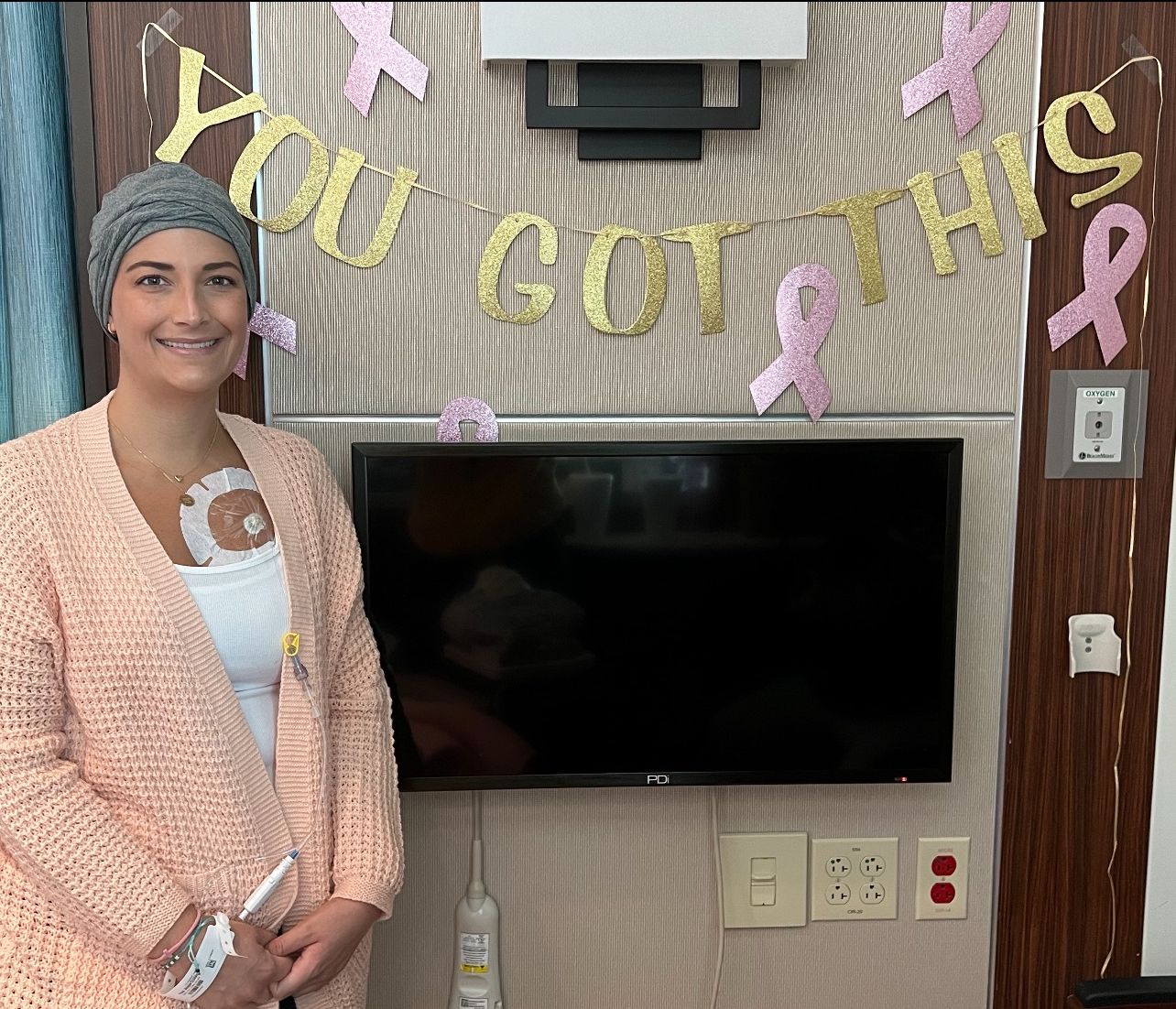
Before surgery, Abby had 12 rounds of chemotherapy. She had four nurses during this time.
“The first one I had, her name was Denise,” Abby said. “She was probably my mom’s age.”
Denise was Abby’s nurse for her first six treatments, and the two grew comfortable with one another. Knowing Abby was a nurse, Denise went into detail for each step of the treatment, explaining to Abby exactly what was happening and what would happen next. She also built a rapport with Abby’s parents, who accompanied her to her appointments.
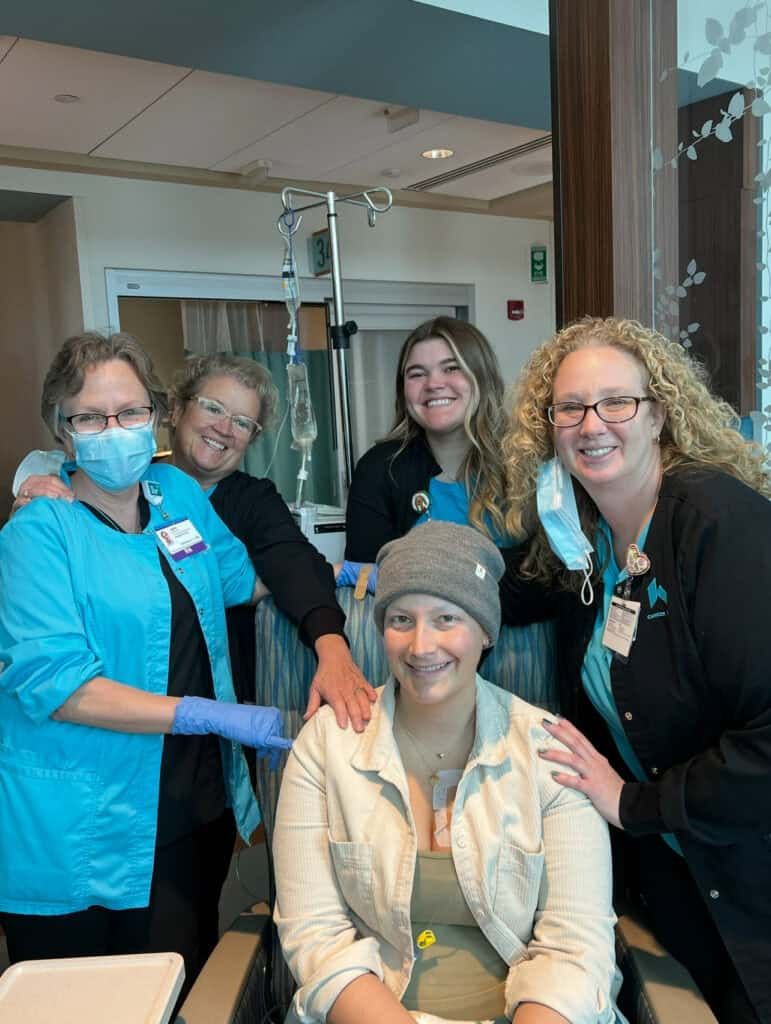
“She just felt very motherly,” Abby said. “The type of person that makes you feel comforted when you don’t feel well.”
Abby’s second nurse was Morgan. She often complimented Abby’s nails, which Abby takes pride in painting, and the two continued to bond over normal things during an otherwise abnormal time in Abby’s life.
The third nurse already knew Abby. But the last time she saw her, Abby was in middle school.
“She was actually one of my parents’ neighbors,” Abby said. “Her name was Jane.”
At the end of her chemotherapy treatment, Abby received the drug doxorubicin (Adriamycin), often referred to as “The Red Devil” because of its red color and strong side effects.
“My mom remembered it,” Abby said, “and as soon as they started my first dose, she just started sobbing.”
Her fourth nurse, Francie, told her she had another name for the infamous drug—“Jesus juice. Because it’s going to save your life.”
Womanhood
After chemotherapy, Abby had her double mastectomy and six months of immunotherapy.
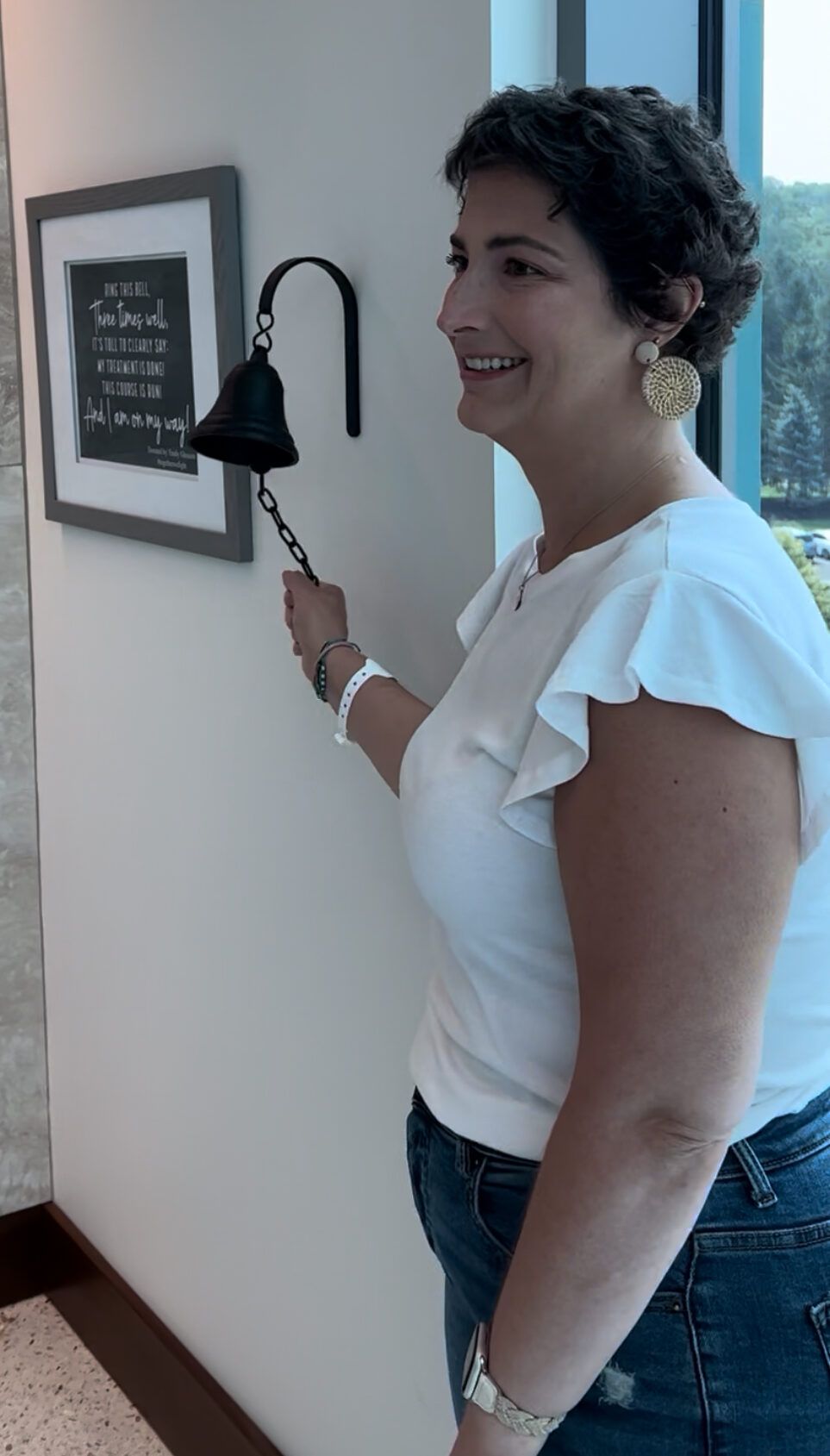
On her last day of immunotherapy, Abby went down to the infusion floor to ring the bell that signals the end of a patient’s cancer treatment. Denise was working that day and watched with Abby’s friends and family.
After leaving the infusion floor, Abby and her mom went to First Watch.
She knows it was hard for Kathy to watch her fight the same diagnosis she had. But having her by her side throughout it all made a world of difference to Abby. She still had some reconstructive surgeries ahead of her, but the hardest part was over. The two could finally put this behind them.
They reflected, cheered to their health, and ate brunch.