
Urology
Want to learn more about this at Kettering Health?
At a Glance
Q: What is TULSA treatment for prostate cancer, and how can it help reduce side effects?
A: TULSA is a minimally invasive procedure that uses MRI‑guided ultrasound to destroy targeted prostate cancer tissue with fewer side effects than surgery or radiation, with more details covered in the article.
- Article explains procedure steps and recovery expectations
- MRI‑guided ultrasound targets only affected prostate areas
- Often used for intermediate‑risk prostate cancer
Approximately one in eight men will develop prostate cancer during their lifetime, according to the American Cancer Society, with typical treatments like surgery and radiation therapy often producing unpleasant side effects.
But now, there’s a new treatment option.
Kettering Health now offers transurethral ultrasound ablation (TULSA), a new option for those with intermediate risk prostate cancer.
Dr. Daniel Pucheril, a urologist, says, “I call it the Goldilocks. It’s the balance between the right amount of treatment and minimizing or balancing harm.”
How does TULSA work?
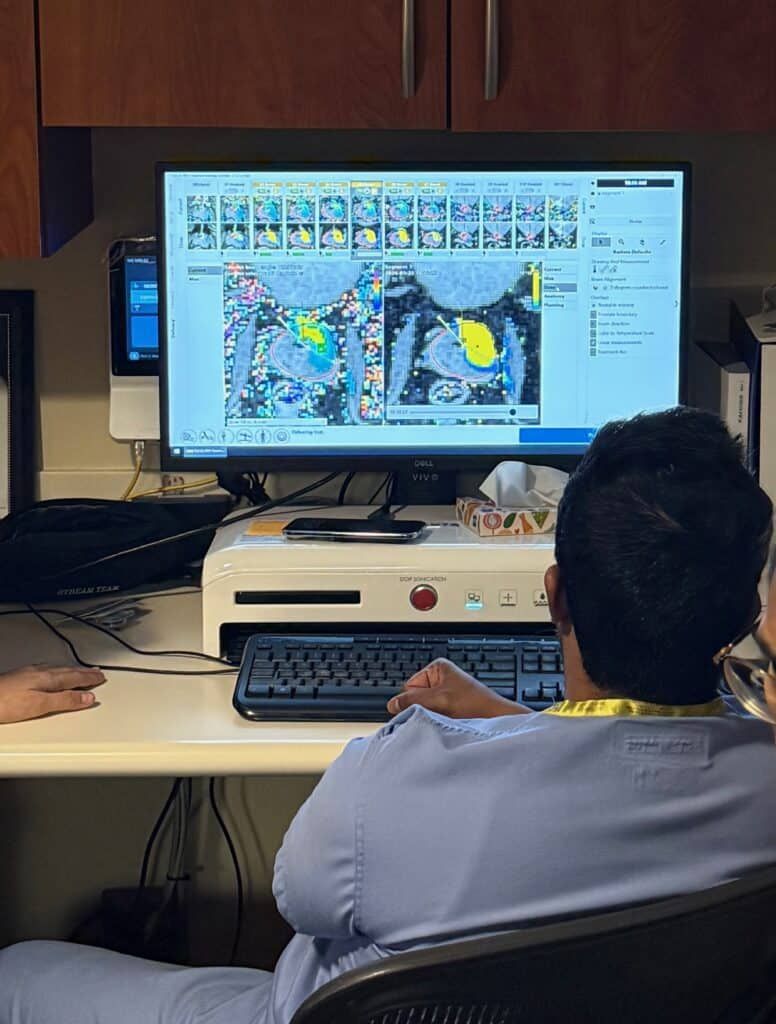
TULSA is a minimally invasive procedure that uses MRI imaging and transurethral ultrasound to target and destroy cancerous prostate tissue. By using MRI and ultrasound, it focuses on specific areas rather than the entire prostate, allowing for greater accuracy and fewer side effects than traditional radiation therapy or surgery.
It’s most often used to treat intermediate risk prostate cancer (cancer that is confined to the prostate and has not spread).
“There’s a cohort of men with what’s termed ‘intermediate risk prostate cancer,’” says Dr. Pucheril. “For whom surveillance is probably not the right fit, but neither is necessarily surgery or radiation.”
It can also be a good option for patients who have undergone radiation therapy for prostate cancer, but the cancer has returned without spreading to other parts of the body, as well as patients with an enlarged prostate.
What can patients expect?
Before the procedure, patients are instructed to follow a prescribed bowel prep routine, which their care team will explain in detail.
TULSA is performed as an outpatient procedure with general anesthesia. After the patient is sedated, an ultrasound device is inserted into the urethra and a cooling agent is inserted into the rectum. The urologist will then use MRI imaging along with the ultrasound device to precisely target and ablate (heat up) the cancerous tissue and destroy it.
Patients are typically able to go home the same day; however, catheters may be needed for up to two weeks. Minimal pain is expected, but most patients feel well enough to be up and walking the day after the procedure.
Diagnosed with prostate cancer or an enlarged prostate? Speak with your healthcare provider to determine if TULSA is right for you. Please note that insurance coverage is limited to Medicare at this time. Speak with your insurance provider to determine your coverage.
Curious about Urology care at Kettering Health?
Learn more about our Urology servicesPeople Often Ask