



Brain and Spine Care
Want to learn more about this at Kettering Health?
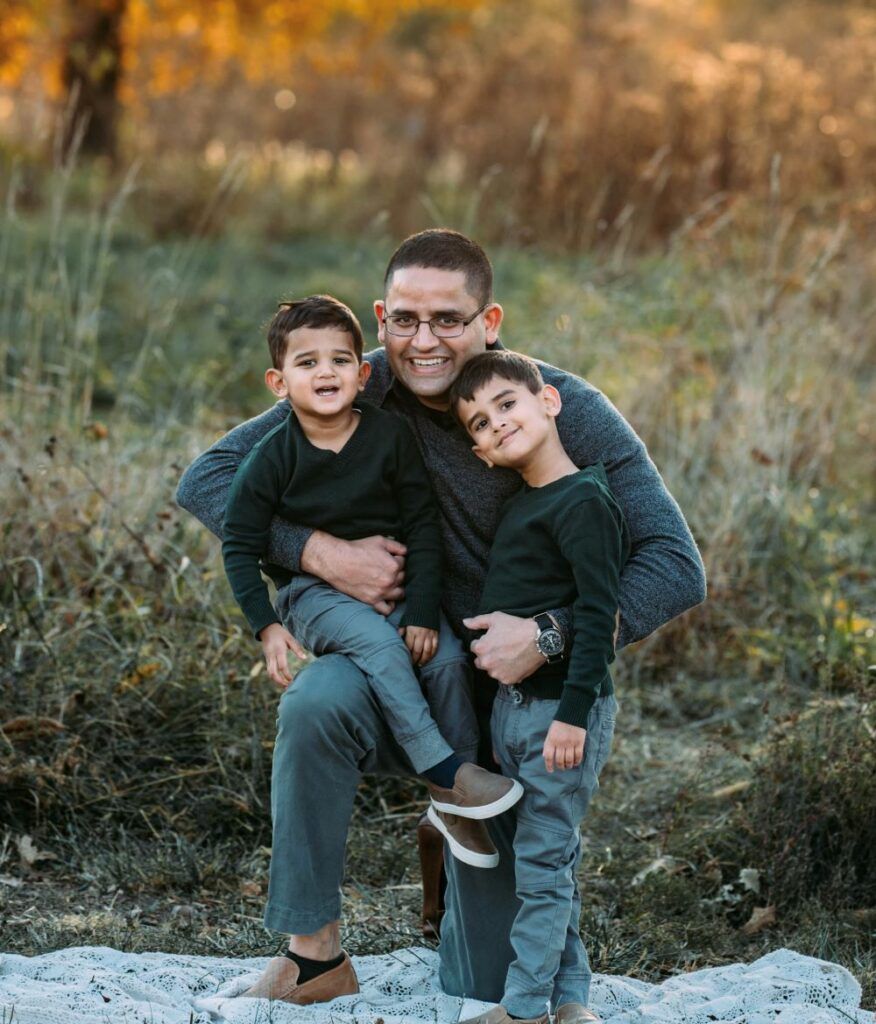
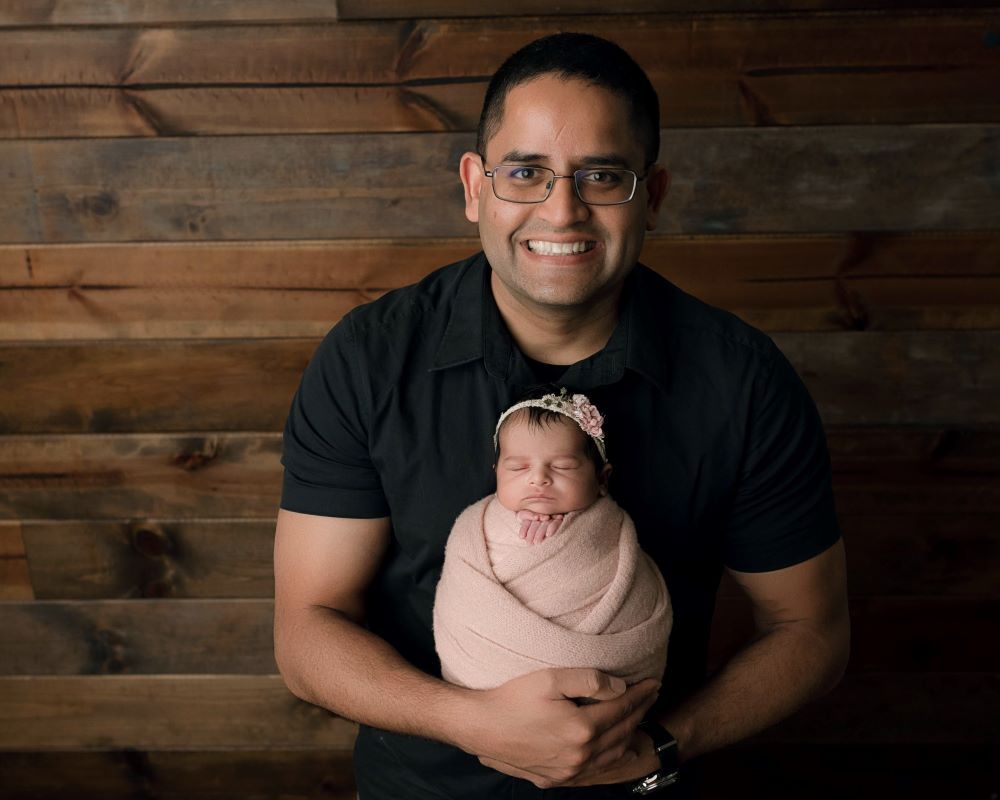
Get Dr. Akil Patel talking about his kids—Riyan, Kalen, and Navia—and you’ll hear his fatherly pride. He leans forward, grins ear to ear, and has countless pictures on his phone. Get him talking about the human brain, and you’ll hear his child-like wonder. He explains it using his hands, eyes widened behind his thin black-rimmed glasses, and has stories galore on his mind.
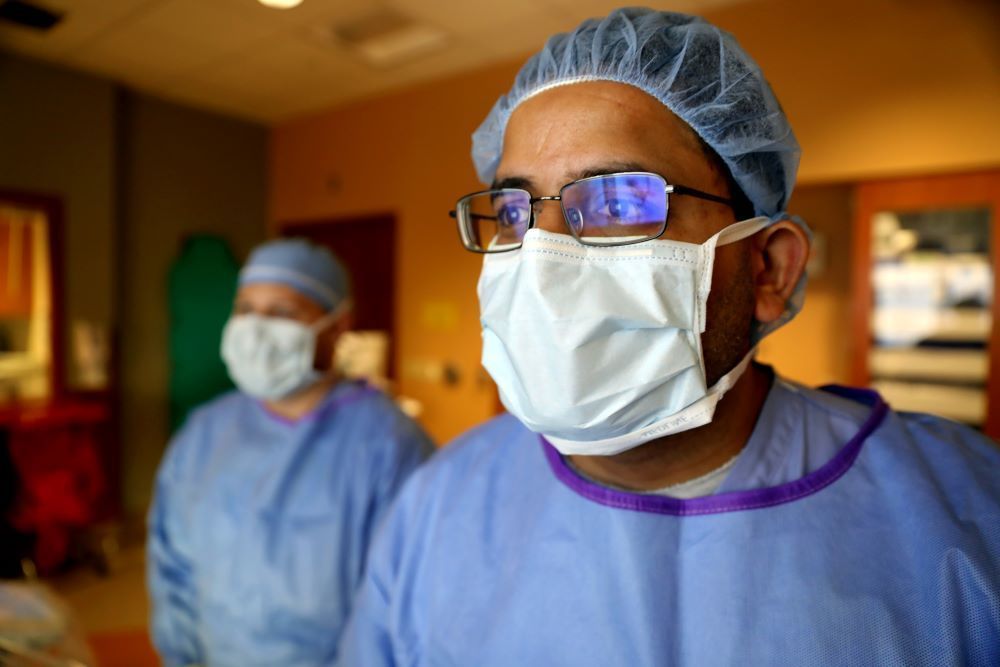
The 37-year-old vascular neurosurgeon knows a thing or two about the three-pound organ between our ears. From residency at the University of Maryland to training at Johns Hopkins and Seattle’s Swedish Neuroscience Institute, he has committed all of his brain to understanding ours.
He even calls the brain “beautiful.”
But when he shares one story in particular, he leans back, rests his hands in his lap, and draws a deep breath before he starts with “It’s the most complicated case I’ll ever do.”
Calling Dr. Patel
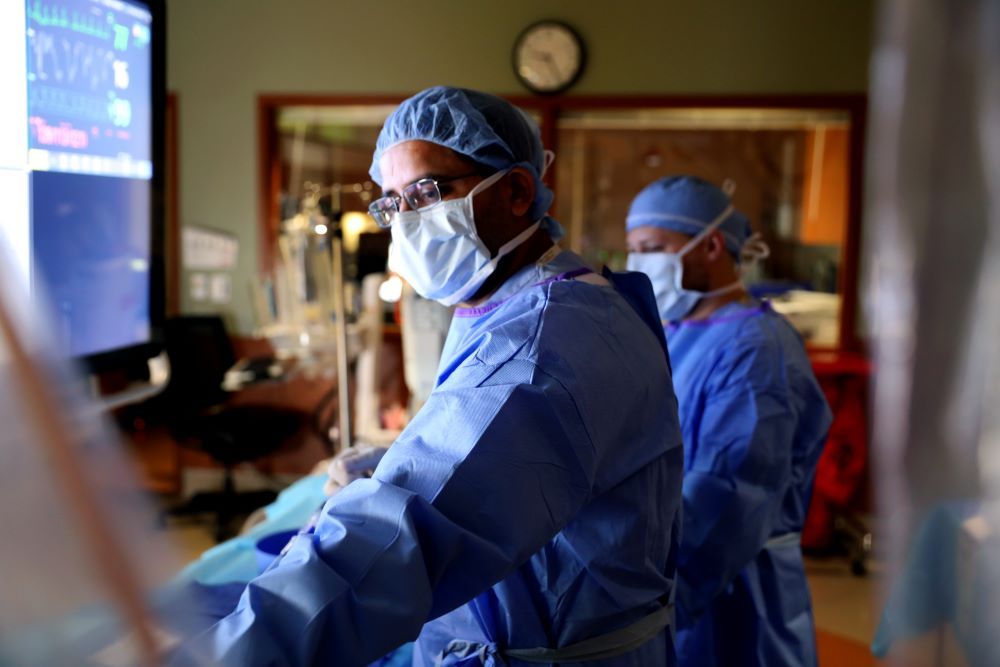
Dr. Patel treated his first patient at Kettering Health on August 10, 2018. It was his fourth day. The young woman had a brain bleed, and her brain’s arteries constricted. She was dying. But he caught it early, treated it urgently, and she lived.
Since then, half of his surgeries are, what he calls, general neurosurgery. The other half are the “vascular part of it. So a lot of brain aneurysms, strokes, and abnormal blood vessel tangles.” His patients range from teenagers to adults, but most are 50 years old or older.
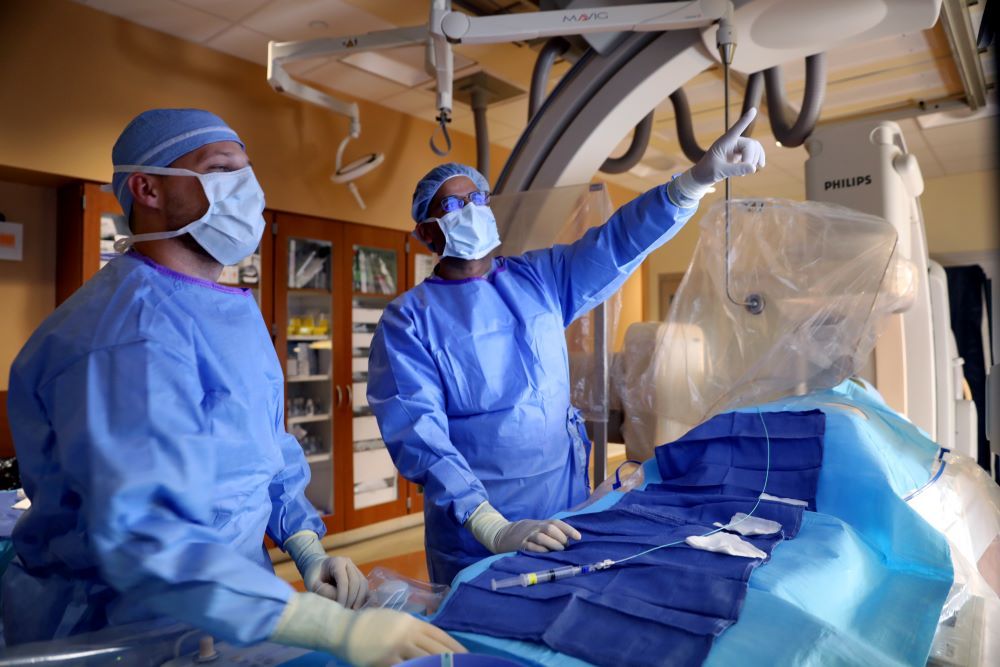
No two brains he operates on are the same. “Every brain has its own roadmap,” he says. To navigate those roadmaps, he’s trained as an endovascular neuroradiologist. Like a cerebral cartographer, he maps the brain’s blood vessels using images called angiographies. He’s also trained as a complex cerebrovascular neurosurgeon, operating on the brain like a mechanic—and its 400 miles of blood vessels.
He talks about the brain with a warm familiarity, like he does his hometown of Cleveland. He almost makes the brain seem less intimidating, except for the fact that, as he says, there’s “so much unknown.”
Dr. Patel’s familiarity with the brain and its blood vessels put him on Dr. Robert Lober’s radar. Dr. Lober, a pediatric neurosurgeon at Dayton Children’s, and his colleague Dr. Christopher Gordon, a craniofacial surgeon, were preparing to do what seemed impossible: separate three-year-old Pedro and Augusto, craniopagus (conjoined at the head) twins from Guatemala.
Unlike other craniopagus twins, Pedro and Augusto lived conjoined at the tops of their heads; one was rotated 90 degrees; and they shared major blood vessels. Their situation was, by all accounts, rare.
Unfortunately, of the equally rare attempts to separate craniopagus twins, safe separations are the rarest.
Drs. Lober and Gordon saw a different story for Pedro and Augusto. But first, they needed to know: Was it possible to separate the boys’ shared blood vessels?
In November 2020, on his way home from Kettering Health Main Campus, Dr. Patel answered his phone. It was Dr. Lober.
Anxious about the impossible
There’s a reason for the saying “At least it’s not brain surgery.” It puts a difficult task into perspective. After all, what’s more daunting than brain surgery? Brain surgeons, though, have no such sayings.
So when a plan was hatched to separate twins conjoined at the head—and the veins they shared in their intertwined brains—the only phrase available is “impossible.”
Dr. Patel had exposure to rare pediatric cases at Johns Hopkins. But looking at MRIs and CT scans from Guatemala with Dr. Lober, Dr. Patel wrestled to make sense of what he saw. “I don’t think this is doable” he first thought. But after hours of deliberating, Dr. Patel envisioned their next move. “Maybe there’s a shot,” he told Dr. Lober. “Let’s do an angiography to see.”
Driving home, Dr. Patel mentally cycled through the remarkable images. “Can I even really help with this?” he wondered.
He called his wife, Megha, confiding the strain between his willingness and uncertainty. A pediatric case would take him out of his comfort zone, let alone these two connected toddlers. But it involved the brain’s blood vessels, “which is what I do.”
He knew Pedro and Augusto needed this. Of the 50 or so craniopagus twins born each year, only 30% survive beyond a few months. The boys had already beaten those odds. But between developmental delays and organ issues, their odds dwindled.
“Sit down. Take some time,” Megha told him.
So he did. He studied. He called mentors. And he exhausted the available medical research.
Moving forward would hold no guarantees. Every second of operating on the twins would take the team into uncharted territory. The brain already is a Wild West “full of unknowns.” What about two of them at the same time?
But Dr. Patel’s research swayed him enough to call Dr. Lober. “I think we can do this.”
Beyond expertise
Dr. Patel handpicked four Kettering Health radiology technologists to join him. Over the next year, the Kettering Health team joined the already-busy Dayton Children’s team to amass supplies, create countless protocols, and even rehearse navigating Dayton Children’s elevators, hallways, and operating rooms (OR).
“At any one time,” Dr. Patel recounts, “there would be 30 to 40 people in the OR. This was collaboration at a whole new level.”
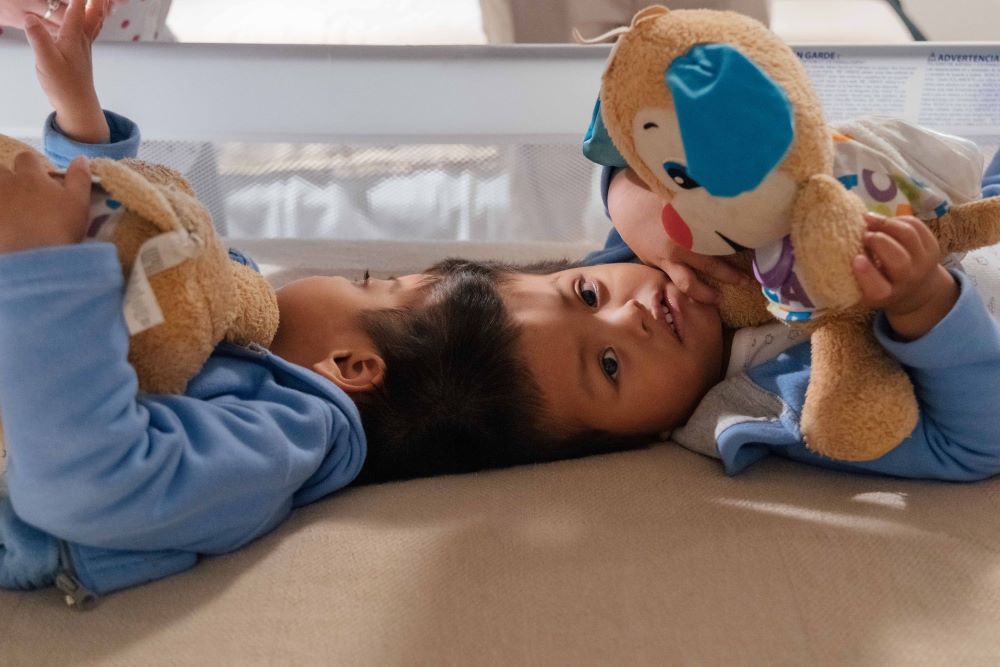
The boys landed in Dayton with their mother in July 2021. And that November, they were wheeled into the OR for surgery. The first task: clamp a blood vessel and, through angiography, see if the blood rerouted as anticipated. This would green light moving forward—or bring everything to a stop.
Of the cerebral roadmaps Dr. Patel had seen, “I’d never seen anything like it.” But it revealed they could, in fact, reroute the blood supply between the boys. And the first surgery was underway.
This surgery initiated a series of four total spread over two years. And with each surgery, Dr. Patel and his team conducted more angiographies to see and understand the changing roadmap of the twins’ slightly-more separated brains. With each surgery, the boys were a step closer to separation—and the team a step further into the unknown.
For all the beauty Dr. Patel sees in the brain, he knows it’s fickle, too. And even though a world’s worth of neurological expertise worked tirelessly during each surgery, it seemed at times as if the window of safe separation might close. Sudden brain bleeds, hidden vein connections, and the rigors of hours-long surgeries on two little bodies pushed Dr. Patel and the others to the edges of their expertise.
“It’s just gut-wrenching to a whole new level,” Dr. Patel says. “It affected my sleep. As much as your medical and scientific background are playing major roles, we’re still human.”
Dr. Patel knew early on this would take him beyond his comfort zone as a surgeon, beyond his familiarity as a specialist, and beyond his confidence as a person. But when he first saw Pedro’s and Augusto’s date of birth in Nov. 2020, Dr. Patel knew he would give everything to the boys. Because he’s also a father.
“The twins are only 12 days younger than my oldest boy, Riyan. ‘What if my son were in that situation?’ I thought. So I put it on my shoulders to say, ‘I’m going to give the best endovascular care I can to these kiddos.’”
“If there’s one guy”
The fourth surgery started on Tuesday at 11 p.m., April 5, 2022. The final stage, a 360-degree separation of the boys’ brains—and lives.
On Friday at 5:43 a.m., Pedro and Augusto were safely separated.
After fourteen months of recovery, they returned home to Guatemala and are receiving care at a special-needs care facility. A longer recovery process continues, involving plastic surgery (at Dayton Children’s), developmental and nursing experts, and around-the-clock care. But now, they have a brain and blood supply all their own. They had, once again, beaten the odds.
Dr. Patel thinks about Pedro and Augusto often, especially when tucking in five-year-old Riyan and three-year-old Kalen, or watching ten-week-old Navia drift to sleep.
The chance to be involved in this groundbreaking procedure isn’t lost on him, either. “It’s one of those once-in-a-lifetime kinds of cases. I’ll always look back and say, ‘Wow, I can’t believe we did that.’”
But he shouldn’t be too surprised to have been involved. As Dr. Lober said in Connected, the documentary about the procedures, “If there’s one guy you want in this surgery, it’s Dr. Patel.”
And it wasn’t only because Dr. Patel knows his way around the brain and its blood vessels. It’s because he enters ORs with more than his smarts and a scalpel.
Just get him talking about his kids.



