



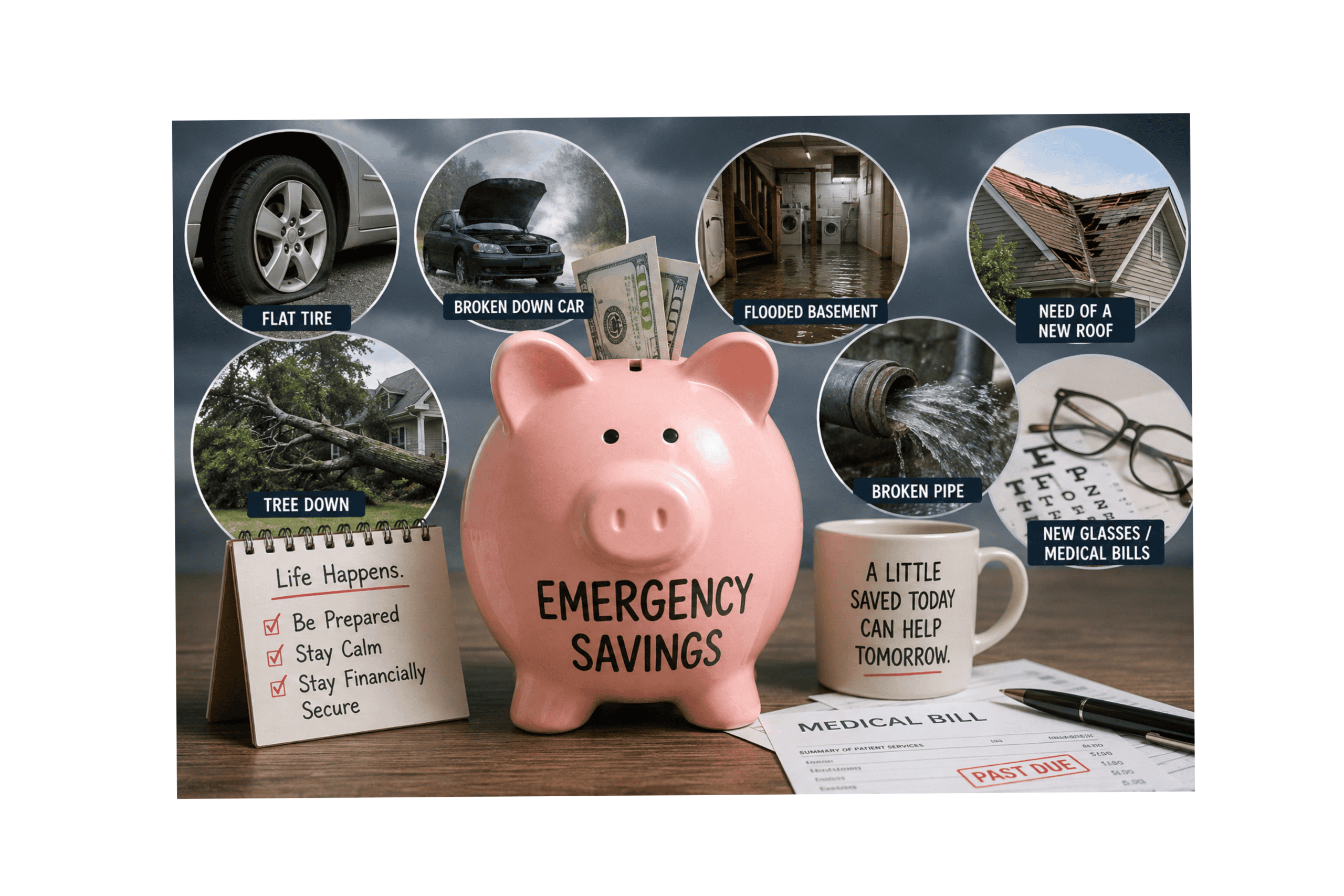
Life has a way of surprising us. A car or home repair, unexpected medical expense or sudden change in income can happen when we least expect it. While we can’t always predict these events, we can prepare for them.
One of the best ways to prepare is by building an Emergency Savings Fund at your financial institution.
What is an Emergency Savings Fund?
An emergency savings fund is money set aside specifically for unexpected expenses or financial emergencies. Unlike money you save for a vacation, a new car or another planned purchase, emergency savings are there for the things you didn’t plan for.
Why do I need an Emergency Savings Fund?
Unexpected expenses happen to everyone. You never know when your refrigerator will stop working or the pipes in your basement will burst. If you can’t cover the bill, it could affect your finances or quality of life for months or years to come.
The emergency fund is there to take care of those surprise costs. That way, there is no need to take out a loan, charge a credit card or withdraw money from a retirement account. A cash reserve can also keep you afloat if you have an unexpected change in employment or take an unpaid leave of absence.
How to build an Emergency Savings Fund
Building an emergency fund can feel overwhelming, especially if you’re starting from scratch. It is important to remember that you don’t have to build it overnight.
Here are different steps and strategies to get you started:
- Use a basic savings or money market account that allows your money to be accessible.
- Research which account earns interest. A high-yield savings account provides a higher-than-average annual percentage yield (APY); helping your money earn a higher dividend.
- Only use the funds for unplanned emergencies such as a house repair or large medical bill.
- Replenish the account when you draw money out.
Consider contributing an amount that fits comfortably within your budget even if it’s just $10 or $25 per paycheck. You can increase your contributions as your financial situation changes.
A common long-term goal is to work toward having three-to-six months of essential expenses saved. However, the right amount depends on your individual circumstances.
Make saving automatic
One of the easiest ways to increase your emergency savings is to make contributions automatically with each paycheck via direct deposit or by setting up automatic transfers from your main account to your emergency savings account.
When saving happens automatically, you’re less likely to forget and you may find that you adjust to having the money set aside automatically.
Get started today
An emergency savings account isn’t just about the money in the account. It’s about knowing you have a plan when life doesn’t go according to plan.
If you have questions about how to start an emergency savings account, KH Credit Union is here to help. Whether it is information on our high-yield savings accounts or how to set up automatic transfers, we’re here to care for your financial health. Feel free to call or text 937-558-9070 during the hours of 8:30 a.m.-4:30 p.m., Monday-Friday.
The best time to start an emergency fund is before you need it. Start small, stay consistent and let your savings grow over time.
Exclusive to team members
Ready to take advantage of one of your Kettering Health benefits?
Whether you’re looking to save more, borrow smarter or simply improve your financial wellness, KHCU is here to help. Visit us online, stop by our office or contact our team to learn more about becoming a member.
We look forward to helping you achieve your financial goals.