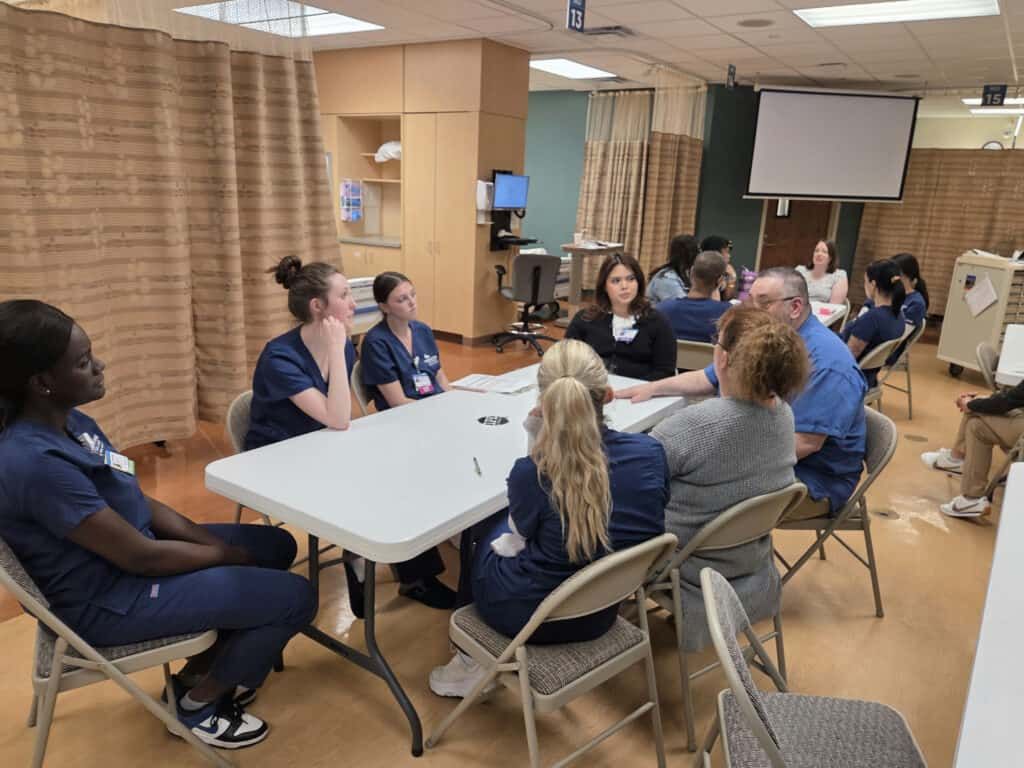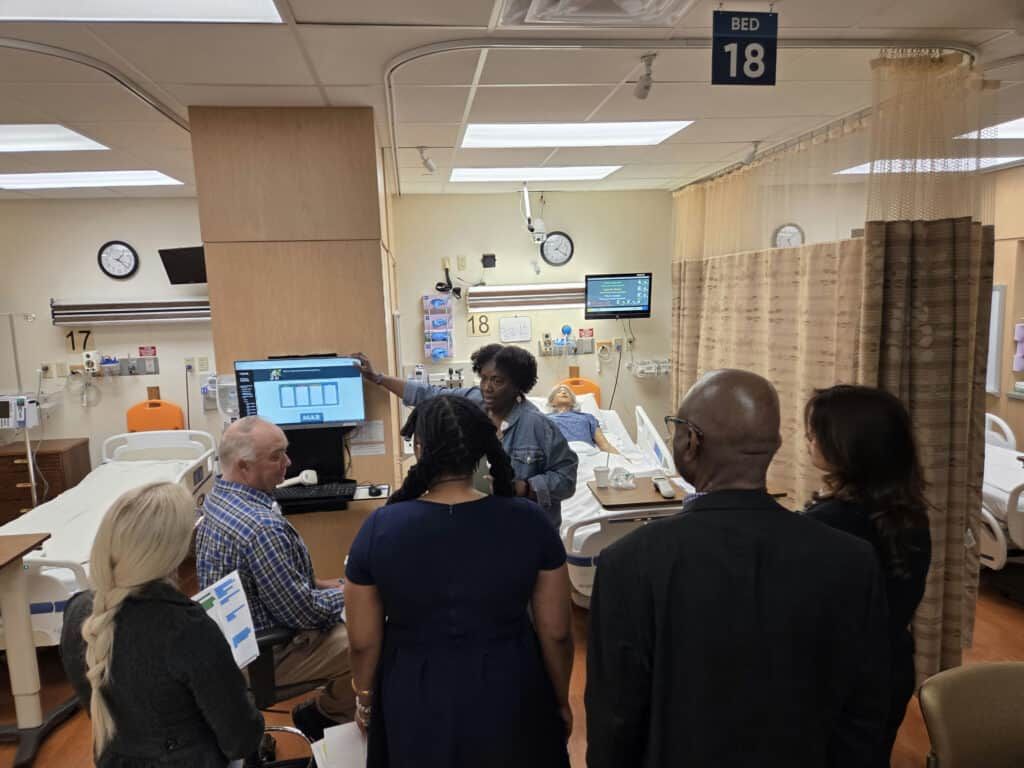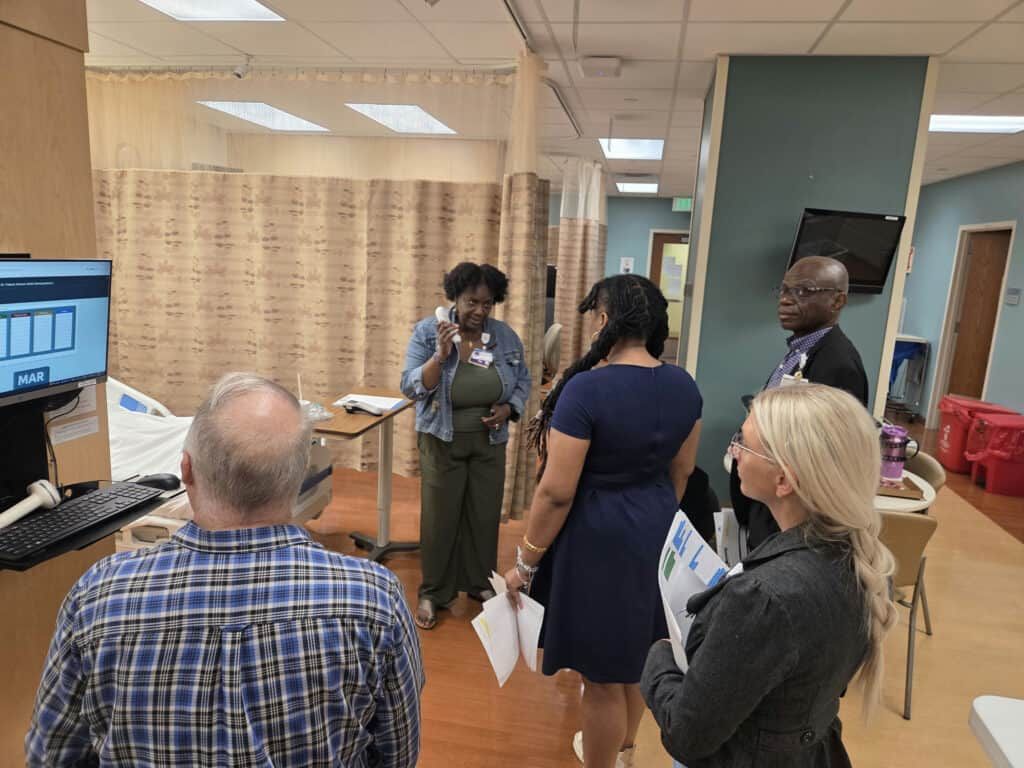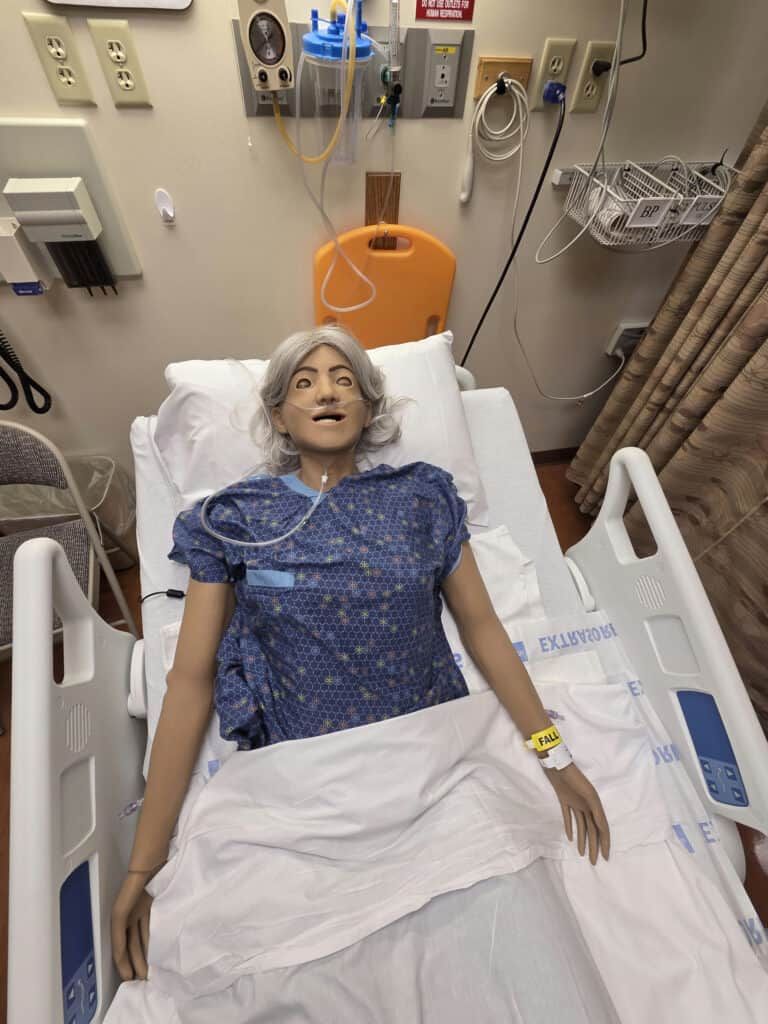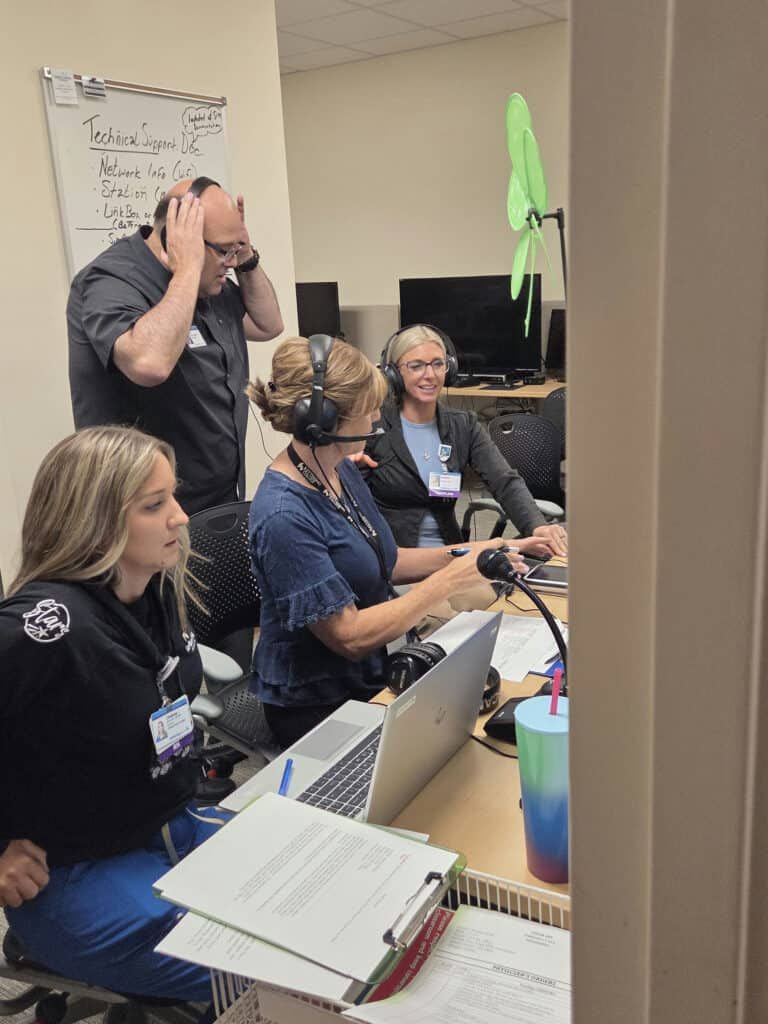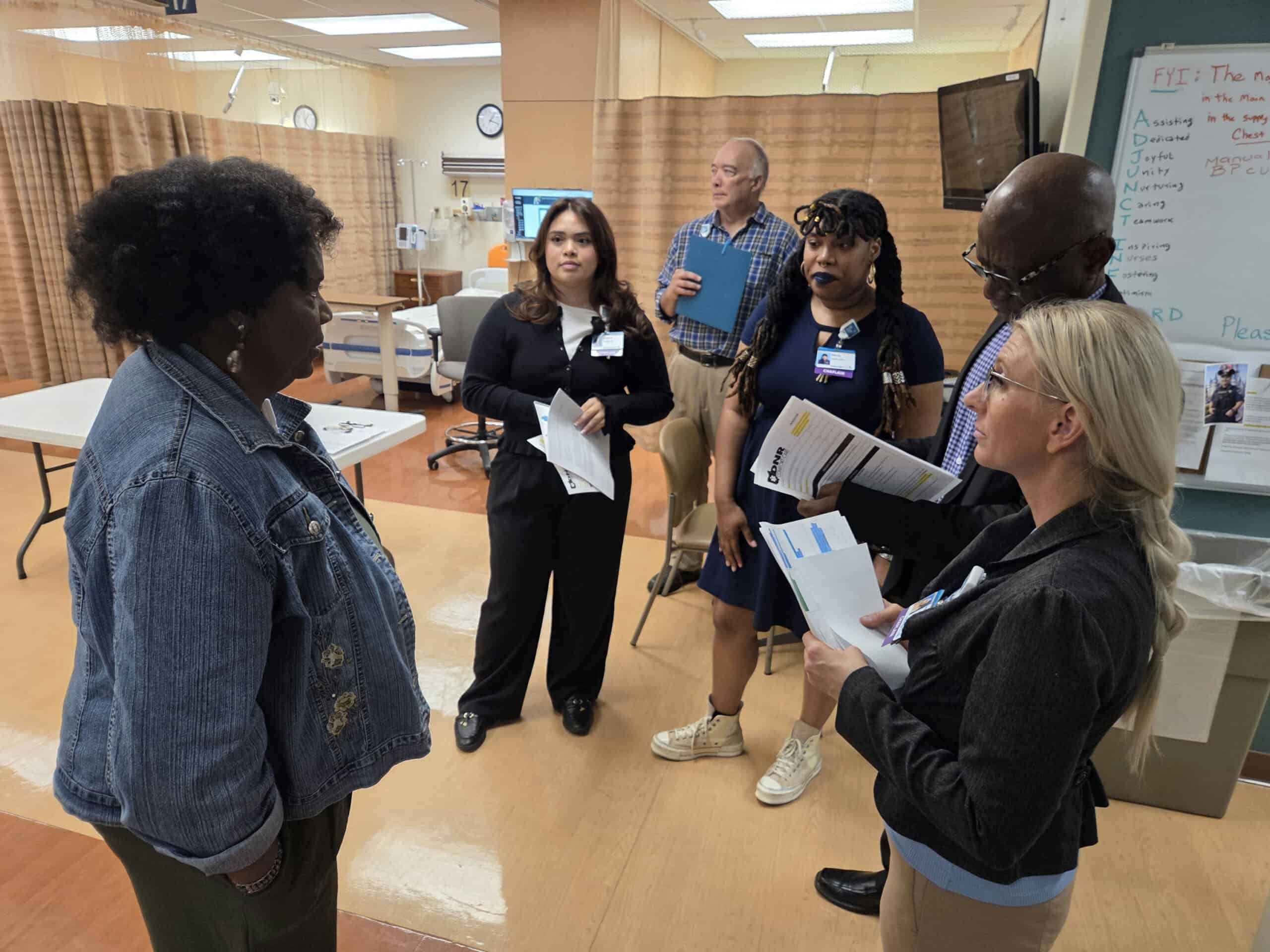
A partnership between Kettering College and Kettering Health is bringing nursing students and chaplain residents together through an interdisciplinary simulation that highlights collaboration and whole-person care.
Participants worked through a realistic patient scenario that challenged them to navigate both the clinical and emotional aspects of care.
“The goal was to provide our students with an experience that they may encounter in the clinical setting,” said Beverley McLean, associate professor of nursing and coordinator of Kettering College’s Simulation Center. “As nurses, it’s important to know how to manage palliative care and end-of-life situations, and which resources can be utilized to assist with these types of patient concerns. And how do you consult with chaplain services to be part of that team to help the family and patient make these types of decisions?”
The exercise brought together learners from two disciplines that often work side by side in healthcare settings but rarely train together before entering practice.
McLean said one of the most valuable outcomes came as nursing students began to better understand the role chaplains can play in supporting patients and families through difficult situations.
“One of the things our nursing students expressed was a sense of relief when the chaplains came in because they themselves are often uncomfortable with that topic,” McLean said. “When the chaplains came in and provided that additional support, they were able to step back and focus more on the patient’s immediate medical needs.”
The simulation also reinforced the importance of collaboration in healthcare education.
“Healthcare is a team effort,” McLean said. “I think sometimes we operate and we educate in silos.”
The collaboration began when Bryant Smith, manager of spiritual care at Kettering Health, approached the college looking for additional opportunities to train chaplain residents. The conversation evolved into a shared learning experience that benefits both disciplines. The first simulation was held this past summer, with another planned for this fall.
“It was really amazing to see the two worlds come together,” Smith said. “At the very beginning of their journey, they are learning how to have a relationship with the chaplains and other staff. That’s very, very important.”
Smith said the simulation gives participants a better understanding of how healthcare professionals rely on one another to support patients and families.
The exercise also reinforces the principles of whole-person care, an approach that considers a patient’s emotional, social and spiritual needs alongside physical health.
Eric Scott, assistant professor of religion and ethics at Kettering College, helped facilitate the simulation and led participants through a post-scenario debrief. He said situations involving family dynamics, emotional support, spiritual concerns and difficult conversations are common in healthcare but often receive limited attention in traditional nursing education. The simulation reflected key themes explored in spiritual integration and medical ethics courses, including supporting patients’ beliefs and values, navigating medical decision-making conflicts and addressing ethical and spiritual considerations at the end of life.
“These things are common in medical practice, but we spend very little time preparing nurses how to deal with it, if any,” Scott said.
Scott said the simulation encourages students to look beyond a diagnosis and focus on the individual receiving care.
“Do I understand a person’s beliefs and values? What is meaningful in their life? What are their expectations?” Scott said. “What we’re doing is we’re looking at not curing an illness, but we’re looking at treating a whole person.”