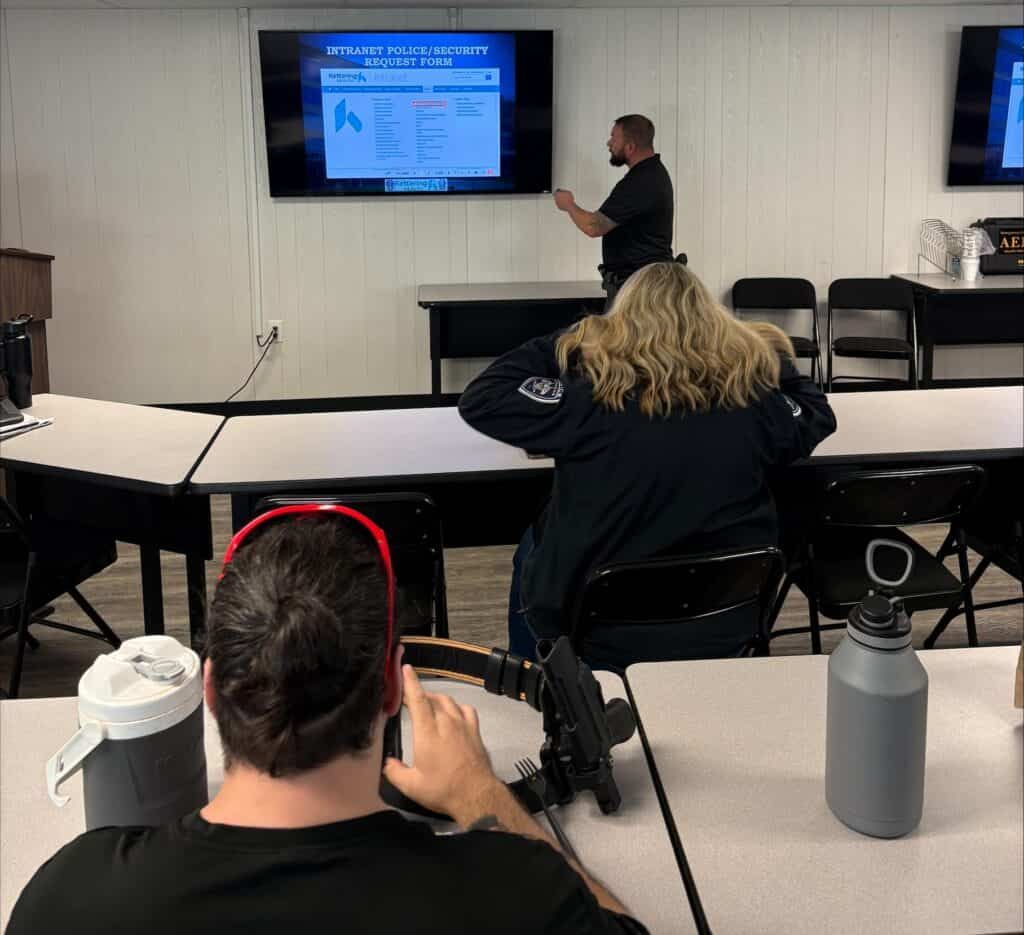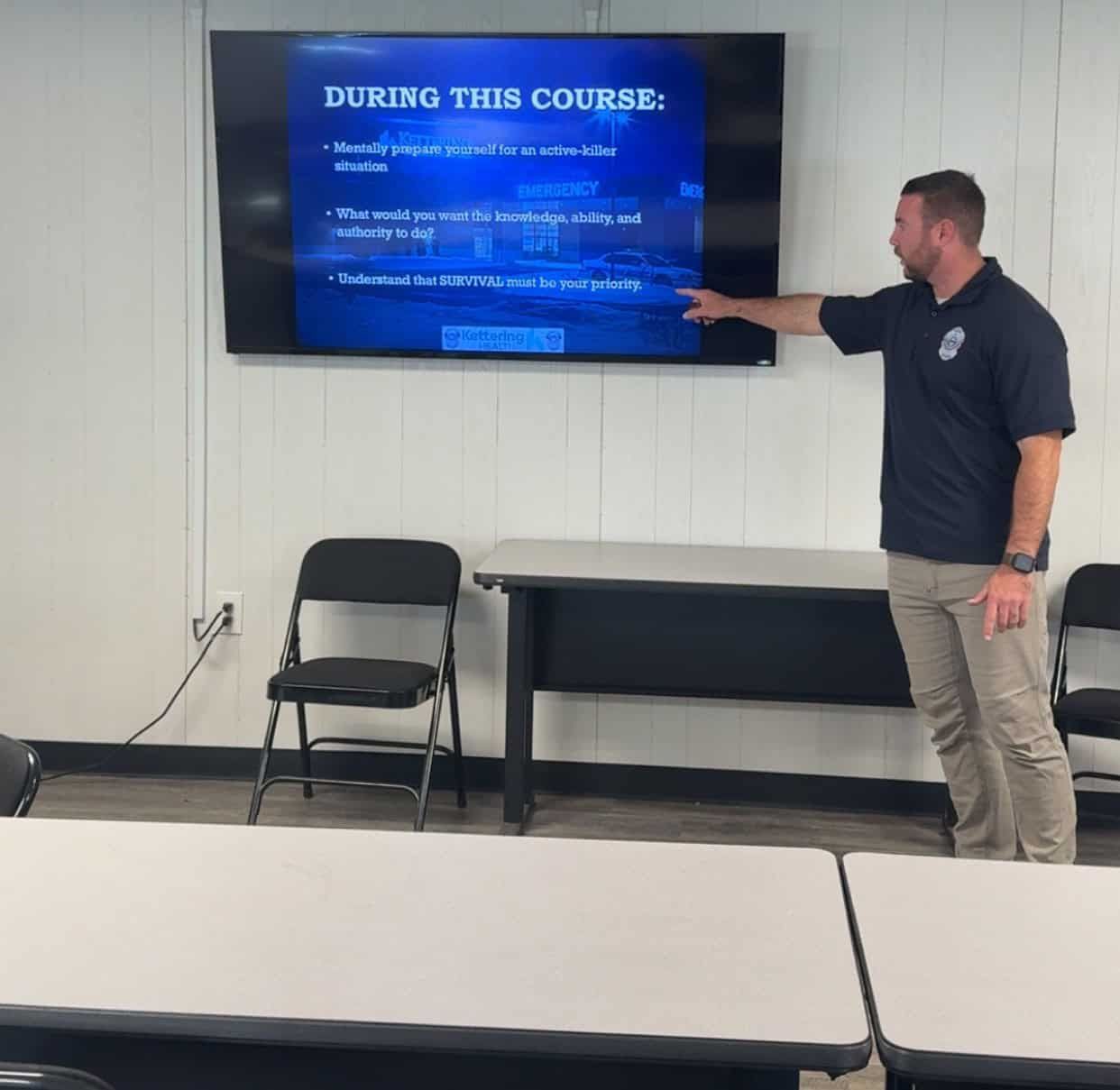
The Kettering Health Police Department has delivered active shooter preparedness training more than 100 times across the system, helping employees prepare for emergencies while learning how to recognize and report warning signs before violence occurs.
While active shooter training is among the most requested programs, leaders say the lessons extend far beyond responding during a crisis. The department also provides education on situational awareness, workplace violence prevention, department safety assessments and unit-specific walkthroughs designed to help employees stay safe on the job.
“One of the biggest myths we try to dispel is that active shooters are random and just snap,” said Matthew Wainscott, an officer whose background includes Army infantry and Special Forces service and active shooter training for law enforcement agencies. “We empower employees to spot concerns and speak up ahead of time.”
That focus on prevention is central to the police department’s approach.
“If we can deter acts, it’s a lot better than having to respond to one that’s already in progress,” said Lt. James Kotronis, who oversees police department training and has nearly three decades of law enforcement and security experience. “The ultimate goal is to prevent it from ever happening.”
According to Kotronis, employees play a critical role in that effort.
“The more people we have being the eyes and ears of security, the more it doubles our ability to do our job correctly,” he said.
Wainscott and Austin List, an officer, tactical medic and sports medicine professional who supports local SWAT teams, lead much of the active shooter preparedness training offered throughout the system. Built around the run-hide-fight model, the course emphasizes prevention and situational awareness while addressing challenges unique to healthcare settings.
“We start with a heavy emphasis on prevention,” Wainscott said. “What it would look like if someone might be heading toward targeted violence, the mindset you need to have to survive one of these incidents and then run, hide, fight.”
List said the training has evolved significantly over the years.
“We’ve really changed it to be more proactive and empowering,” he said. “It’s about what you can do and how you can survive, not about scaring people.”
That approach helps participants better understand the role they can play in keeping themselves and their coworkers safe.
“When we start giving them work to do that they can take ownership in, I think they leave feeling a lot more comfortable,” List said.
In addition to classroom presentations, the police work directly with departments to provide walkthroughs and training tailored to specific work environments.
“We don’t want to just be talking heads,” said Chad DePew, chief of the police department. “We want to learn from staff and create training that’s specifically for them.”
The department increasingly customizes its training to address the realities of healthcare settings, where employees must balance their own safety with patient care responsibilities.
“We take training like that and adapt it to our hospital environment,” DePew said. “A lot of what we’re training on is truly customized to our environment.”
Departments interested in training are encouraged to contact police department representatives at their campus to discuss available programs and safety concerns. Additionally, team members can go to the intranet to get in touch.
For Kotronis, the message to employees is simple: Don’t wait until there’s a problem to reach out.
“If something doesn’t feel right, let us know,” he said. “We’d rather get ahead of an incident than be reactive to one.”