



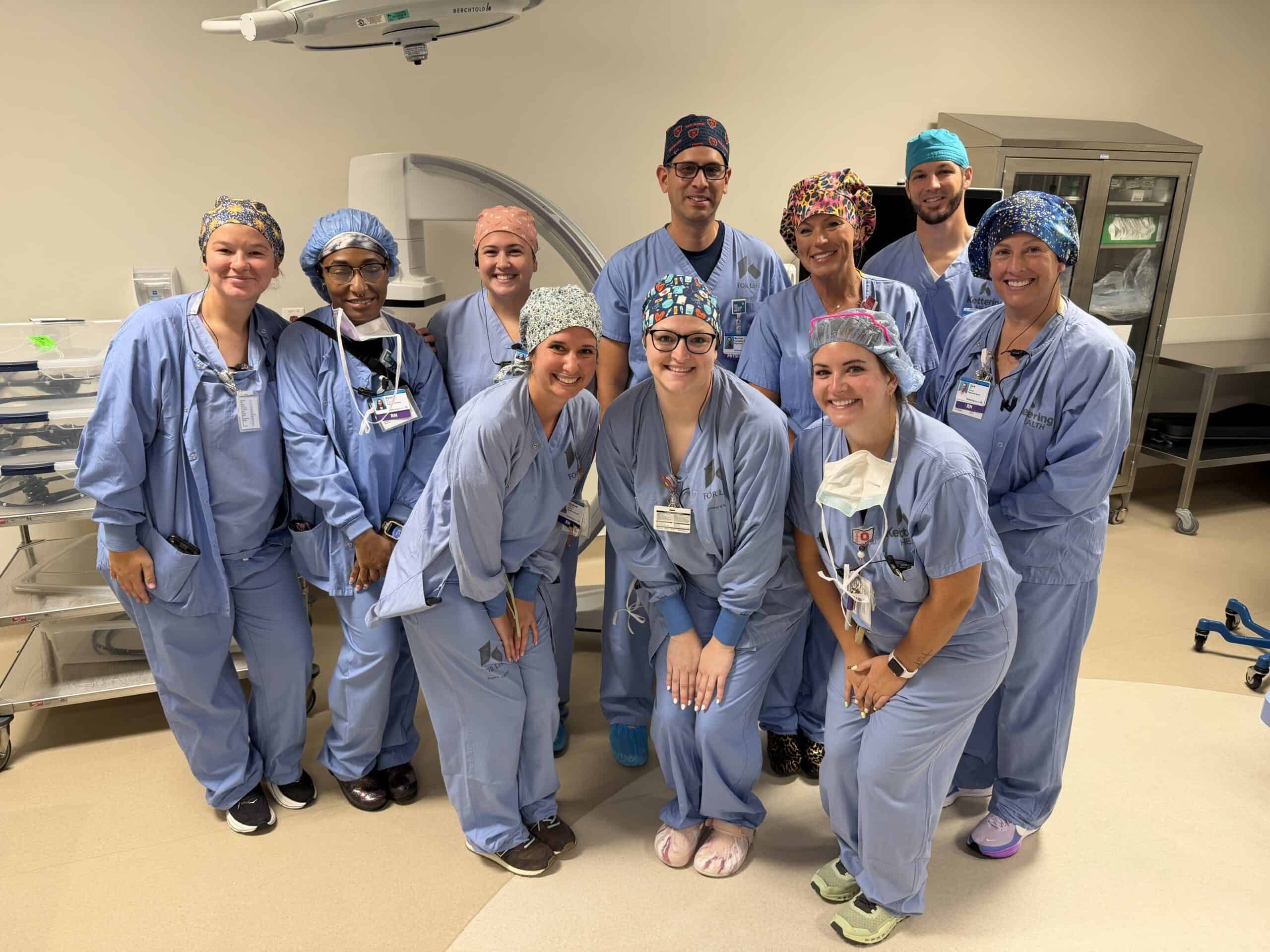
Patients who need a specialized gastrointestinal procedure now have access to a new treatment option at Kettering Health Troy.
The campus is offering endoscopic retrograde cholangiopancreatography (ERCP), a procedure used to diagnose and treat certain digestive conditions.
It is led by Dr. Mauricio Carballo, a gastroenterologist who joined Kettering Health in March and brings years of experience performing ERCP and treating complex gastrointestinal conditions.
“Not every physician does this type of procedure,” Carballo said. “Not every gastroenterologist will do these procedures.”
Because ERCP requires additional training and expertise, relatively few physicians perform it. Kettering Health invested in the equipment and team training needed to bring the procedure to Troy.
Carballo said the need for the service is already clear.
“I’m getting patients transferred from Soin,” he said. “I’m getting patients transferred from Dayton just for us to do these procedures. It is going to grow, and I think there’s a lot of potential in that.”
ERCP is commonly used to treat conditions such as bile duct obstructions, infections, gallstone-related complications and some cancers. Patients often require care from multiple specialties, making collaboration an important part of the process.
For patients with cancer, Carballo works closely with medical and surgical oncology teams. For patients with gallstones and other benign conditions, care often continues with general surgeons after the procedure.
“The good thing about it is we try to keep the patients in the same system without needing to transfer them to other facilities,” Carballo said.
In addition to physicians from several specialties, the program relies on nurses, endoscopy technicians and imaging professionals for support.
“It’s teamwork,” Carballo said. “If we didn’t have a whole team, we wouldn’t be able to do anything.”
For Carballo, offering ERCP at Kettering Health Troy helps address a long-standing need within the health system.
“It is really covering a gap in care that was very noticeable in the Kettering system,” he said. “We are able to fill that void for patient care.”