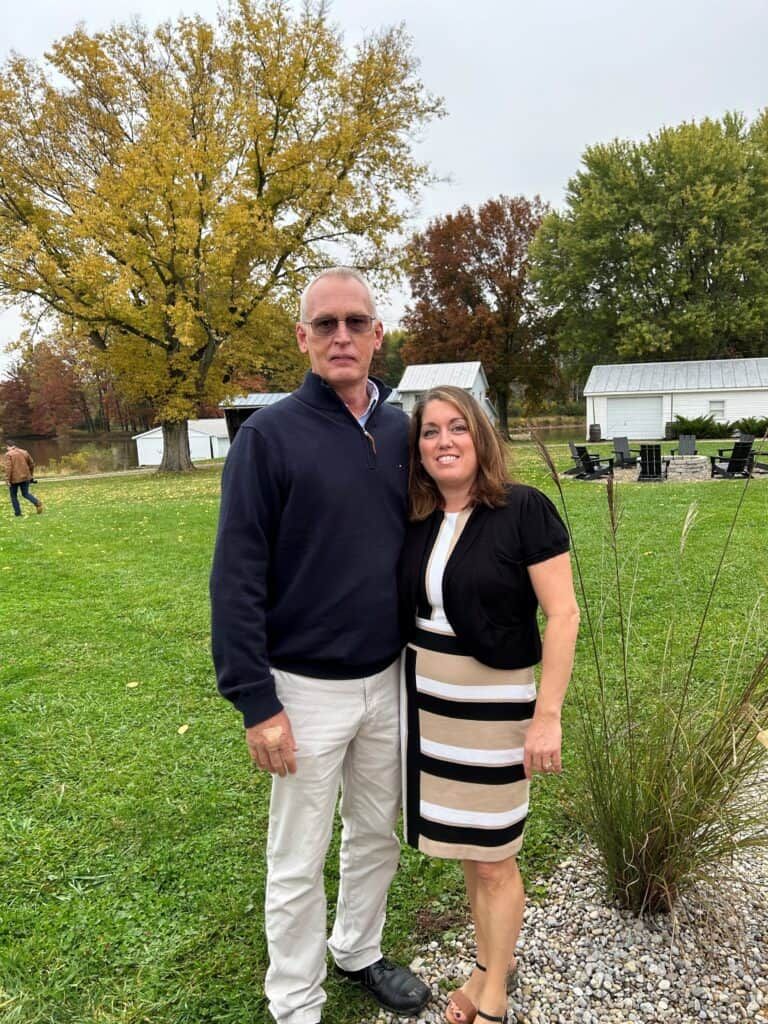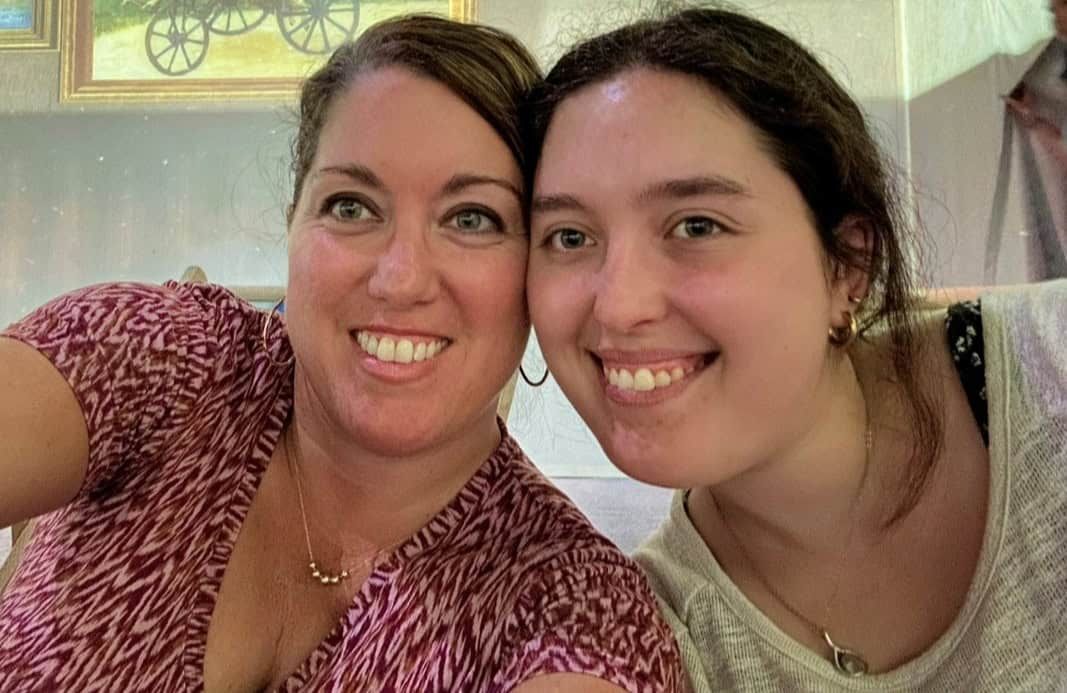
In the spring of 2024, when a heavy pressure settled into her chest, Malissa Templin didn’t think it was her heart. She assumed it was anxiety. But she also felt a quiet prompting. A nudge she couldn’t ignore. Trusting that instinct, she went to see her primary care physician. That decision, she now believes, was grace at work.
Templin, an HR manager overseeing multiple Kettering Health campuses, had always lived a healthy lifestyle. She had adopted a vegan diet and avoided alcohol and smoking. Her lab work had always been normal. But suddenly, everything changed.
“All of my numbers had spiked,” she said. “Cholesterol, A1C, everything.”
“It was jarring,” she added. “But even then, I felt this quiet sense that God was preparing me for something. He was already ahead of me, even if I didn’t know what was coming.”
An in‑office EKG didn’t reveal a clear problem, but it didn’t look normal for her. Her care team worked throughout the day to secure an urgent appointment with cardiologist Dr. Ammar Safar the next morning.
Dr. Safar reviewed her results, listened to her symptoms, and immediately sensed something was wrong. He ordered a heart catheterization for the earliest possible opening. A few days later, Templin was at Kettering Health Main Campus for the procedure.
What doctors found was life‑threatening: an 80–90% blockage in her left main artery, the widowmaker.
“(Dr. Safar) told me I wouldn’t be leaving the hospital,” she said.
In that moment, the weight of what lay ahead settled over her. She remembers feeling a mix of fear and peace. A sense that while she didn’t know what was coming, she wasn’t walking into it alone.
“I didn’t understand the gravity of everything,” she said. “But I trusted the people caring for me, and I trusted that God was with me.”
One week after meeting her cardiologist, she underwent an eight‑and‑a‑half‑hour double bypass surgery. As she was wheeled back, staff members held her hands, a gesture that felt, to her, like God’s reassurance through human touch. Their compassion stayed with her long after the surgery.
The hardest part came when she realized the timing: two days after her surgery, her daughter Abigail would be graduating from Miami of Ohio University. Templin had already missed Abigail’s high school graduation in 2020 due to the pandemic.
“She’s graduated twice, and I’ve never seen it,” she said.
In the ICU, still unable to move on her own, nurses washed her hair, helped her friend pull it back, and gently lifted her into a chair so she could watch the ceremony through FaceTime.
“I didn’t get to see it all, but I needed her to walk,” she said. “I wanted her to have that moment.”
Those moments, the ones she missed and the ones she was given, stayed with her long after she returned home. Recovery slowed her life to a standstill. For months, her only responsibility was healing. Her daughter moved back home to care for her. Her family hovered protectively. And in that stillness, Templin began to see her life differently.
“Everything stopped,” she said. “All the noise, all the rushing. I got time with my family in a way I hadn’t in years. It made me realize what really matters.”
She also felt something deeper. It was gratitude for the people who cared for her, many of whom recognized her as a colleague.
“The staff were amazing,” she said. “They carried my emotions with me. They cried with me. They cared for me like I was one of their own.”
One moment stands out. After her second heart cath, overwhelmed by the reality that she would miss Abigail’s graduation, she began to cry. Two staff members held her hands as they wheeled her back to her husband.
“My husband said, ‘You have to stop making the staff cry,’” she said, laughing. “But that’s who they are. They carry the weight of their patients’ stories every day.”
The experience reshaped her purpose. Two years later, she is still recovering, rebuilding lung capacity, adjusting to physical limitations, and navigating the emotional impact on her family. But she is also moving forward with renewed clarity.
“It gave me a different path,” she said. “A different understanding of what I want to do and how I want to give back.”
That clarity led her to apply for and earn a promotion to HR manager, overseeing multiple campuses. It also inspired her to begin her master’s degree.
Her leaders say the change in her is unmistakable.
“She lives the mission,” said Erica Schneider, president of the Ambulatory Division. “Her first instinct is always: How do we take care of our team? How do we take care of our patients? Every conversation she has is framed that way.”
Schneider describes Templin as a trusted partner whose leadership comes from a deep place of purpose.
“She has been such a blessing to our team,” Schneider said. “She brings solutions, she brings ideas, and she leads with a spirit of support. That’s a special gift.”
Regional HR Director Garth Gabriel says her experience as a patient transformed her leadership in a way that can’t be taught.
“Because of her experience as a patient at Kettering, it amplifies her desire to do a good job, almost like giving back to the organization that saved her life,” Gabriel said. “It’s rare and powerful when someone who supports our teams becomes a patient in the same environment they help shape.”
He says her faith is central to that transformation.
“She’s a person of faith, and one reason she works at Kettering is because it’s a faith‑based organization,” Gabriel said. “In her moment of need, the mission came full circle. She didn’t just support the mission, she experienced it.”
Templin says her experience deepened her connection to Kettering Health’s mission — to live God’s love by promoting and improving the health of the people and communities we serve — and to the values embraced across the organization: belonging, wholeness, excellence, leadership, and learning.
“I trusted the staff completely,” she said. “They recognized what I couldn’t see. They saved my life. Now I want to support the people who save lives every day.”
She wakes up each morning with two questions: How can I make an impact? How can I pay it forward?
For Templin, the answers are rooted in faith, gratitude and the sacredness of time — the moments she almost lost, and the ones she refuses to miss now.
“I don’t want the things,” she said. “I want the time. I want the moments.”
Today, Templin sees her work as a way to live out God’s love in the same halls where her life was restored. Her journey has given her a deeper compassion for others and a renewed sense of purpose. It’s a daily reminder that every moment and every person is a gift.