



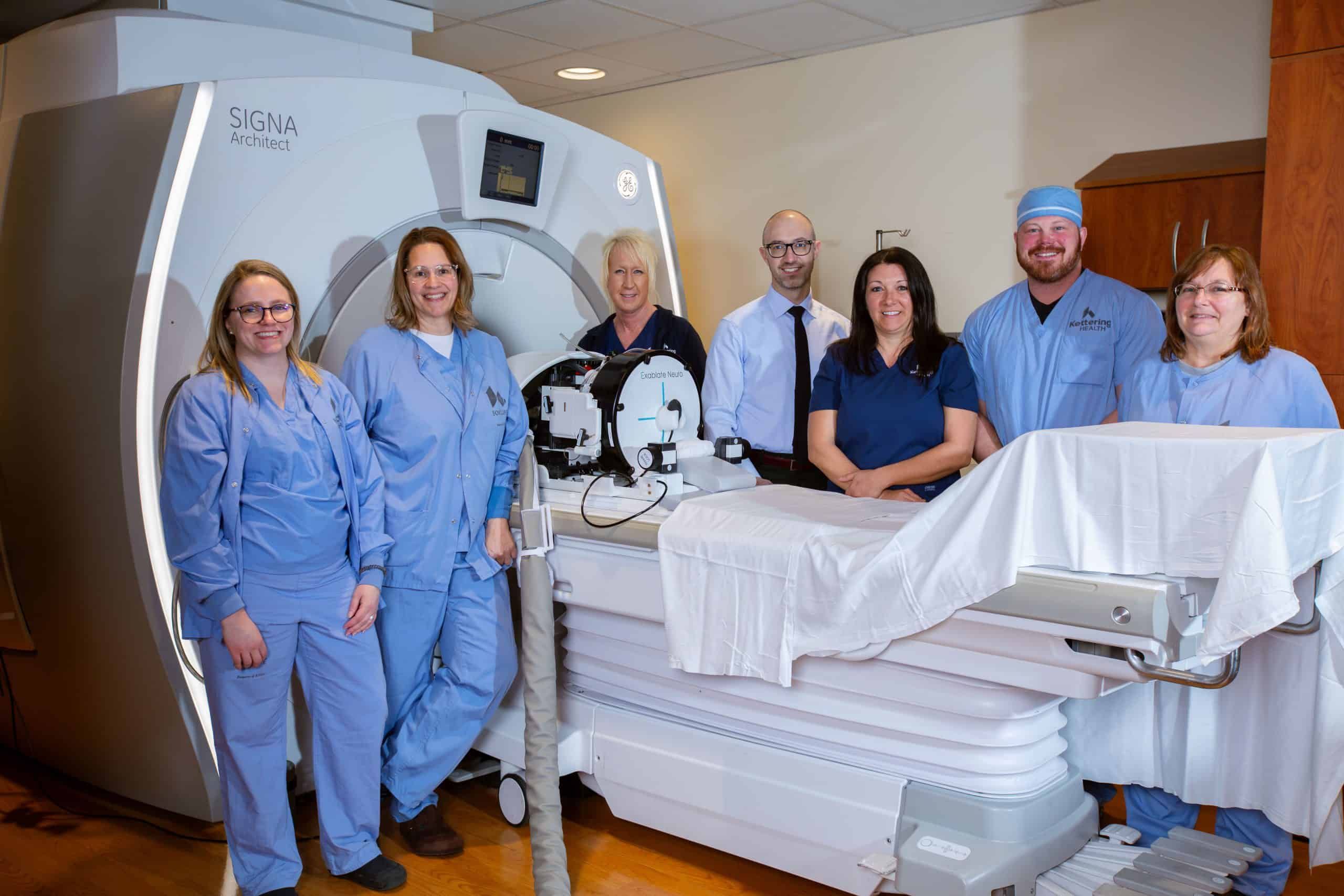
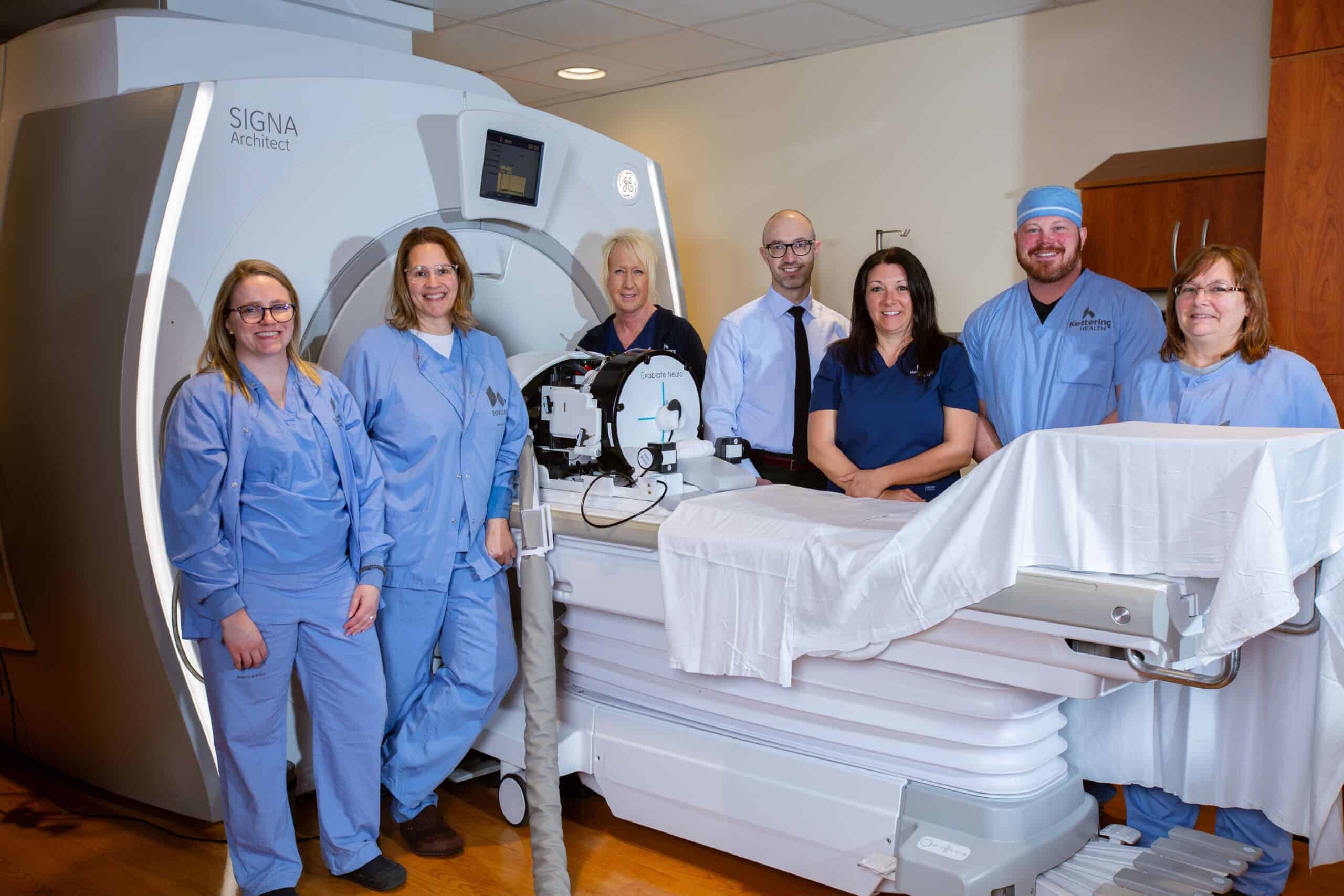
Kettering Health Brain & Spine is the only health system in southern Ohio to offer MRI-guided focused ultrasound to treat tremors. The incision-less treatment uses sound energy to target small areas in the brain. Heating these targets creates lesions that disrupt irregular brain activity and reduce tremor symptoms.
To date, deep brain stimulation (DBS) has been the gold standard tremor treatment. But, as neurosurgeon Mark Hoeprich, MD, explains, “The invasiveness of DBS can cause significant hesitancy for patients. Now, focused ultrasound provides a noninvasive, outpatient option that brings exceptional results.”
What happens during focused ultrasound treatment?
Focused ultrasound treatment starts with a clinic visit and consultation. The surgeon orders two imaging tests to evaluate patients:
- A head CT scan to look at skull density. The denser a patient’s skull, the better their candidacy for the procedure.
- Pre-surgical MRI to help plan treatment and expedite care the day of the procedure.
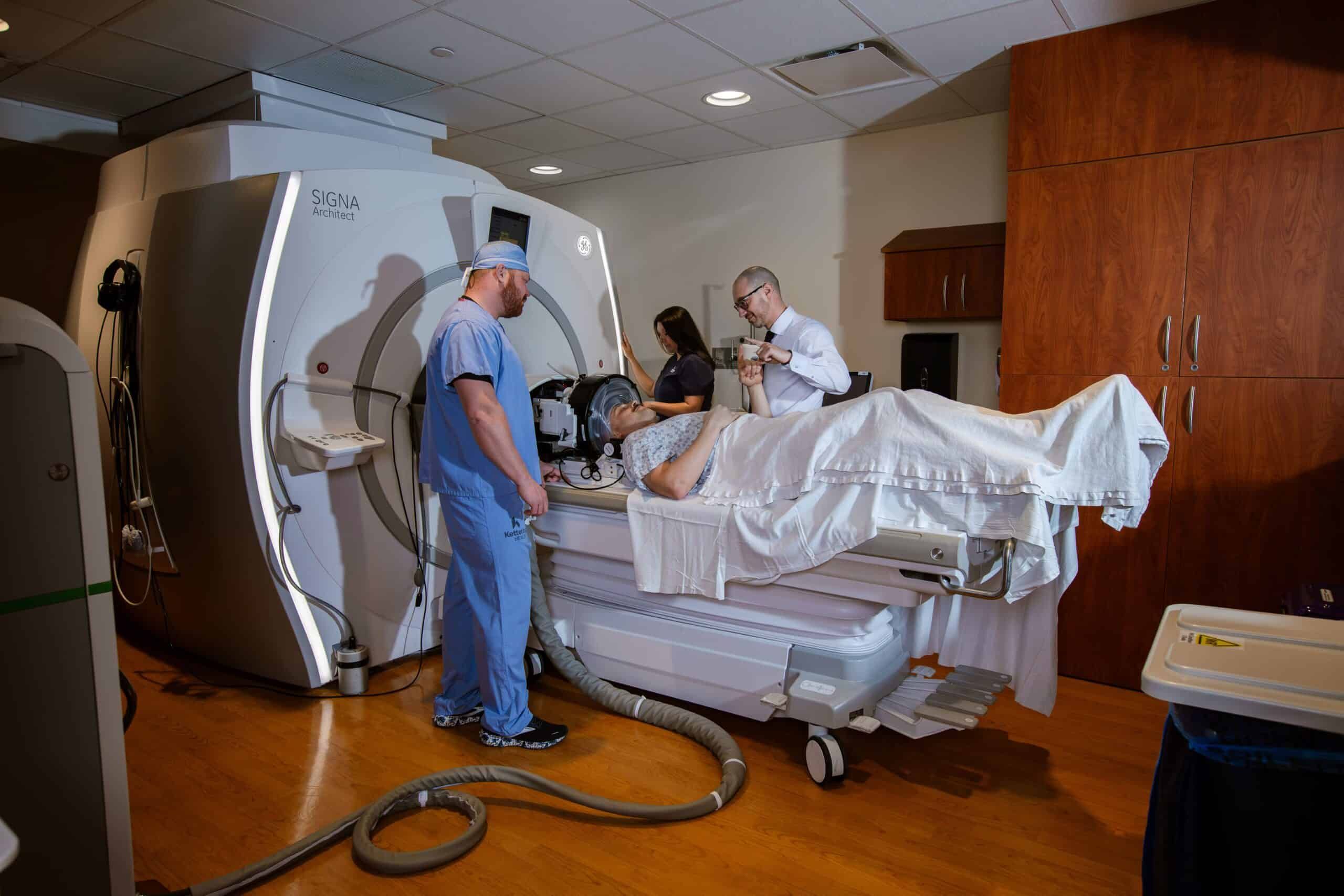
On the day of treatment, patients come into the hospital and get their head shaved. The team numbs four spots on the patient’s scalp and attaches a headframe. The headframe keeps patients from moving during treatment, helping to ensure accuracy.
Surgeons perform the procedure in the MRI unit so they have real-time monitoring. When the patient is positioned correctly, the surgeon maps the target for a test session. They apply sound waves that heat up this very small section of the brain, then increase the amplitude to give the patient a test dose. The heat is just high enough to cause neuronal dysfunction in a reversible manner.
After applying the test dose, the team brings the patient out of the MRI machine to test for symptom reduction and side effects. Afterward, the surgeon can adjust the target and complete another treatment dose as needed. This process continues until achieving the intended results.
“The ability to test the target is very different than other treatment methods to-date,” says Dr. Hoeprich. “This technique of heating tissue and creating lesions has been around for 50 years or so. But there’s not previously been a way to complete adequate testing before giving the treatment.”
A game-changing option
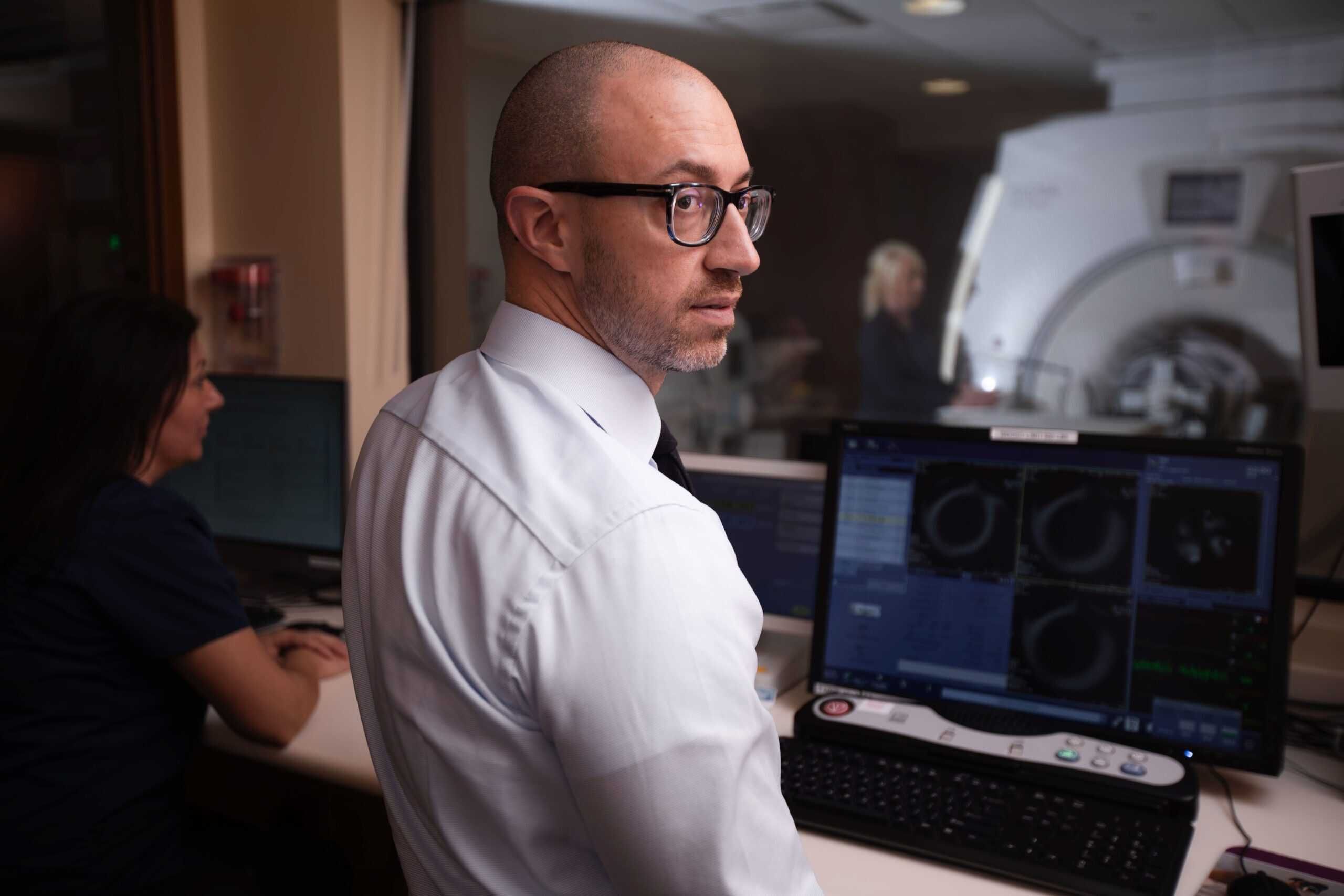
The entire procedure takes about three hours and patients can return home the same day. They get a follow-up MRI within 24 hours to document the brain lesion. Afterward, they’ll see their surgeon at the three-, six-, and 12-month marks, then as necessary.
Generally, patients can expect to see about a 75% reduction in their tremors. “For most patients, this is well above what they need to achieve control and improve their quality of life,” Dr. Hoeprich notes. Data shows that the results are durable for five years or longer.
“There haven’t been significant advancements in the medical or surgical management of tremor, beyond deep brain stimulation, for many years,” says Dr. Hoeprich. “This treatment option is a gamechanger.”
Transforming patients’ lives with cutting-edge treatment
Because Kettering Health is the only one in the region to offer this technology, patients from Cincinnati and Kentucky are willing to travel to Dayton for the treatment. “About half of our consults are from the Cincinnati region,” Dr. Hoeprich says. “Patients are very motivated to find centers that offer this option.”
Patients who travel can get their pre-operative and post-operative scans with local providers and send their results to Kettering Health. Dr. Hoeprich also utilizes telehealth for follow-up care to make access as convenient as possible.
“This efficacious, noninvasive technology can transform patients’ lives,” Dr. Hoeprich says. “It’s another illustration of our commitment to providing cutting-edge treatments right here in the patient’s community.”