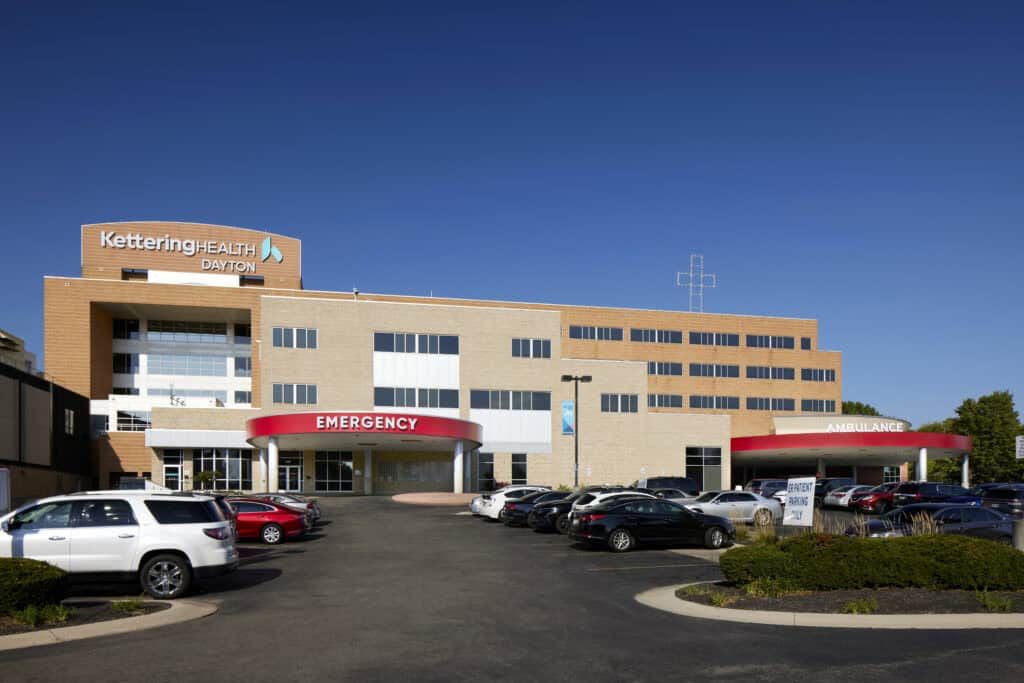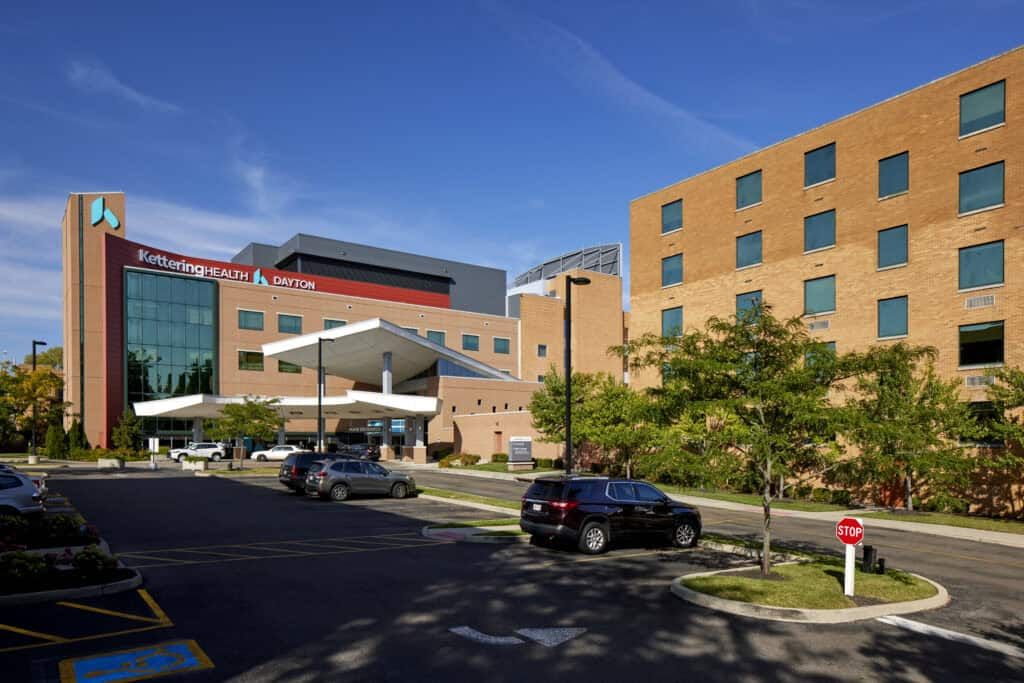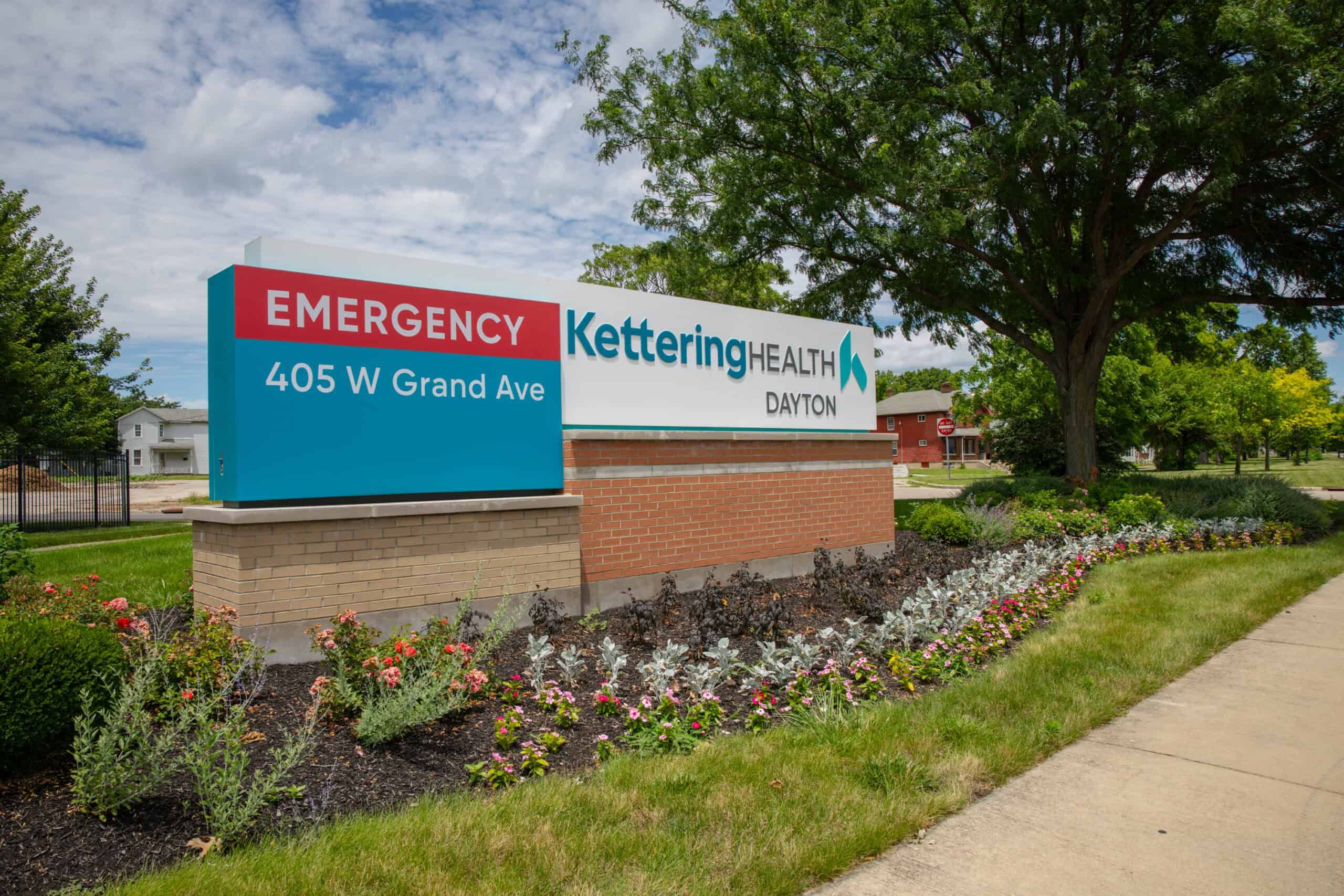
As Kettering Health Dayton marks its 100th anniversary, employees reflecting on one of the hospital’s most significant milestones say the transition from Grandview Hospital to Kettering Health Dayton preserved the values that had defined the organization for generations.
Founded in 1926, Grandview Hospital grew into one of the nation’s leading osteopathic teaching hospitals. By the late 1990s, changing healthcare economics were creating challenges for independent hospitals across the country. Seeking a partner that could help secure its future while preserving its osteopathic identity and educational mission, Grandview merged with Kettering Health in 1999.
For many employees, the announcement brought uncertainty.
“A group of us started just coming together and praying on the outcome because none of us really knew,” said Veronica Dickerson, who has worked in nutrition services for 40 years. “We had families. We had obligations. We didn’t know what was going to happen.”
Dickerson recalled that employees spent months wondering what the changes would mean for their jobs and the future of the hospital. Looking back, she believes the transition ultimately strengthened the organization while preserving the sense of community that first drew her to Grandview.
For Troy Tyner, DO, who first came to Grandview Hospital as a medical student in 1987 and now serves on the Kettering Health Board of Directors, the merger succeeded because the two organizations shared a similar philosophy of care.
“The fit of Grandview and Kettering was very logical from a philosophical standpoint,” Tyner said. “You have the Seventh-day Adventist concept of whole-person care. And you have the osteopathic concept of whole-person care.”
While employees understood why the merger took place, many also recognized what was at stake.
“The name Grandview was synonymous with this area,” said Jeremy Meredith, administrative nursing director for critical care, who has spent nearly a decade connected to the Dayton campus. “It was very difficult for people in the community and a lot of employees that had been here for a long time.”
Over time, Meredith said employees realized the things they valued most had not disappeared.
“The name has changed, but the culture remains the same,” he said.
Meredith said that realization helped ease many of the concerns employees and community members initially felt about the transition.
“It’s not something that you can rehearse or fake,” Meredith said. “It’s something that’s embedded.”
That sentiment was echoed by Homer Vaughn, a nursing assistant in surgery who has worked at the hospital for 45 years.
“We don’t turn down anybody,” Vaughn said. “We help everybody.”
Employees also pointed to the hospital’s longstanding role in serving West Dayton. As other hospitals closed or changed over the years, Kettering Health Dayton remained a constant presence in the community.
“I kind of see the Dayton campus as that beacon on the hill,” Meredith said. “We’ve had other hospitals come and go, but Dayton (formerly Grandview) is still standing 100 years later.”
The hospital’s educational mission also endured through the transition. Long recognized as a teaching hospital, Kettering Health Dayton remains one of the nation’s largest osteopathic teaching hospitals.
Greggory Volk, DO, completed his residency at the hospital and now helps lead its internal medicine residency program. He said support for physician education has continued to grow since the merger.
“Kettering’s very supportive of the education,” Volk said. “It’s just exponentially gotten better since the merge.”
As employees reflect on the transition from Grandview Hospital to Kettering Health Dayton, many return to the same conclusion: the hospital evolved, but the principles that shaped it endured.
For Dickerson, who has spent four decades watching that evolution firsthand, the result is clear.
“The way it was back then with the family, we still have that, but it’s stronger.”