



Today marks the beginning of not just another month, but the start of Black History Month. Today through the end of February, we will be highlighting historical figures, sharing educational resources from podcasts and movies about the experience of African Americans, and how certain foods impacted their lifestyles, in addition to highlighting our employees who help us continue to thrive as a diverse organization. Join us as we celebrate Black History Month!
Community events
Take a moment this month to learn more about your the history of African Americans by attending events, watching a movie, or even reading a book. We’ve done the work for you and found different events in the Dayton area where you can celebrate diversity and learn more about Black History Month!
Thursday, February 2, 9, and 16 at 6:00 p.m.
Omega CDC’s Hope Center at 1816 Harvard Blvd, Dayton, in the Sinclair Suite
Come celebrate Black History Month with us at our Black History Trivia nights on February 2, 9, and 16! Each session will be different and have new trivia questions.
Whether you’re an expert or novice, join Sinclair’s Chief Diversity Officer, Michael Carter, for a fun night of trivia, answering questions that will dive deeper than the typical Black history questions.
Event starts at 6 p.m. and is free!
Contact Elise Herzing with any questions at elise.herzing@omegacdc.org, or call (937) 723-8254, ext. 210.
On Saturday, February 18, the JW Chorale International will perform at Kettering Adventist Church to celebrate Black History Month.
The concert begins at 4 p.m. and is free to the public.
Sunday, February 5 at 4:00 p.m.
2533 Kemper Ln, Cincinnati
Note: The lecture will be hybrid, taking place both at the Walnut Hills Branch Library and via Zoom.
The village of Madisonville, Ohio–now a neighborhood within Cincinnati–has a remarkable tradition of civic leadership by persons of color and many of its leaders were also residents of the Walnut Hills neighborhood. Learn about the importance of Madisonville in the history of African American culture.
Tuesday, February 7 at 2:00 p.m.
Zoom Room
Join Sinclair’s Chief Diversity Officer Michael Carter and Archives & Reference Librarian Lajmar Anderson, MLS, for a discussion on the findings from an October 2021 Pew Research Center Report. Many say key U.S. institutions should be rebuilt to ensure fair treatment.
Pre-requisite: Read the Pew Research Center report by Kiana Cox and Khadijah Edwards
Thursday, February 16 at 7:00 p.m.
Campus: Dayton
Building 2, Blair Hall Theatre
In honor of Black History Month, Jackie is attempting to steal home, but also attempting to steal the hearts of the fans and pave the way for people of color to play America’s favorite pastime.
All performances are provided free of charge as part of Sinclair’s Free Expressions Series.
All seating is first come, first serve at the door beginning 30 minutes prior to showtime. Groups of 20 or more should email patti.celek@sinclair.edu for reservations.
The performance lasts approximately 45 minutes.
Additional performances: Friday, February 17 at noon and 7:00 p.m.
Tuesday, February 28 at 6:00 p.m.
Campus: Dayton
Sinclair Conference Center, Smith Auditorium Sinclair’s Diversity Office “Visiting Scholars” series proudly presents guest speaker, Dr. Shannen Dee Williams, associate professor of History at the University of Dayton, and author of Subversive Habits: Black Catholic Nuns in the Long African American Freedom Struggle.
For most people, Whoopi Goldberg’s performance as Sister Mary Clarence in Sister Act is the dominant interpretation of an African American nun and the desegregation of white Catholic sisterhood in the United States. In this talk, Dr. Williams will explore the story of America’s real sister act: the story of how generations of Black women and girls called to the sacred vows of poverty, chastity, and obedience fought against racism, sexism, and exclusion to become and minister as consecrated women of God in the Roman Catholic Church. In doing so, she will turn attention to women’s religious life as an important battleground in the long African American struggle for freedom, justice, and human dignity.
This event is free and open to the public: register here.
See more Black History Month events offered by Sinclair here.
Employee highlights
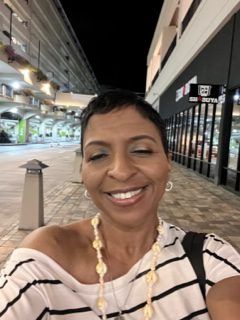
Meet Heather Jackson-Chapman
Heather is a native of the Dayton area and began working for Kettering Health in 2017 as an ICU nurse. During her time with the organization, she’s been awarded $500 for the George B. Nelson award in 2021, received the Employee of the Month award, and been recognized during a dinner with her nursing manager. One of the reasons she enjoys working at Kettering Health is due to the religious aspect and the Christian atmosphere. Heather is inspired to do great work, make a difference, and serve the Lord through the care she administers to patients. While working as a nurse, she’s learned to be a humble servant. The best advice she gives to people regarding their careers is to “find somewhere where you feel you count and have something to offer your peers, your superiors, and your subordinates. Most of all, offer all you can to your patients. They always deserve your very best.”
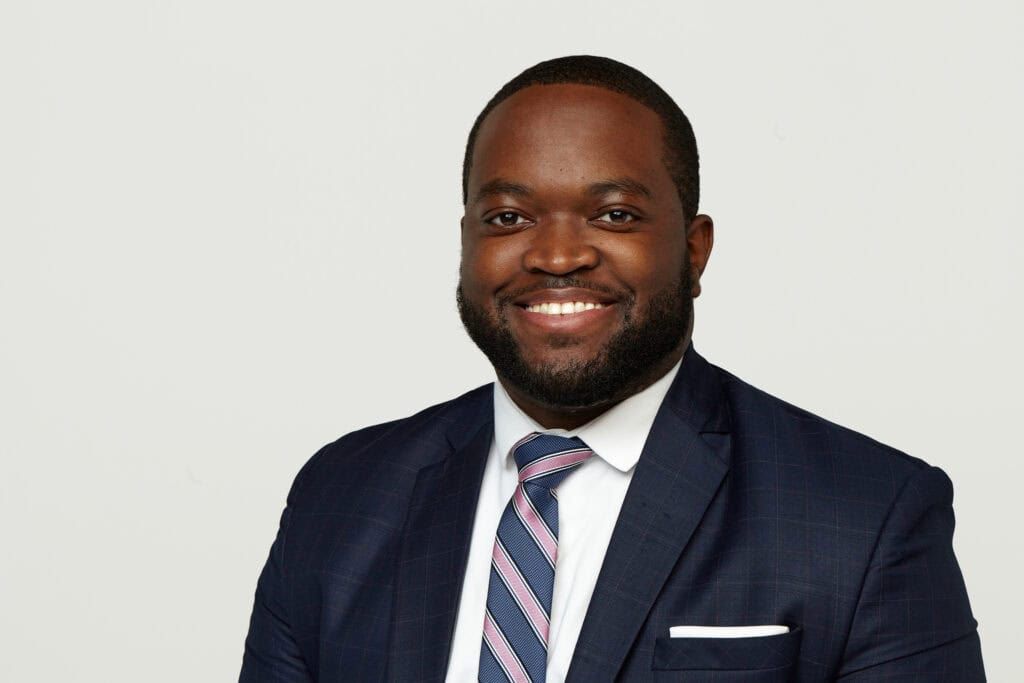
Meet Lukonde Mwinga
Lukonde was born and raised in Zambia. He had the privilege of living in four countries and being educated in another four countries. He’s been with the system for over three and a half years. Currently, Lukonde is the lead chair of Robert Patterson Unity Forum ERG, which supports over fifteen hundred employees by focusing on building community and cultivating personal and professional growth. He partners with other ERGs to make Kettering Health a better place to work and serve our community. During his time as an intern, those he encountered made him feel welcome and encouraged him to join an organization where he could grow and serve. In his current role in project management, his focus is always on improvement. He finds it enjoyable to have the ability to live that day in and out with his team. In his profession, he’s learned the importance of relationships. Lukonde recommends getting a mentor if you don’t have one. Someone available to meet with to pick their mind and take in their wisdom. He’s had the privilege of having leaders and managers show support in his growth through the person’s wisdom and experience. Someday, he hopes to do the same for other young professionals. A bit of advice that he would give people in their careers is, “God will open doors you never knew existed, just trust the process. But in trusting the process, you have to do the work to be ready to perform once the doors open.”
Thank you, Heather and Lukonde, for your dedicated service to Kettering Health!
Celebrating culture through food

Plantains are a traditional staple in Caribbean and Latin American homes. They were eaten by slaves because of their excellent source of vitamin C and A. During long passages, plantains were crucial in slaves’ survival while coming to America. Since many slaves were farmers, they cared for the plantains that were then loaded onto boats during the journey. Plantains have been cooked in multiple ways such as fried, boiled, and baked, and can be enjoyed with any meal. About 55% of African Americans are diagnosed with hypertension. Plantains help reduce hypertension due to the excellent source of potassium they provide. They are naturally low in sodium, so if you don’t add too much salt when cooking, they can help you stay within the recommended amount of sodium per day, which is 2,300 milligrams. Learn more or see recipes for 10 different ways to cook and eat plantains.
Our culinary team will be doing a few specialty options in February honoring Black History Month at our facilities.
February 20-24 (each location will do this a different day through the week)
Fried Green Tomato BLT with spicy remoulade sauce, turkey bacon, avocado mash, and romaine – from Black history month virtual potluck rebranded Eat the culture Since 2017, Black food bloggers and content creators have come together to celebrate this joyous occasion by contributing recipes to the Black History Month Virtual Potluck. This year there is an exciting change: The potluck is now branded under Eat the Culture. Founded by Meiko Temple of Meiko and the Dish, Eat the Culture was established to create community-centered spaces that nurture, support, and amplify Black culinary creators. In addition to collaborations like this potluck, the organization also offers educational resources, virtual courses, and live events to help creatives elevate their craft and amplify the culinary heritage across the African diaspora.
Historical figure: Rebecca Lee Crumpler
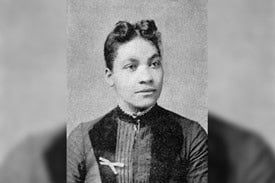
As we conclude Black History Month, we would love for you to learn about Rebecca Lee Crumpler. She was the first African American woman to receive a medical degree in the United States. Despite the prejudices against African Americans becoming doctors, she attended New England Female Medical College in Boston with the assistance of a scholarship from Benjamin Wade, an abolitionist in Ohio. After graduating March 1, 1864, she volunteered her time and provided care for enslaved men, women, and children. Rebecca returned to Boston with her husband in the late 1860s to continue providing care to all who needed it, regardless of their ability to pay. Learn more about Rebecca Lee Crumpler here.
Resources
Book – Up from Slavery by Booker T. Washington
A firm believer in the value of education as the best route to advancement, Washington disapproved of civil-rights agitation and in doing so, earned the opposition of many Black intellectuals. Yet, he is regarded as a major figure in the struggle for equal rights, one who founded a number of organizations to further the cause and who worked tirelessly to educate and unite African Americans.
Movie – Till | Apple TV
In 1955, after Emmett Till is murdered in a brutal lynching, his mother vows to expose the racism behind the attack while working to have those involved brought to justice.
Podcast – Uncivil on Apple Podcasts

Uncivil brings you stories that were left out of the official history of the Civil War, ransacks America’s past, and takes on the history you grew up with. We bring you untold stories about resistance, covert operations, corruption, mutiny, counterfeiting, antebellum drones, and so much more. And we connect these forgotten struggles to the political battlefield we’re living on right now. The story of the Civil War—the story of slavery, confederate monuments, racism—is the story of America.
Thank you for taking a moment of your time to celebrate Black history with us. We hope that you’ve enjoyed the materials we’ve shared!