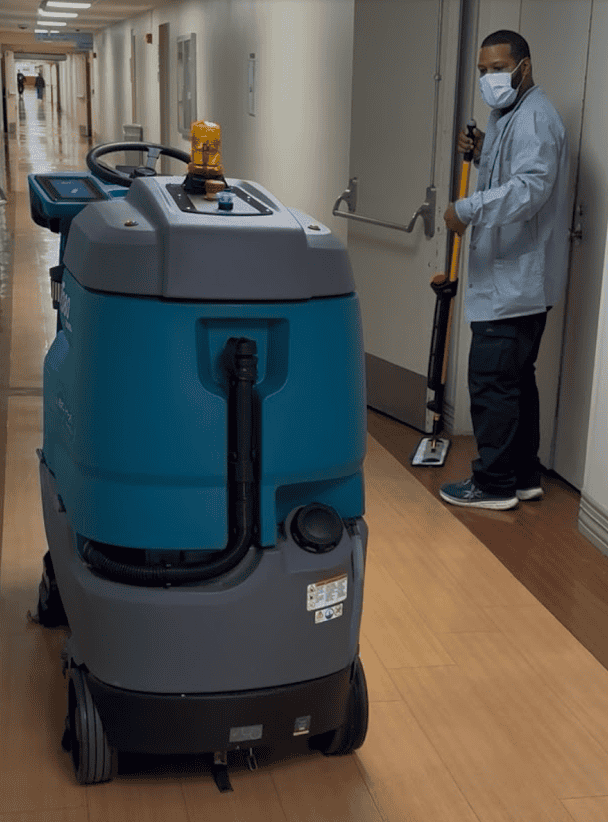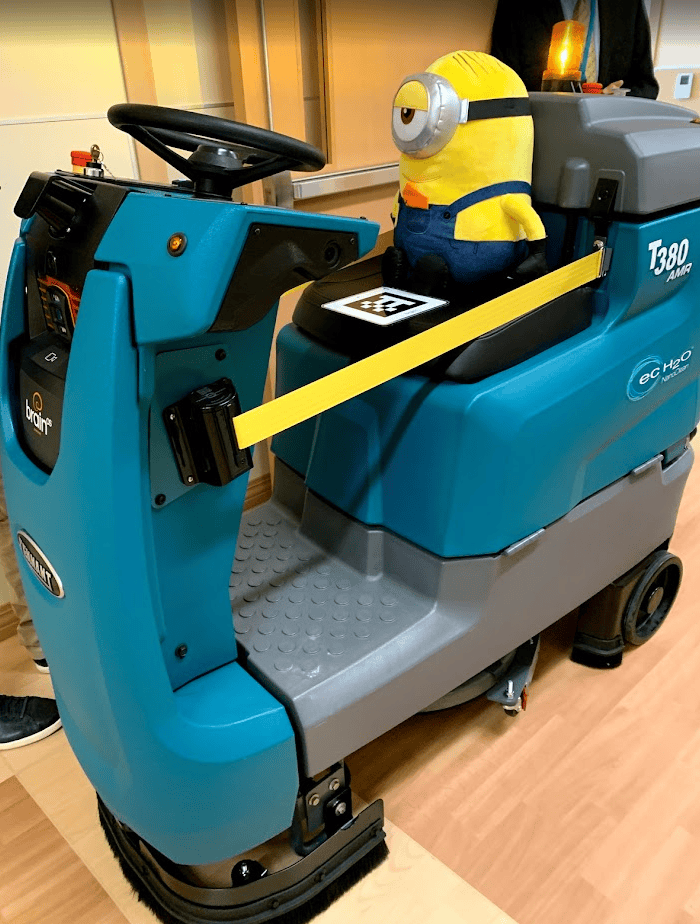
Autonomous floor-cleaning machines are helping Environmental Services (EVS) teams across Kettering Health devote more time to detailed cleaning while assisting with routine floor-care routes.
The machines are currently in use at Kettering Health Main Campus, Soin Medical Center and Kettering Health Miamisburg. While the technology assists with routine floor-care routes, EVS employees remain responsible for maintaining the hospital’s floors and common areas, operating and maintaining the equipment, and completing detailed cleaning throughout their assigned spaces.
“We’re cleaning thousands of square feet every night autonomously,” said Melvin Crawford, executive director of EVS.
Loneil Burnett, an EVS worker at Kettering Health Main Campus, has worked with autonomous floor-cleaning machines for about eight months. His responsibilities include programming cleaning routes, moving the machine between locations and performing daily maintenance.
Before each run, Burnett clears obstacles from the machine’s path and starts its programmed route.
“Once my shift starts, I take it to the start location, I clear everything out of the way in the path of the machine,” he said. “Once that’s all cleared, I just press start and run, and it cleans the whole floor. Then I can go off and do something else.”
At Main Campus, the machine cleans portions of the corridor connecting Kettering College and other high-traffic hallways. Burnett typically moves the machine between programmed routes throughout the shift while continuing floor care in areas the machine cannot reach.
For Burnett, the biggest advantage is the additional time it creates to focus on other responsibilities.
“When I first started, I had to use the manual machines and it took away so much time that it was hard to finish my area,” he said. “When I started using the machine and programmed it to the areas I like, it became a huge benefit.”
Crawford said the technology helps EVS teams maintain large areas of floor space while allowing employees to devote more attention to corners, edges and other detail-oriented tasks throughout the hospital.
“Now that the robot handles the bulk of the scrubbing, we have time to do that detail work,” he said.
The technology is also giving EVS employees experience working with new tools. Operators program routes, monitor reports and troubleshoot obstacles that affect cleaning paths. Burnett said the machines generate reports identifying route obstructions, helping staff improve future runs.
The machines are equipped with sensors that detect people and objects in their path.
“If you step in its path, it’ll stop long before it gets to you,” Burnett said. “It’ll wait there until it doesn’t sense you anymore.”
Crawford said EVS leaders can also review information showing where machines operated, how long they ran and whether obstacles interrupted a cleaning route. The data helps teams identify opportunities to improve processes and ensure routes are completed as intended.
Kettering Health’s use of the technology has earned recognition from the equipment manufacturer. Crawford said the organization ranks among the top users of the machines nationwide and has been recognized for adopting best practices and fully utilizing the equipment’s capabilities.
Looking ahead, Crawford believes technology will continue to be an important resource for EVS teams as they maintain welcoming spaces for patients, visitors and staff.
“I just want to care for our workforce,” he said. “If technology can help people doing the hardest physical labor, that’s a win for the organization.”