




Update on Q1 safety goals
Kettering Health has several patient safety goals for 2023 including:
- Reducing the Serious Reportable Event (SRE) rate by a threshold of 15%, target of 20%, and stretch of 25%
- Increasing Great Catch submissions by a threshold of 10%, target of 15%, and stretch of 20%
- Increasing safety event reporting by a threshold of 5%, target of 10%, and stretch of 15%
In Q1, we saw strong results for our safety goals. Continue reading to learn the areas where we are on track and where we still have opportunity to improve.
Goal: Reducing SRE rate
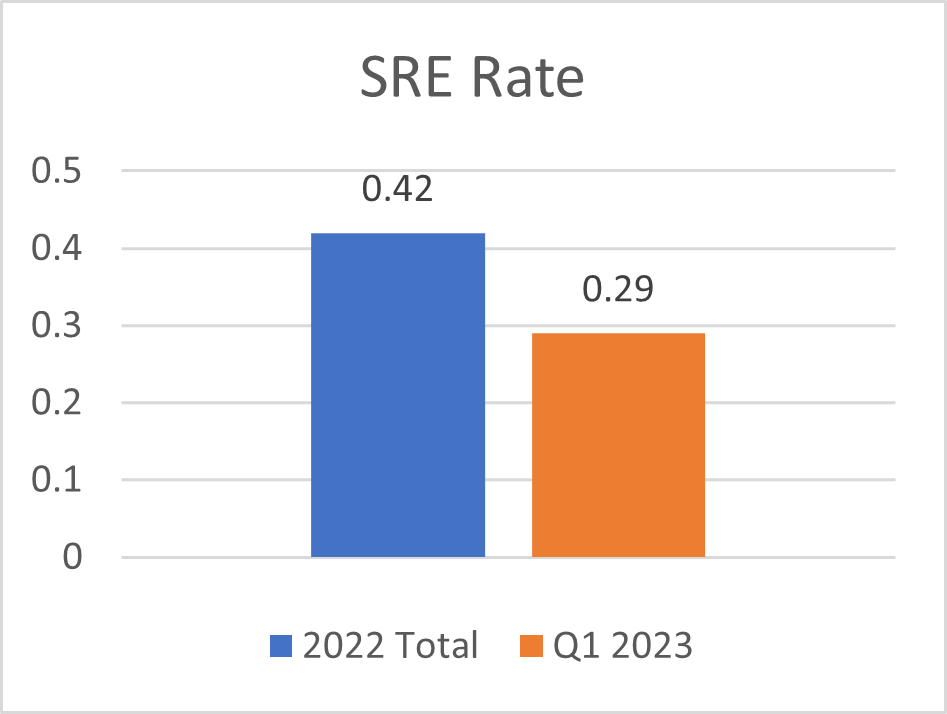
The graph below shows the SRE rate for January-March 2023. Through March, there has been a 31% reduction in the SRE rate.
Goal: Increasing Great Catch submissions
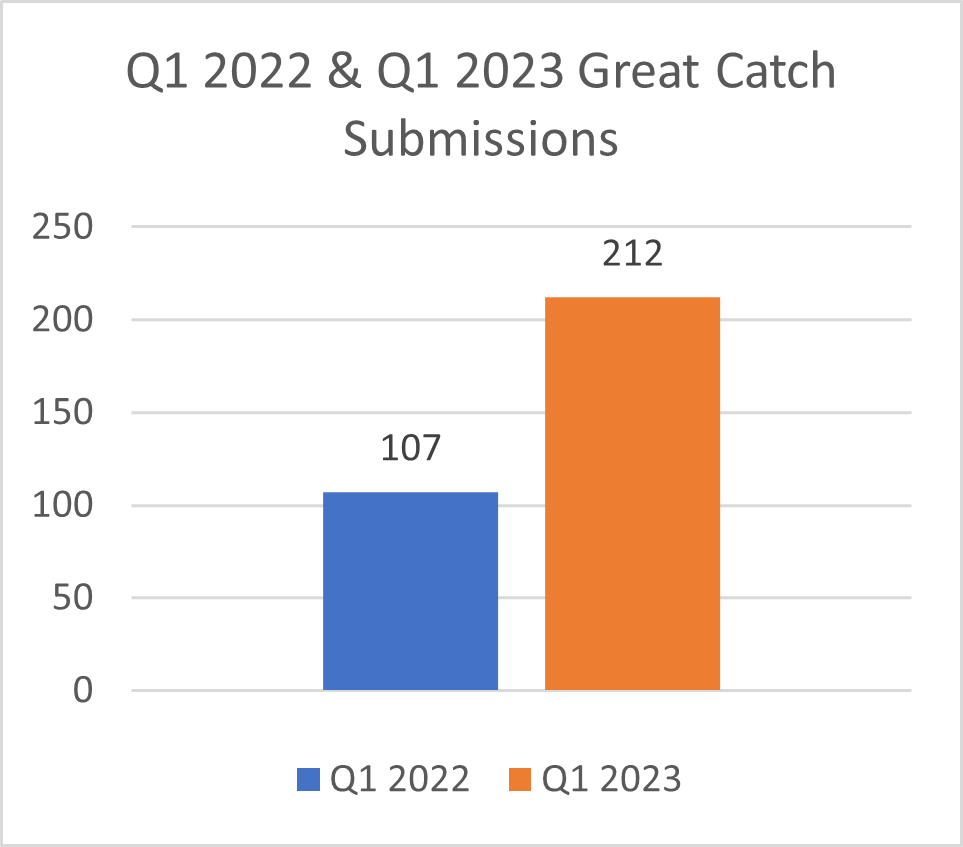
A Great Catch is when someone proactively prevents harm from reaching the patient. We share Great Catches to learn about potential safety issues and make changes to the systems and processes before harm reaches the patient. Great Catch submissions are on the rise.
Goal: Increasing safety event reporting
Safety event reporting remains an opportunity. While there was a bit of an increase in the reporting rate for March, the overall rate is still down compared to prior years. Staff have shared that SAFE (formerly Midas) can be difficult to use when entering safety events. A group has been identified to focus on improving the event entry process and it will go live in Q2.
Great Catches
- Thank you to Monica Kain from the ICU at Kettering Health Hamilton for being named the Great Catch of the Month. Monica was reviewing medications and questioned why a patient was ordered clopidogrel. After investigation, it was identified that a post-procedure order set had been placed on the incorrect patient. The provider was contacted, and the order was discontinued before harm reached the patient. Thank you, Monica, for “Having a Questioning Attitude,” “Speaking up for Safety,” and “Paying Attention to Detail” to prevent patient harm.
- Thank you to Alexie Fields from MS5 at Soin Medical Center for noticing a patient was being discharged with lovenox and warfarin. Alexie contacted the provider, and it was identified that they meant to have one discontinued. Thank you for “Paying Attention to Detail.”
- Thank you to Katelyn Asher from 5 West at Kettering Health Dayton for your Great Catch. Katelyn was orienting a new nurse when a K+ chloride IV bag was removed from the Omnicell. Through the five rights of medication administration, Katelyn noticed the dose was incorrect. The Omnicell had been stocked with 40meq, instead of the ordered 20meq. Katelyn called the pharmacy to correct and prevent patient harm. Thank you for “Paying Attention to Detail” and “Speaking up for Safety.”
Medication safety: Preventing missed doses
Omitted or missed doses are among the most common types of medication errors. This type of error is so common because it can result from virtually every step of the medication-use process. Whether the medication wasn’t ordered, the dispensing cabinet wasn’t stocked, an order wasn’t placed, or it simply slips someone’s mind, the patient fails to receive the medication they were ordered to receive as a result.
In the age of technology, we have come up with numerous ways to help prevent these types of errors. In the pharmacy, this includes the use of automation to track and reorder or restock products according to inventory levels. For prescribers, things like order sets help ensure that various aspects of therapy aren’t missed, including medications. For nursing and other frontline staff, this includes precautions like MAR warnings that indicate when medications are overdue.
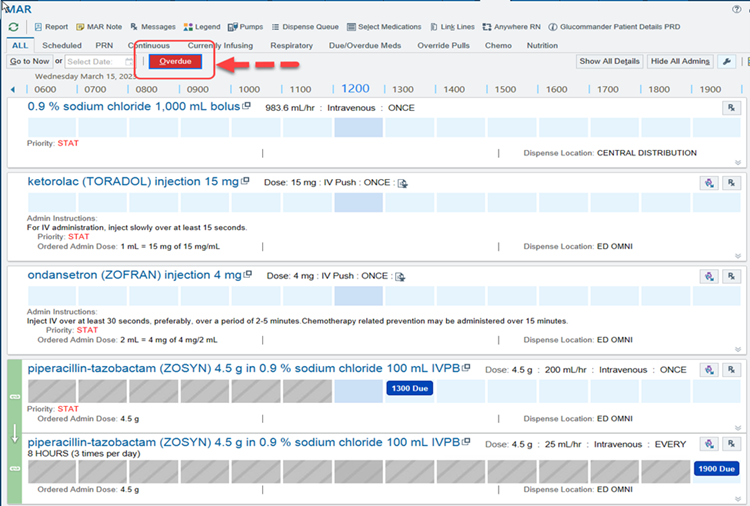
In the screenshot above, it’s easy to see how it might be difficult to determine which medications are overdue by simply looking at the body of the MAR report. However, by clicking the “Overdue” button, it’s easy to determine which medications need to be given. Along with other workflow aids in patient lists, there are a variety of indicators that ensure medications are given appropriately.
How do things get missed, then? Documentation and communication.
Many missed doses come down to one or both reasons. First, there are certain scenarios where medications need to be held or omitted. The key in these situations is proper MAR documentation. This informs the rest of the healthcare team that missing the dose was intentional, necessary, and helps prevent accidental downstream administration in potentially inappropriate situations. Second, communication is key. When doing handoffs, tell someone about doses not given. When medications are missing, tell the pharmacy. If you’re not sure if you should tell someone, do it! Overcommunicating is always best.