




Safety updates
Thank you for providing feedback on the safety event reporting process. During the annual Employee Engagement and Safety Survey, you shared that entering events into the SAFE (Midas) system was difficult and time-consuming. We heard your feedback and as a result, several changes were made to make entering an event easier. Those changes went into effect on June 6. Please share any feedback on the updates with your campus Quality and Safety leader.
Safety Behaviors
Defined Safety Behaviors provide us with tools to help prevent the human errors we all experience. The Kettering Health Safety Behaviors are:
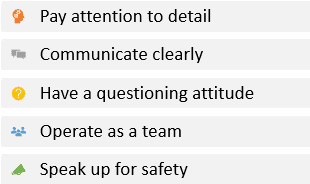
Be defining Safety Behaviors, Kettering Health is setting expectations for our teams and allows us to hold each other accountable to the behaviors that support a highly reliable organization. Mandatory training for all staff on the Safety Behaviors is coming soon.
Great Catches
- Thank you, Julie Sears at Kettering Health Hamilton, for your Great Catch. During admission, a patient was prescribed Lantus as a formulary alternate to Toujeo. The order was miscalculated, and a 30-40% higher dose than needed was ordered. Julie intervened and got the dose reduced to prevent patient harm. Thanks, Julie!
- Thank you, Cori Bartlett at Kettering Health Main Campus, for your Great Catch. Cori realized a patient had a severe nickel allergy. She went to the physician with her concern of using staples for closure. The physician was unaware of the allergy. The implants to be used in the case also contained nickel. The case was canceled and will be rescheduled when nickel-free implants are available. Great work, Cori!
- Thank you, Karolyn Hogg at Kettering Health Main Campus, for your Great Catch. Karolyn caught that a patient was unsafe to consume Barium for a video swallow study because of possible esophageal leak. The patient underwent testing with an alternate agent which confirmed a leak. This prevented possible complications. Thanks, Karolyn!
Medication Safety
We continue on our journey of hardwiring system enhancements to ensure we provide the best care to our patients by implementing safe medication practices. There have been SAFE error reports on medications being administered too soon. An Epic alert appears to warn that the medication is being administered too soon, but the alert was being ignored and bypassed. When a medication is given too soon, the user is not following the providers’ order. This may lead to patient harm if there are unsafe medication doses being administered to patients.
To bring heightened awareness to the user, the Epic Best Practice Advisory (BPA) was refined and redesigned to now include the following information:
- Medication name, dose, and frequency
- Last administration time, date, and dose
- Acknowledgement reason is now a required action for the end user
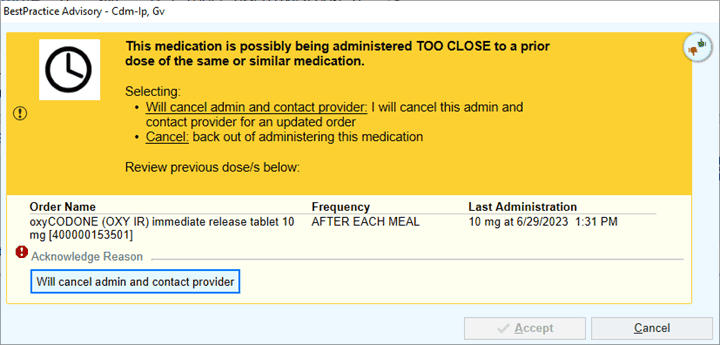
This BPA is intended to prevent medication doses from being administered too soon and to ensure the providers’ orders are being followed as intended. This new alert also aims to prevent medication errors from patients receiving higher than necessary doses, which could cause adverse effects and patient harm.