



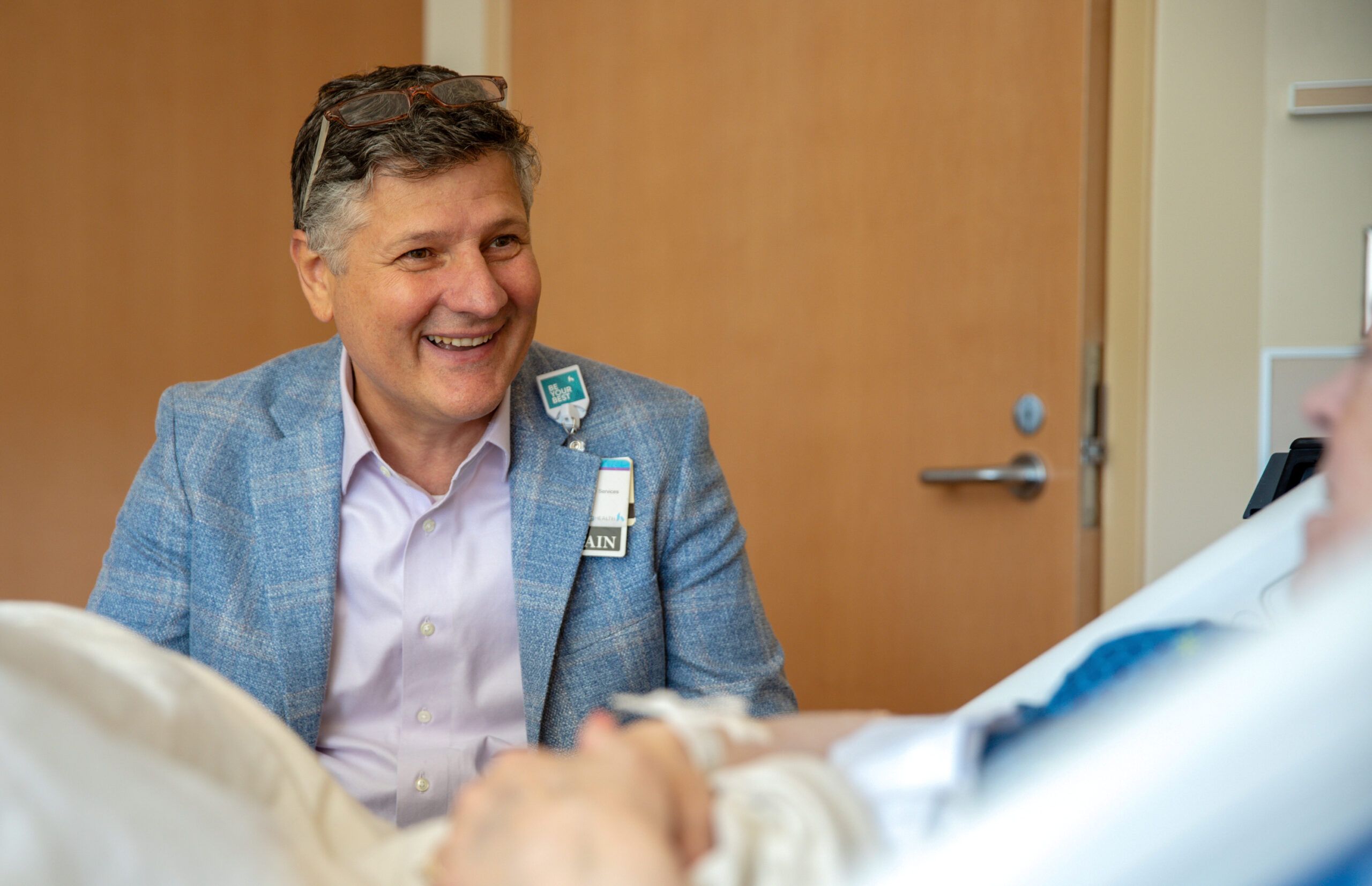
Exceptional patient care obviously involves with focusing on patient safety and treating illness and injury, addressing the body’s intricate complexities. But it doesn’t end there. Truly exceptional care recognizes and responds to the need for whole-person care, affirming each person’s inherent dignity and worth—understanding humans as more than their biology.
Increasingly, research and experience affirm this approach as healthcare moves toward values-based models. Yet, this philosophy is not new. Seventh-day Adventist healthcare has long embraced this view, seeing every patient as an image-bearer of God—who require physical, mental, and spiritual well-being to flourish.
While evident throughout healthcare settings, this commitment to whole-person care can be particularly crucial in acute settings, where life’s vulnerability is clear, and where at Kettering Health the role of the chaplain uniquely embodies this belief.
A Vital Part of the Team
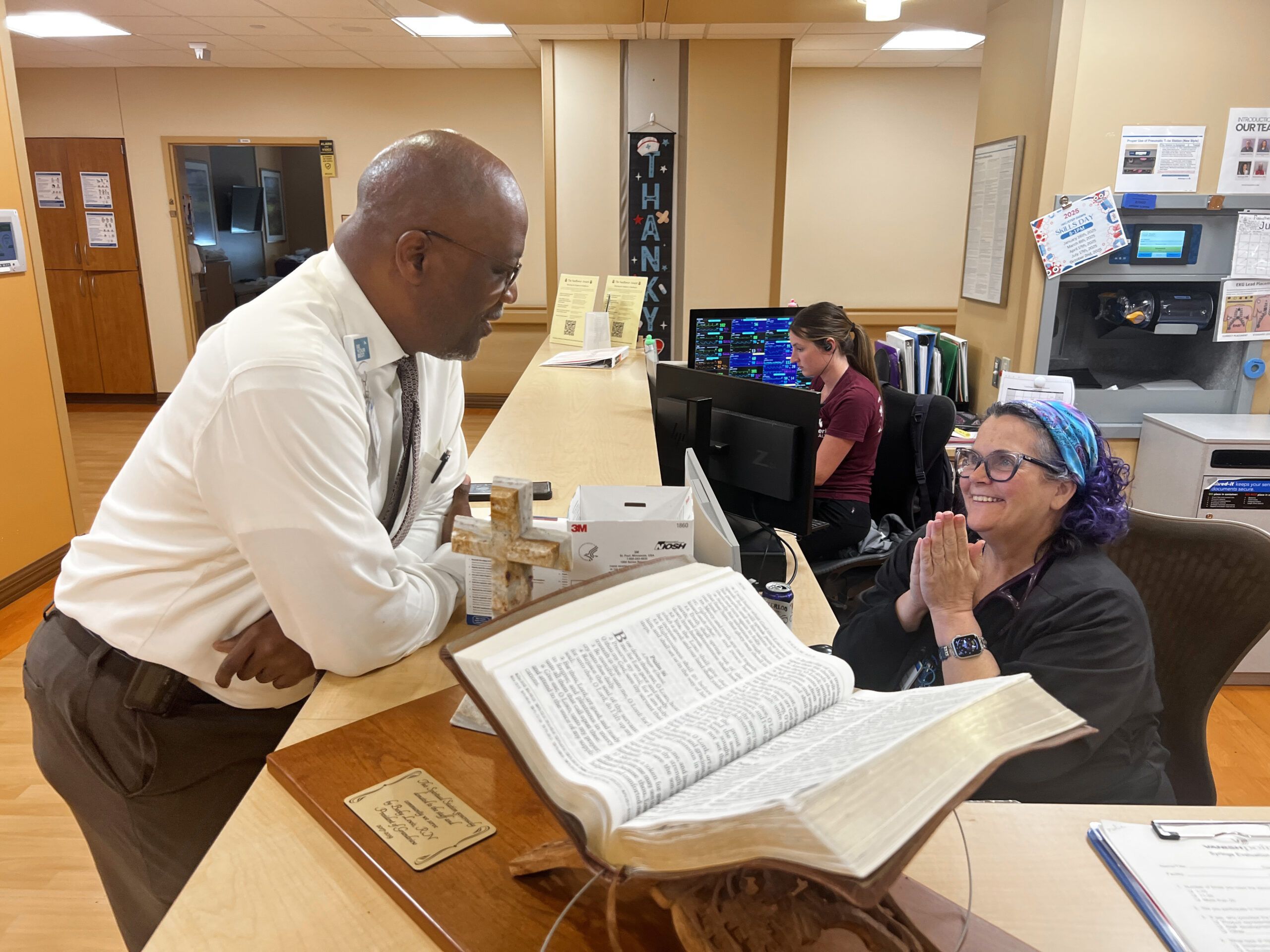
“The role of the chaplain at Kettering Health today is one of a spiritual care provider,” says Garth Adams, chaplain at Kettering Health Dayton. Whether it’s care for the patients or staff, chaplains are trained to navigate—with presence and clarity—the often-overlooked yet deeply human aspects in health and healing like grief, suffering, purpose, and meaning. “The chaplain also provides guidance and support for how one can nurture and restore the often-neglected spiritual areas of our life, which might adversely affect our health.”
Adams emphasizes this isn’t a recent development. “Fortunately, chaplains have never been seen as ornamental within Kettering Health. Beginning with employee orientation, chaplains are introduced as an essential member of the care team.”
“The role of the chaplain at Kettering Health today is one of a spiritual care provider,” says Garth Adams, chaplain at Kettering Health Dayton. Whether it’s care for the patients or staff, chaplains are trained to navigate—with presence and clarity—the often-overlooked yet deeply human aspects in health and healing like grief, suffering, purpose, and meaning.
“The chaplain also provides guidance and support for how one can nurture and restore the often-neglected spiritual areas of our life, which might adversely affect our health.”
Adams emphasizes this isn’t a recent development. “Fortunately, chaplains have never been seen as ornamental within Kettering Health. Beginning with employee orientation, chaplains are introduced as an essential member of the care team.”
Kettering Health chaplains serve across the system in a variety of settings. In addition to 11 full-time chaplains at our medical centers, including Kettering Health Behavioral Medical Center, there are 11 resource chaplains who extend this ministry of presence and care. The team reflects a rich diversity of backgrounds and service. The team is led by Nestor Bruno, director of Mission and Ministry, who provides overall leadership for chaplaincy and spiritual care. Along with those mentioned in this article, Chaplains Ron Swinger (KH Green Memorial), Bryant Smith (KH Washington Township), Debi Robertson (KH Hamilton), Anne Petratis and Berenice Nunes (KH Main Campus), Jimmy Mann (KH Dayton), and Kevin Gill (KH Troy and Behavioral) serve patients and staff through intentional chaplaincy care.
Several chaplains bring international perspectives—Raul Concha from Chile, Berenice Nunes from Brazil, Kevin Gill and Nestor Bruno from Argentina, and Stefano Paris from Italy. And many extend their ministry beyond hospital walls: Elliot Smith leads support groups with Homeful, provides crisis support, and serves in worship at Kettering Seventh-day Adventist Church. Ron Swinger has long invested in prevention programs, including annual prom awareness events at Xenia High School. Kevin Gill engages through the Troy Rotary Club, Miami Valley Drug Free Coalition, and community events such as the Strawberry Festival. Garth Adams leads cancer support groups, emcees city events, and is pursuing doctoral research on spiritual care for cancer patients.
Together, they embody a ministry that is not ornamental but integral—bringing hope, meaning, and whole-person support to patients, families, and employees.
Expanding Care Amid Crisis
Over the past decade, chaplains have become essential to patient and employee care—a role notably amplified during the COVID-19 pandemic.
“During the pandemic, no outside clergy could visit,” says Raul Concha, chaplain at Kettering Health Miamisburg. “We became the sole spiritual connection for patients, especially early on when families were restricted. Our role expanded significantly.”
As distancing protocols limited direct patient interaction, chaplains intensified their focus on staff, recognizing employees as crucial conduits of patient care. “We intentionally rounded on all units, offering emotional support, prayer, and personal conversations,” notes Concha.
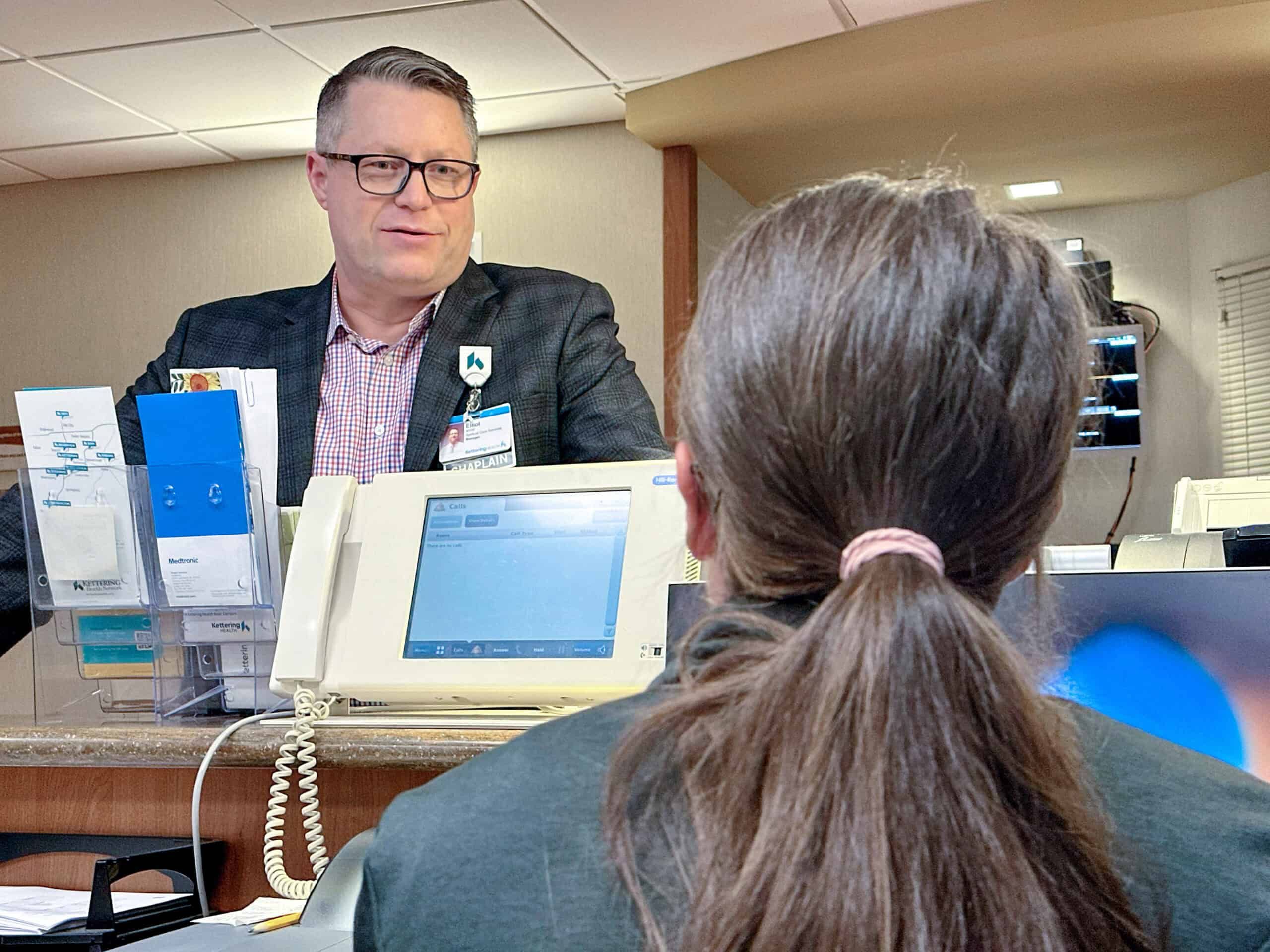
This strategic shift has continued post-pandemic, amplifying the chaplain’s impact through hospital staff. “We can’t reach every patient individually,” explains Elliot Smith, chaplain at Kettering Health Main Campus. “But supporting staff means indirectly reaching many more.”
Smith emphasizes, “Helping staff care for themselves emotionally and spiritually ultimately leads to better patient care.”
Where Medicine Meets Meaning
Chaplains are also increasingly present during complex care decisions that require more than clinical expertise.
“Our doctors, nurses, and administrators have welcomed chaplains as vital contributors in moments that require more than medical expertise,” says Kevin Walter Gill, chaplain at Kettering Health Troy. “These moments are often less about clinical facts and more about meaning, morality, grief, fear, and spiritual conviction. Chaplains are uniquely equipped to walk with patients and families across the delicate lines of belief, ethics, and emotional need.”
Gill adds, “Regular participation in interdisciplinary rounds, collaboration through consults, teaching sessions for medical residents on spirituality in medicine—these are no longer exceptions, but growing norms at Kettering Health.”
Multiplying the Mission
Jimmy Mann, chaplain at Kettering Health Dayton, adds, “The chaplain offers the peace of God, which surpasses all human understanding, during the most vulnerable moments for patients, families, and staff. The chaplain’s hope is totally dependent on the supremacy and sovereignty of Yahweh.”
For patients, that impact can be unforgettable.
As Raul Concha recalls, one patient, after a long ICU stay, shared that his impact made it clear to the patient what where his influence came from:
“He said to me that ‘I could not have made it without your support and prayers. I’m so glad we met here. You were an angel sent from heaven to me.’”
(A version of this article will appear in the September–October issue of The Visitor.)