



Every day, our employees fulfill our mission by delivering and supporting compassionate, high-quality care in our communities.
As part of Hospital Week, we’re uplifting the stories of just a few of our many team members whose daily efforts advance the level of care we’re able to provide.
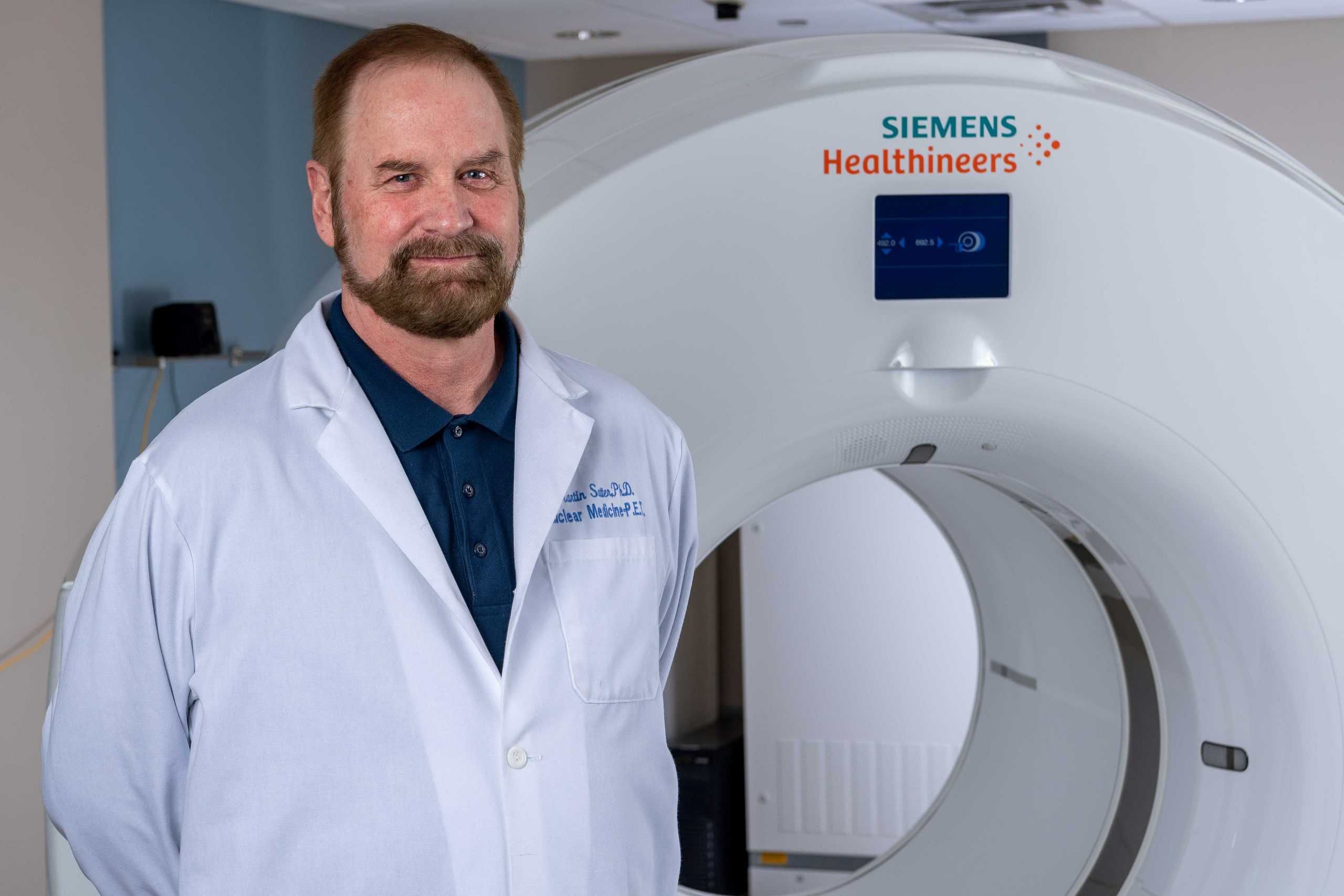
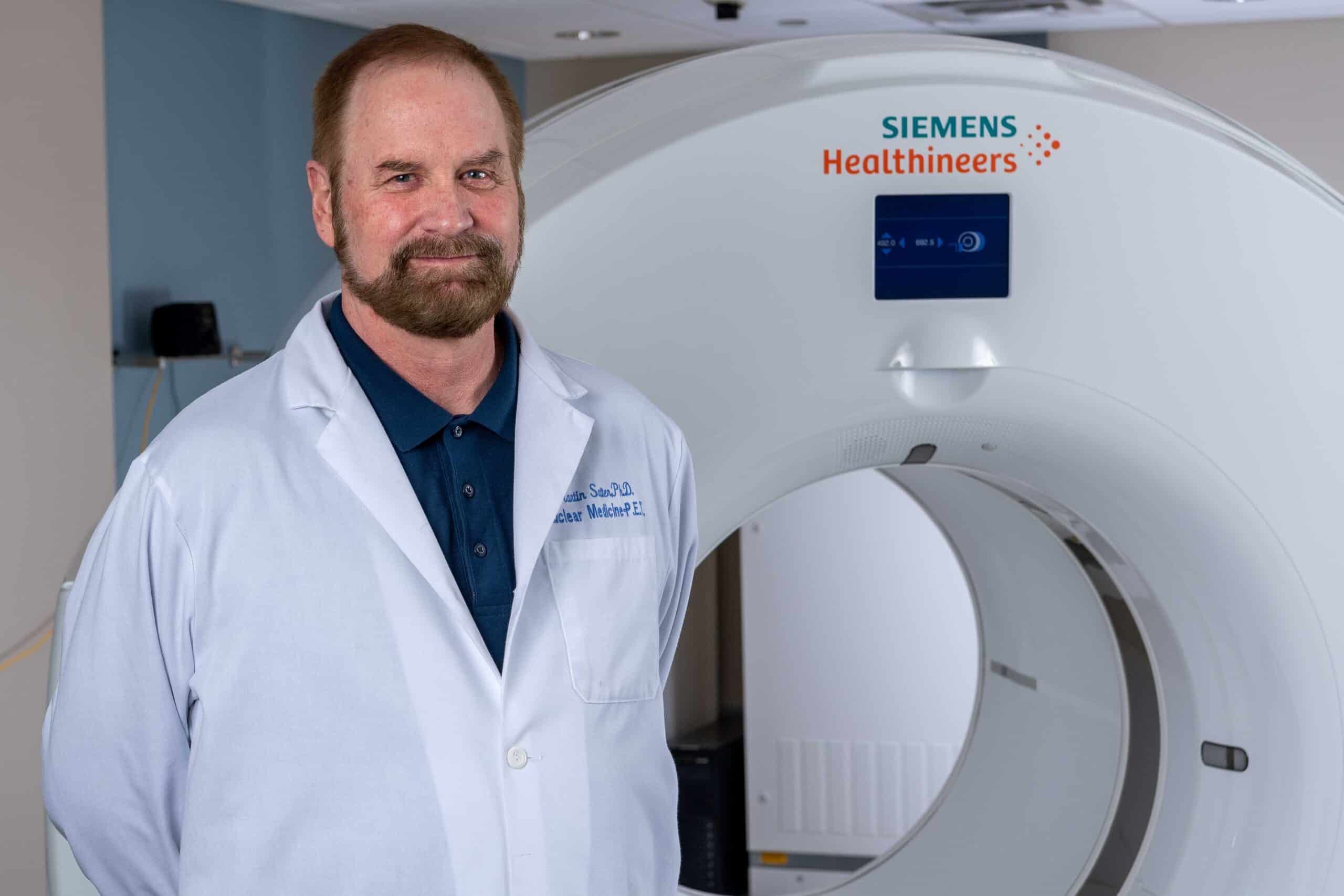
Below you’ll learn the story of Martin Satter, PhD, who is improving the lives of cancer patients as a medical physicist in the PET Molecular Imaging (PET MI) Department at Kettering Health Main Campus.
After dedicating 31 years to a career, most people would hope to have made a tangible impact.
Martin Satter’s work at Kettering Health Main Campus over the last three decades has, quite literally, added time and quality to patients’ lives through his expertise in technology that aids in early detection of tumors: molecular imaging.
A type of medical imaging, PET molecular imaging detects tumors on a biochemical level, enabling faster identification and accurate determination of the type of cancer, at an earlier time in the cancer’s evolution than traditional anatomical imaging, like MR or CT scans.
Martin shares that molecular imaging roles are more common in academia. Yet, he chose to grow the program at Kettering Health. “A dozen or so years ago, Michael Brendel pointed out that at Kettering Health, we were unique in that we were effectively bridging the gap by working hard to keep up with academic developments in PET MI but serving as a template for how this amazing technology could eventually get to everyone else,” said Martin. “I redoubled my efforts back then, and still thank Michael to this day.”
Through his innovative mindset, persistence, and commitment to advancing the level of care we provide to our patients, Martin has helped catapult our molecular imaging program to one that, in many aspects, can match the capabilities of top U.S. academic hospitals.
A natural innovator
Martin finds constant inspiration in knowing that the technology he dedicates his career to saves others’ lives. “My father, only about a month after first visiting me here at Kettering Health many years ago, passed away with a heart attack that would most likely have been avoided, had he had access to the cardiac PET technology we now offer to our patients every day,” he said.
Martin co-developed software with collaborators at Wright State University to automatically fuse MR/CT and PET data and auto-segment tumors a decade before similar software was widely commercially available.
He and a team brought first-in-the-nation image-guided neurosurgery to Kettering Health, as well as technologies like Gamma Knife and MR-guided laser ablation to the Dayton region for the first time. KH Main Campus is the only community hospital in the U.S. to offer C-11 methionine imaging for diagnosing and providing treatment planning for brain tumor patients.
Patients have come to the medical center from as far away as Canada to access this technology.
“The work we do here in PET Molecular Imaging is to shorten the gap typically required to bring new, better technology and treatments to our patients, as inspired by Charles Kettering’s legacy, and this work has brought many rewarding moments through the years,” Martin said.
He has also brought innovative solutions for prostate cancer treatment to Kettering Health. The PET MI Department realized that molecular imaging would be the future of diagnosis and treatment for this type of cancer. He shared his vision for prostate cancer imaging to various advocates like the Kettering Health Foundation and hospital administrators to secure funding for equipment to perform this specialized imaging.
KH Main Campus was the first in Southwest Ohio to offer the Prostate Specific Membrane Antigen (PSMA) PET scan, which shows doctors where prostate cancer is in the body and influences the course of the patient’s treatment, which significantly impacts their quality of life and outcomes. The PET MI Department was proud to learn that Kettering Health provided the most PSMA PET scans in all of Ohio in 2022.
Traditionally, a tumor would have to reach a certain size before it could be seen on CT. Now, the PSMA PET scan can see prostate cancer cells as well as predict the rate at which they are growing. Some doctors are using the scan as first-line imaging with new prostate cancer patients and recommending initial treatment based on the results. It’s revolutionizing treatment for patients because it’s more accurate, can be used earlier, and is personalized to the individual.
Martin is also leading a new research initiative, working with Dr. Mark Hoeprich on a Kettering Health-sponsored molecular imaging research project. They are investigating the use of PSMA for neurological tumors and are collaborating with academic institutions and industry organizations.
Creating molecular imaging champions, one compassionate step at a time
Martin brings in administrators and community members for tours of the department, communicating highly technical details into an understandable vision that can apply to their personal lives with enthusiasm and hope. Martin creates other champions of molecular imaging because his passion is contagious—it rubs off on physicians of all types including urology, cardiology, neurology, and neurosurgery.
“There are many high-tech jobs that provide major benefits to humankind,” explained Martin. “However, the mathematicians and physicists often don’t get the feel-good feedback from their contributions, as they are several layers removed from seeing their work impact their fellow human beings.”
“Here at Kettering Health, I have been blessed to work closely with many brilliant physicians and can see that my efforts and those of the PET Molecular Imaging Department can better patient’s lives.”
Martin was nominated for the 2023 Ohio Healthcare Association Health Care Worker of the Year and was named a 2023 Health Care Hero by the Dayton Business Journal.
His knowledge of molecular imaging applications is transforming the care we offer our patients and the lives of those in our community.