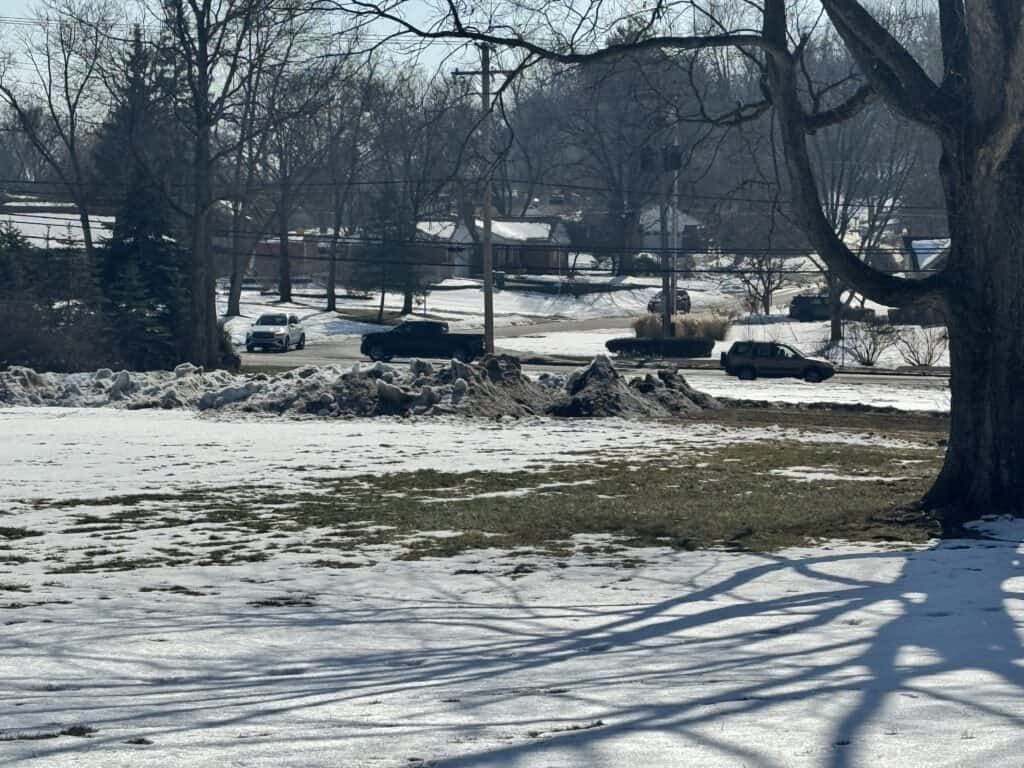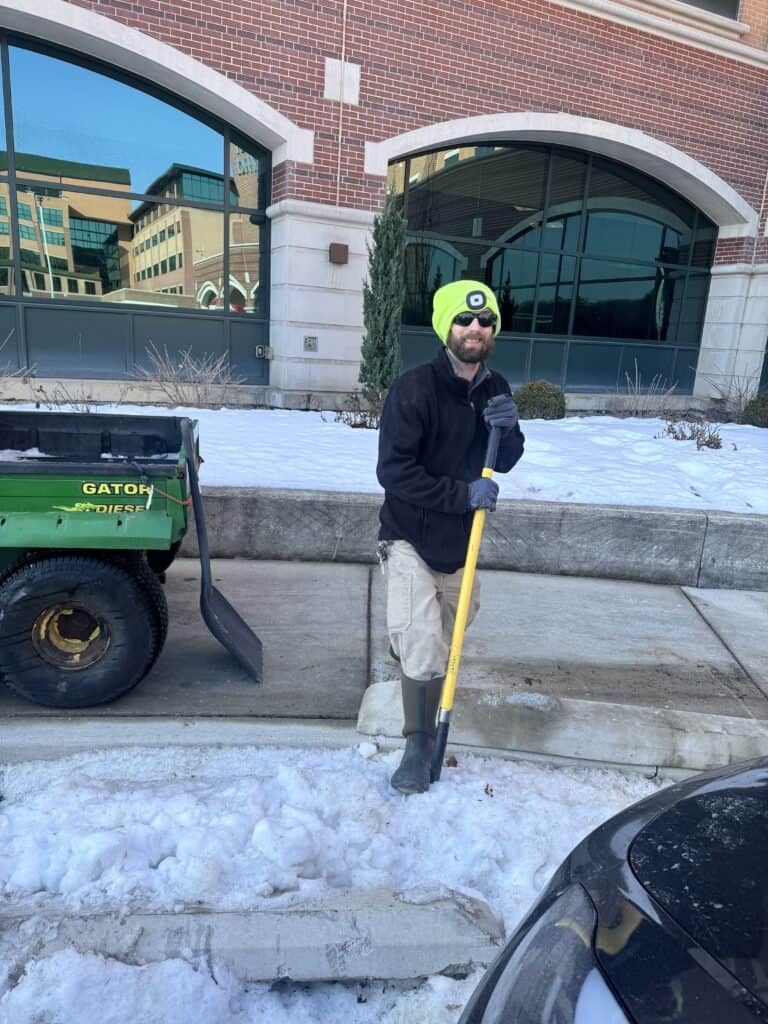
The storm that delivered record snow across the Miami Valley over the weekend of Jan. 24 was a major test for Dan Morton, who manages ground systems at Kettering Health (KH).
“We didn’t panic, and that was the main thing,” said Dan, who’s been with KH for almost 25 years. “This storm was the equivalent of six regular storms all in one. Somebody called this our Super Bowl, and I think we won the Super Bowl. I’m very proud of my guys.”
Most of the region saw a foot or more of snow, followed by a frigid blast of Arctic air that lingered into the week.
“Keeping the emergency departments open is the strategy,” Dan said. “Everything else comes after that.”
He leaned on a team of about 20 staff and subcontractors working 12‑ to 16‑hour shifts across two days to maintain KH’s medical facilities. Crew members caught short bursts of sleep in hospital sleep rooms or at Moraine Farm.
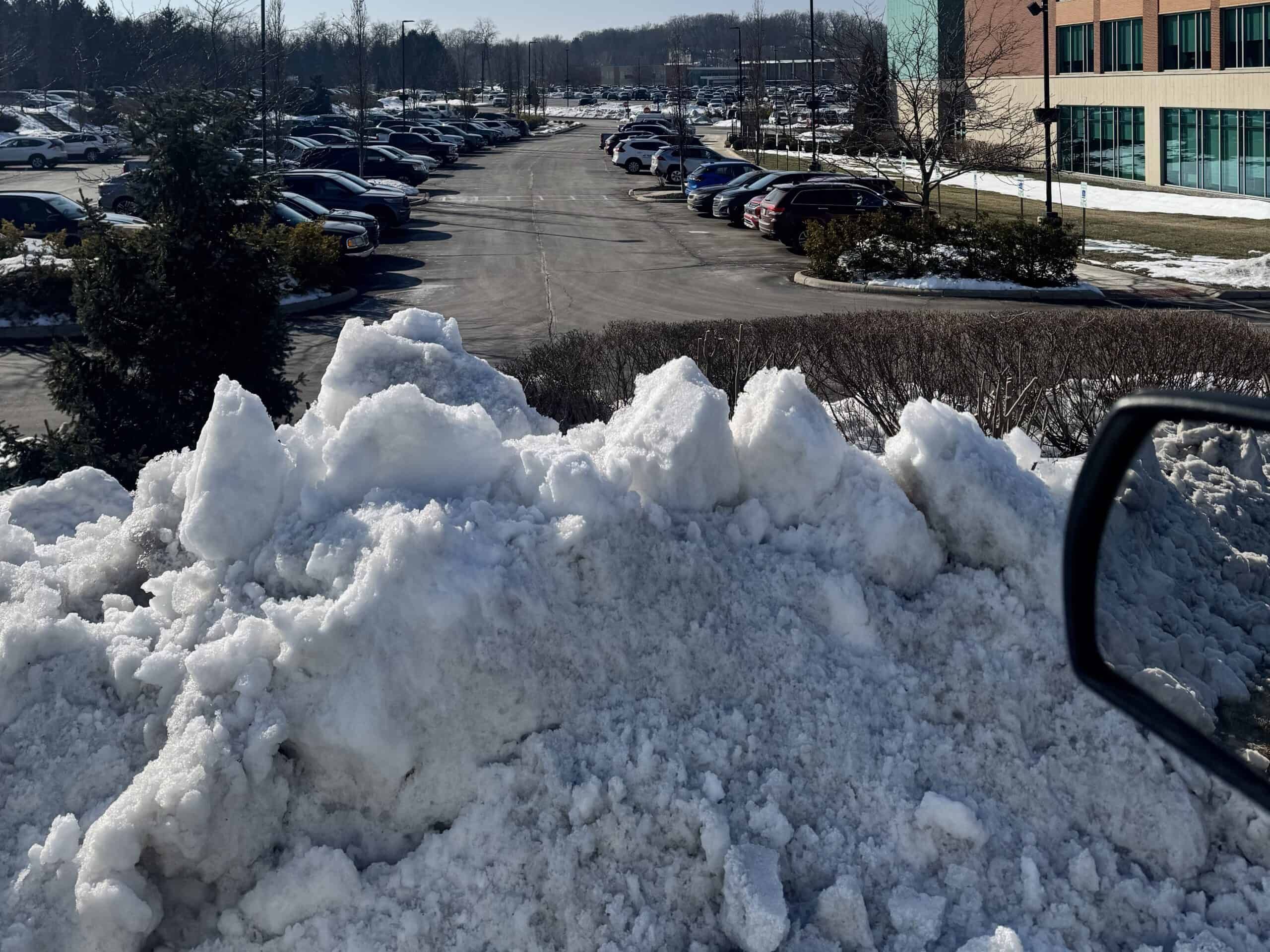
Managing an around-the-clock operation brought added challenges, including limited space for snow removal. KH brought in subcontractors with heavy equipment to relocate piles overnight.
Equipment issues also complicated the effort. The team started the storm with seven plow trucks and five bobcats but lost some of those resources as conditions intensified.
“If something breaks down, it really puts the system in a bind,” Dan said. “We try to stockpile as many spare parts as we can so we can fix something on the fly and get back out there.”
That preparation paid off during a storm of this scale. From his base at KH Main Campus, Dan and his team began planning about 10 days in advance, tracking forecasts and making sure equipment and staffing were ready. One early decision that proved valuable was choosing not to pretreat lots and pathways because of low ground temperatures.
“We lost all the surface temperature, so we didn’t have any good ground temperatures coming in, which was a blessing because it was so cold,” said Dan, who typically uses 400 to 600 tons of salt annually. “Each storm is different, so we didn’t do any pre-treating, and the goal was not to salt until after the storm was done.”
While much of the work happens in the days before a storm, Dan said the key planning actually begins as soon as the snow season ends. Ensuring materials arrive on time means putting in orders as early as June. Staying ahead helps him stay focused on his ultimate goal.
“Not a single fall,” he said. “I don’t want anybody to ever get hurt on our campus.”